Custom Cabinets Built for Kuna, ID Homes
Kuna's housing stock runs a tight mix: newer subdivisions with open-concept kitchens that demand clean-lined cabinetry, and older farmhouses where stock cabinet widths leave awkward gaps or…
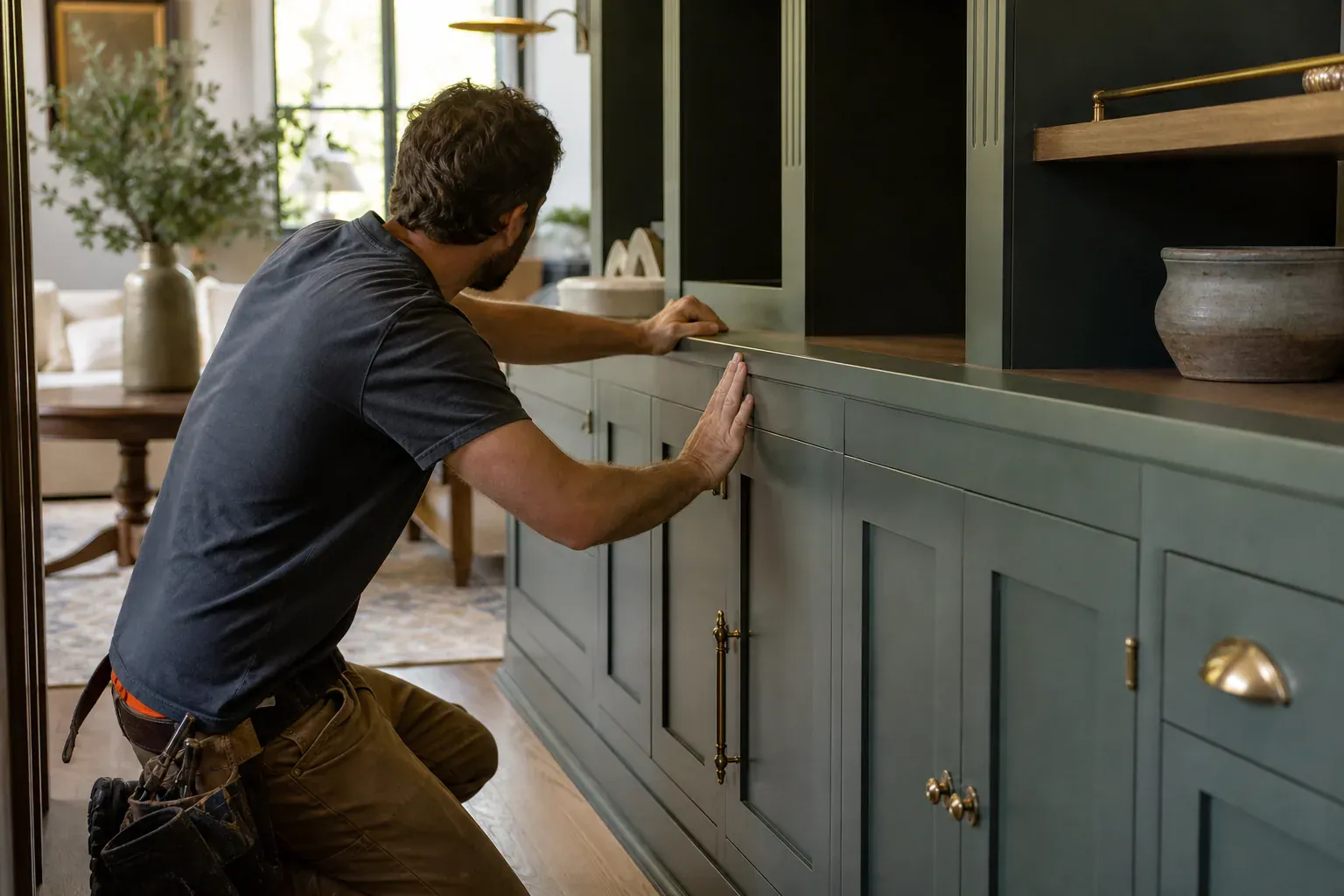
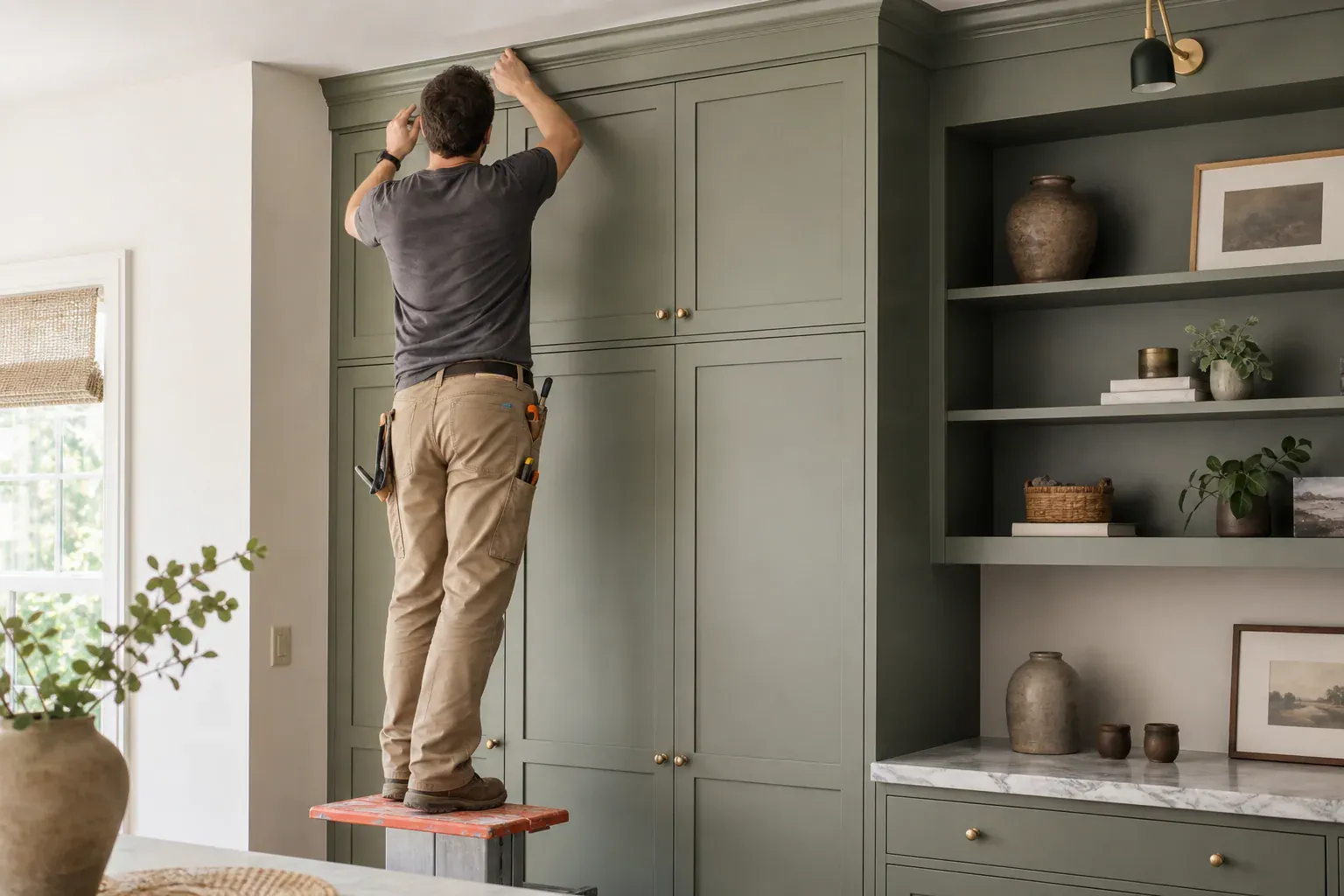
Boise Custom Cabinets provides custom cabinets for Kuna, ID homes, rental properties, and multi-unit buildings across the Ada County region. We build to exact opening dimensions, handle tight installation schedules, and deliver finishes that hold up to repeated tenant turnover and the wear patterns of shared living spaces.
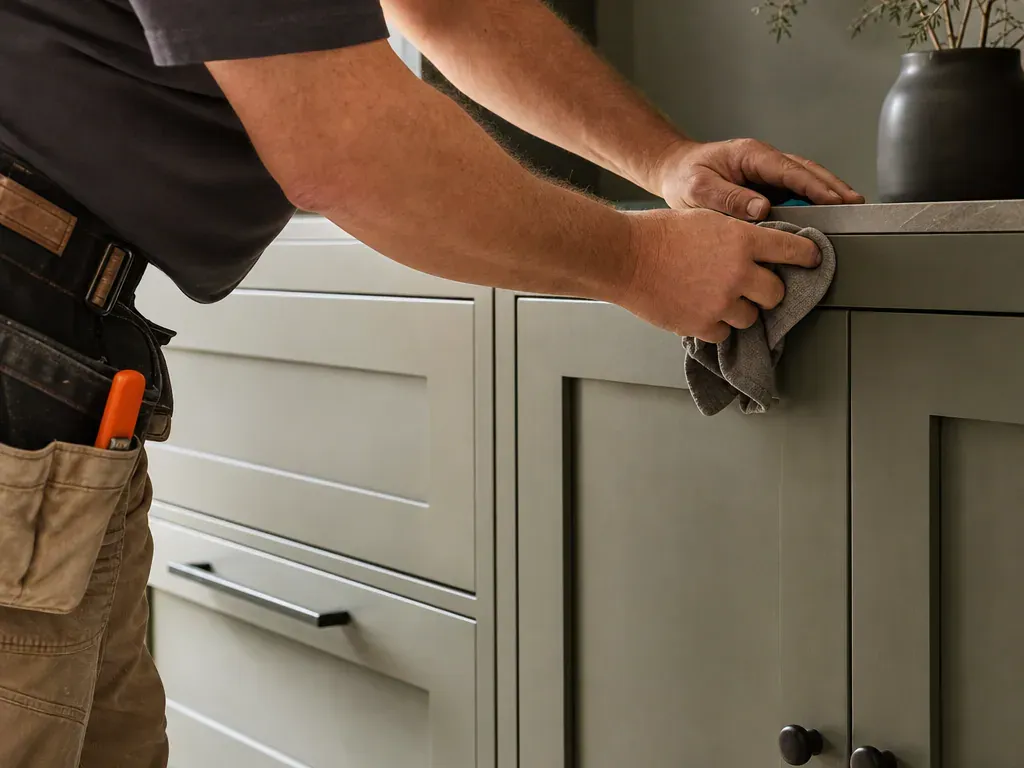
Kuna's housing stock runs a tight mix: newer subdivisions with open-concept kitchens that demand clean-lined cabinetry, and older farmhouses where stock cabinet widths leave awkward gaps or force dead space. Custom cabinets solve both. We measure once, build to your exact opening, and avoid the filler strips and spacer panels that plague stock installations. We serve Kuna directly and extend service to Meridian, Nampa, and surrounding communities within reasonable drive time.
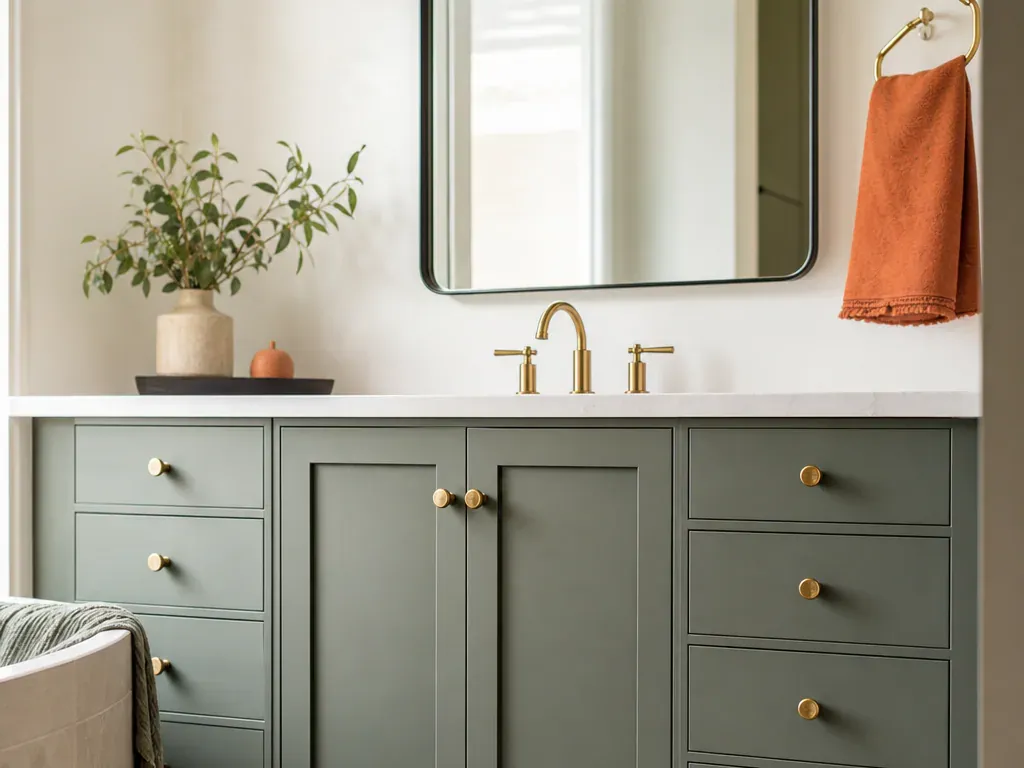
Stock cabinets ship in 3-inch width increments. Your opening is 37 inches wide; you buy 36-inch cabinets and fill the gap with trim. Semi-custom starts with modified stock boxes—your width, standard depth—but allows custom door and finish options layered on top. Full custom cabinets are built to your exact opening dimensions from the box up.
Stock ships in weeks. Semi-custom runs 4 to 6 weeks. Full custom typically takes 8 to 12 weeks. In rental turnovers, the lead-time premium of custom often disappears when you consider that stock requires on-site filler and shims; custom arrives floor-ready. Durability favors furniture-grade plywood and solid-wood construction over particle board, which swells when exposed to kitchen moisture.
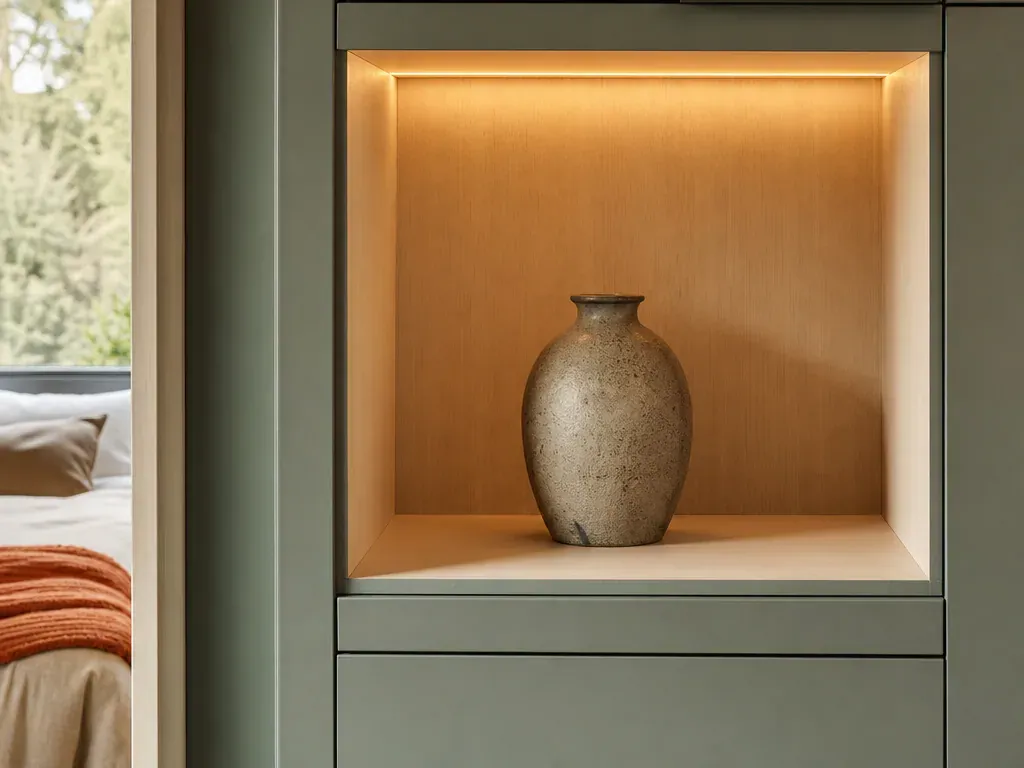
Material choice is first. Particle board and MDF box construction runs lower cost than furniture-grade plywood or solid wood. A solid-wood frame with plywood sides costs less than all-solid construction. Door style matters: shaker doors cost less than raised panel doors, which require more material and routing time. Painted finishes begin lower than stained, though premium stain-grade wood species—maple for painted work, oak for traditional grain, cherry for dark stains—add material cost upfront.
Hardware and organizer add-ons compound the bill. Soft-close hinges and soft-close drawer slides run per-box costs higher than standard ball-bearing slides and butt hinges, but they survive multiple open-close cycles without sag. Utensil trays, spice racks, tray dividers, and appliance garages are custom-built to your dimensions and add material and labor proportionally.
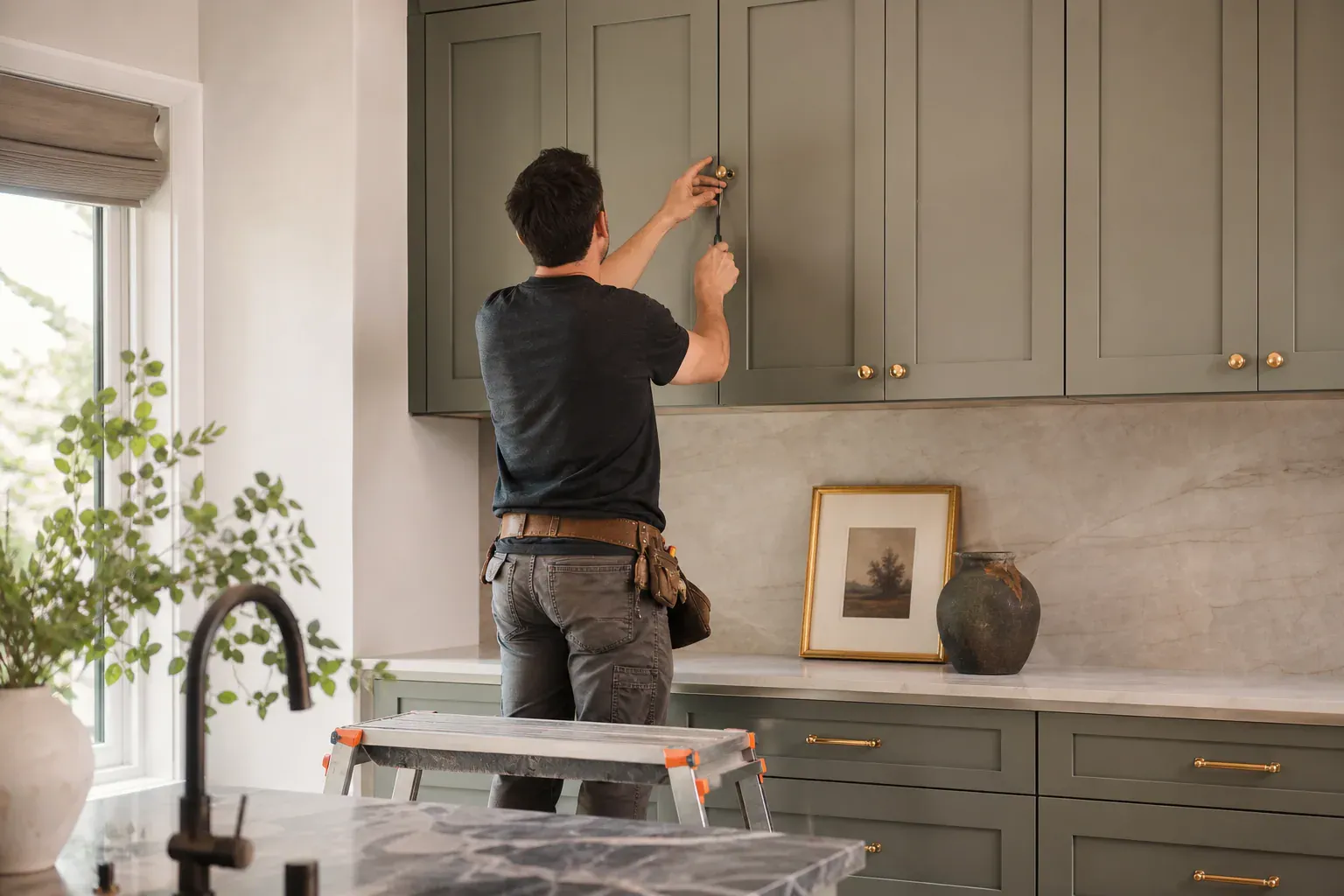
Shaker doors suit modern open-plan kitchens. Raised panel doors work in traditional homes. Painted finishes begin with bonding primer to prevent chipping; low-VOC emission finishes improve indoor air quality in tight rental units. Matte finishes hide fingerprints but show dust. Satin and semi-gloss finishes wipe clean in kitchens and hold up to repeated cleaning between tenants. Idaho's dry winters shrink wood slightly; we build a small panel reveal to prevent edge-checking at door joints.
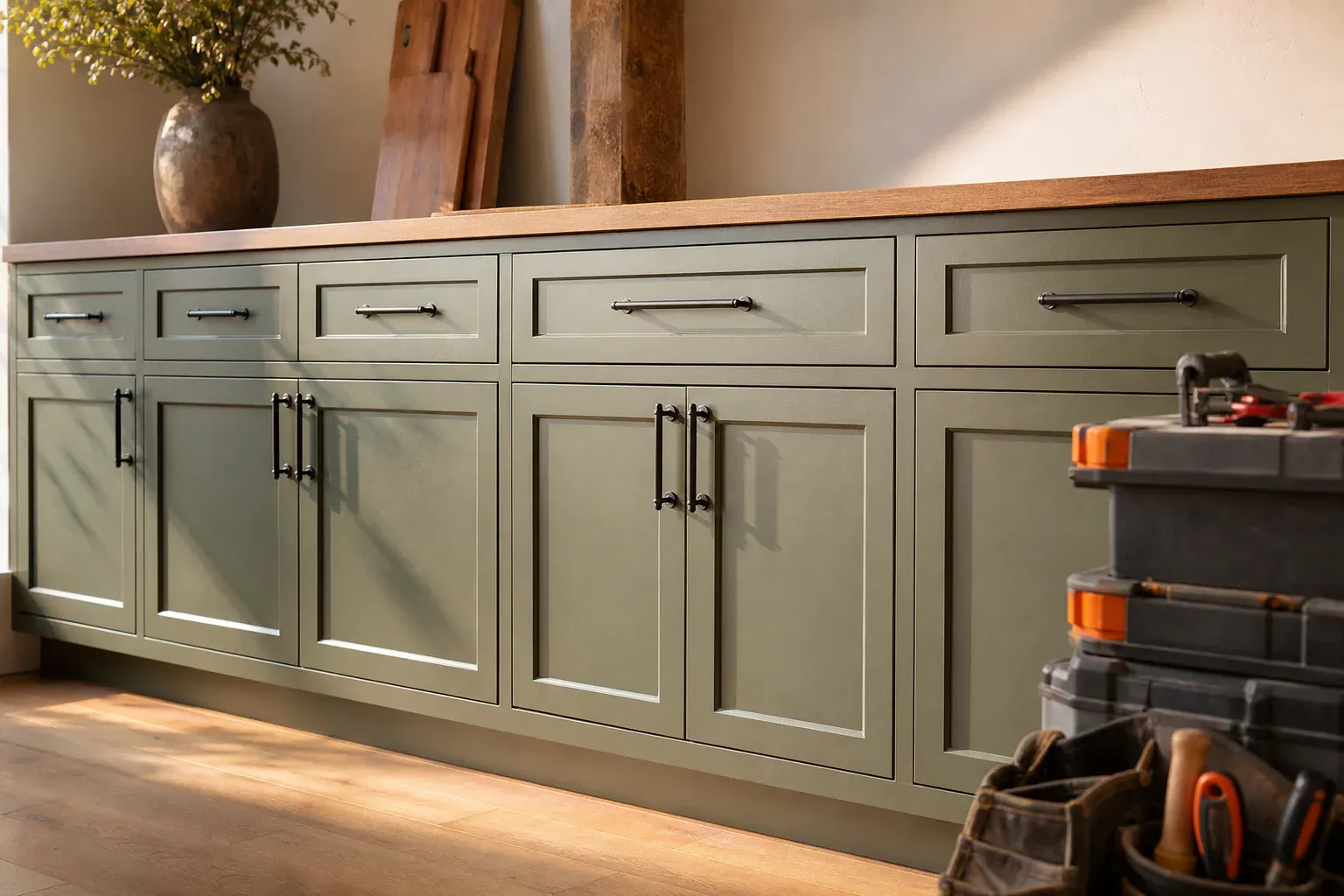
Check plywood thickness. 1/2-inch plywood on box sides handles standard loads; 3/4-inch plywood resists sagging under weight over decades. Particle board and MDF are less rigid and cheaper but swell if moisture penetrates finish.
Joinery matters. Dovetail joinery on drawer boxes resists racking and lasts longer than stapled construction. Mortise-and-tenon joinery on face frames locks rigidly without seasonal wood movement causing joint gaps.
Soft-close hinges and soft-close drawer slides cost more but eliminate the cumulative fatigue of slamming doors and drawers—critical in turnover cycles where closing force increases as hardware wears.
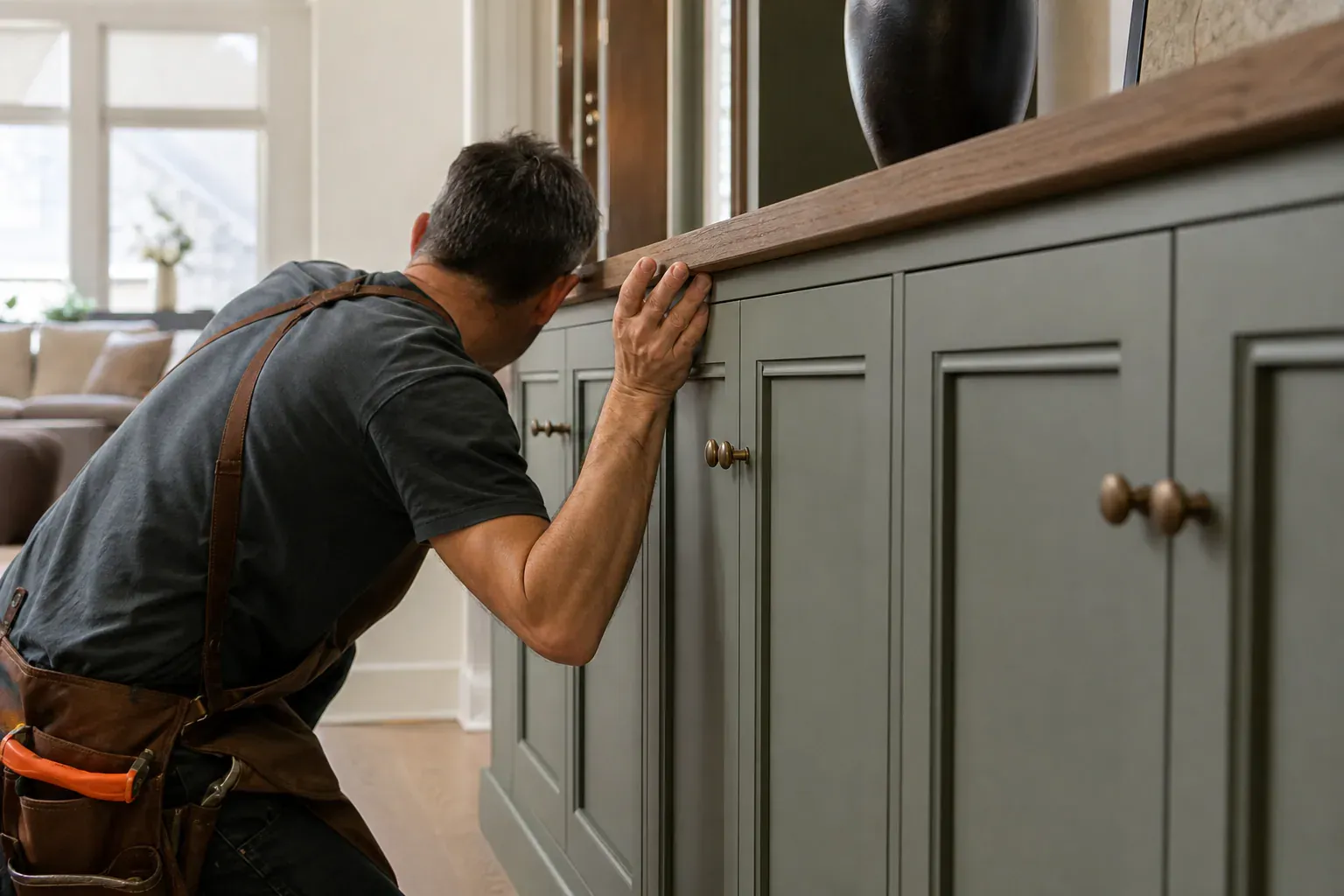
Appliance garages hide countertop small appliances behind tambour or hinged doors, freeing visual space in compact rental kitchens. Pull-out tray dividers organize baking sheets. Utensil trays and spice racks scale to standard drawer widths and add organization without additional footprint. Coordinating cabinetry finishes across kitchen, bathroom, and laundry areas unifies a rental unit visually and signals maintenance-ready professionalism to prospective tenants.
The finish you choose matters as much as the wood itself, especially in Kuna where the dry climate and seasonal temperature swings can stress paint and stain. We spray lacquer, conversion varnish, and water-based polyurethane depending on the durability you need and the look you want. Lacquer dries fast and buffs to a smooth feel, but it yellows over time. Conversion varnish holds color better and handles moisture well—good for kitchens near the Boise River Diversion Dam area where humidity can spike. Water-based finishes don't yellow and clean up with water, but they require more coats and cost more labor.
Color matching the rest of your home matters too. We can match existing cabinetry, pull from paint chips, or work from photos. For Kuna homes with rustic or farmhouse aesthetics, we often spec warm whites, soft grays, and natural wood stains. Modern designs in the newer subdivisions tend toward matte blacks, deep charcoals, and bleached oak. We apply stain first, then topcoat—skipping stain on painted cabinets. Multiple coats of finish protect against water damage and scratches, which is critical in kitchens and bathrooms where humidity and hard use are constant.
Joinery methods determine how long your cabinets last. We use mortise-and-tenon joinery on frame-and-panel doors and drawer sides because the mechanical interlock resists racking and won't fail as joints loosen over years. Dowel joinery is faster and cheaper but relies on glue and friction; it works fine for cabinet boxes where stress is lower. Pocket-hole construction is common in semi-custom and stock cabinets—it's fast to assemble but visible from inside and weaker at angles. On our custom work, we build through-tenons on high-stress joints like where a face frame meets the side panel, and we use biscuits on large panels to align grain and distribute stress.
Plywood thickness specifications affect both durability and cost. Cabinet sides and backs are typically 3/4-inch plywood for custom work; 1/2-inch is standard on stock and semi-custom boxes. Thicker plywood resists warping from humidity swings—important in Kuna's dry climate where cabinets sit in low humidity for months then face summer moisture. Shelves over 24 inches long need 3/4-inch plywood or they'll sag under a load of dishes or small appliances. Bottom panels take more wear, so we always use 3/4-inch ply or solid wood. Cabinet backs are usually 1/4-inch plywood, which is enough for bracing as long as joinery is solid. Drawer boxes can use 1/2-inch on the sides if the joinery is tight, but we often upgrade to 3/4-inch to reduce flex and vibration from the glides.
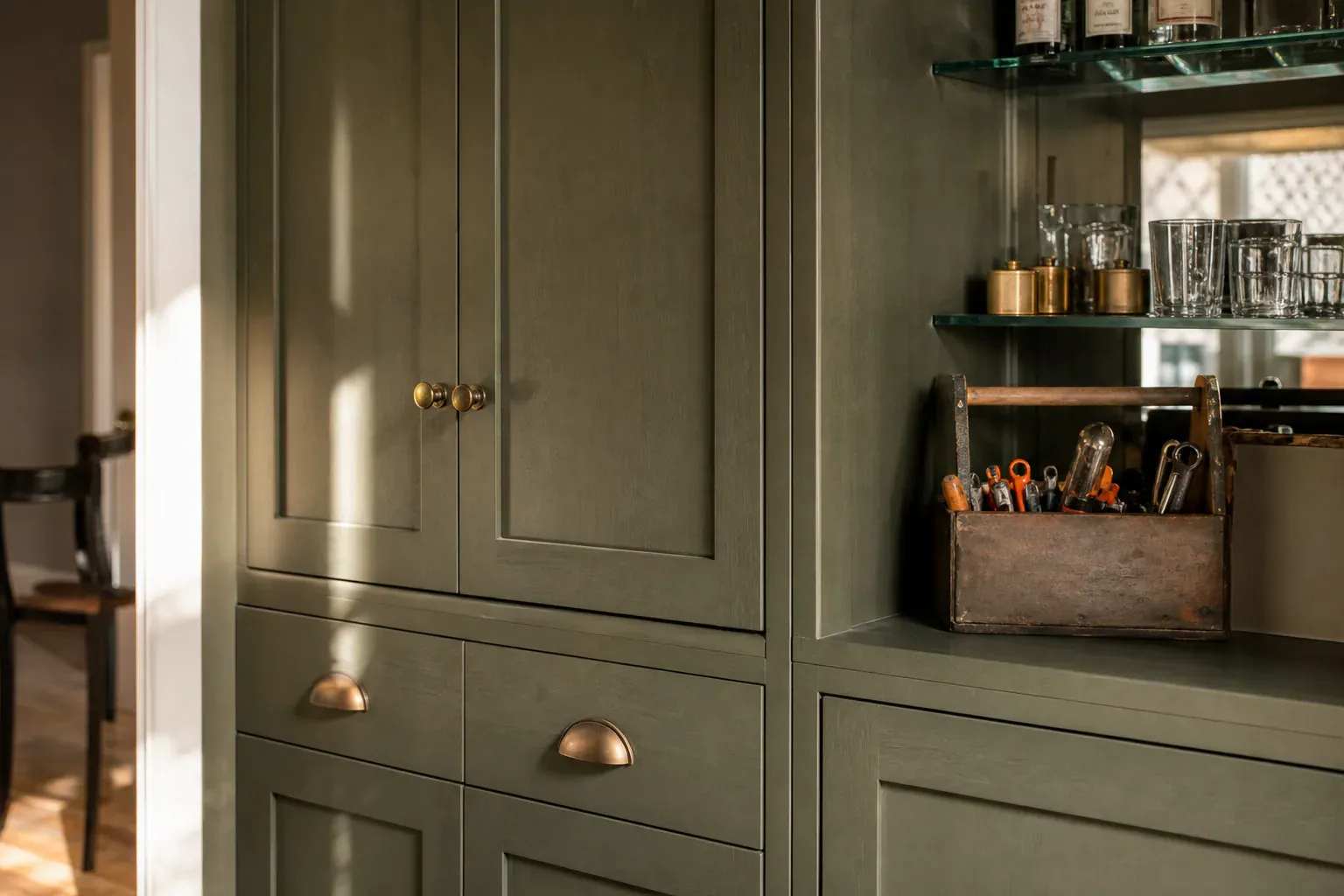
Stock cabinets come off the shelf in standard widths and depths. They fit most rectangular spaces, but they leave gaps, force you into preset colors, and use thinner materials. You're paying for convenience, not quality. Semi-custom cabinets let you pick from a manufacturer's menu—different door styles, a few finish colors, maybe adjustable shelves. But the box size is still locked. If your kitchen has an odd corner or you need a cabinet that wraps an appliance, semi-custom bends to fit it, but barely.
Custom cabinets are built to your space, your needs, and your materials. We measure twice, cut once. If your Kuna home has sloped ceilings, a peninsula that's 27 inches deep instead of 24, or a pantry that needs to hold your stand mixer, freezer, and flour bins all at once—custom cabinets solve that. We choose the joinery method, the wood species, the plywood thickness, and the door style because they match your kitchen or bathroom, not because they're what's in stock somewhere in a warehouse.
The cost difference is real. Stock is cheapest because it's built in bulk. Semi-custom is middle ground—some choices, some compromise. Custom costs more because labor, materials, and design time are yours alone. But Kuna homes vary wildly. Older houses near the Boise River Diversion Dam may have narrower doorways or uneven walls. Newer builds in Star or Eagle often have standard framing but demand modern finishes. Custom cabinets don't fight the house—they work with it. You get durability that matches your investment, not a generic solution that fits 80% of the way.
Kuna's housing stock runs a tight mix: newer subdivisions with open-concept kitchens that demand clean-lined cabinetry, and older farmhouses where stock cabinet widths leave awkward gaps or…
Stock cabinets ship in 3-inch width increments. Your opening is 37 inches wide; you buy 36-inch cabinets and fill the gap with trim.
Material choice is first. Particle board and MDF box construction runs lower cost than furniture-grade plywood or solid wood.
Shaker doors suit modern open-plan kitchens. Raised panel doors work in traditional homes. Painted finishes begin with bonding primer to prevent chipping; low-VOC emission finishes improve…
Check plywood thickness. 1/2-inch plywood on box sides handles standard loads; 3/4-inch plywood resists sagging under weight over decades.
Appliance garages hide countertop small appliances behind tambour or hinged doors, freeing visual space in compact rental kitchens. Pull-out tray dividers organize baking sheets.
Why homeowners call us
Every custom cabinets job is scoped and priced in writing, so the number you approve is the number you pay. If something behind the wall changes the work, we stop and price it first.
You speak to the people doing the work, not a call centre, and cover certificates go to your building manager or general contractor on request.
Containment, floor protection and same-day debris removal on every interior job — the space stays usable while the work is going on.
Crews work Kuna and the surrounding cities every week, so a walkthrough is usually available within the same week you call.
FAQ
Material selection is first: particle board or MDF costs less than furniture-grade plywood or solid wood. Door style compounds cost—raised panel doors run higher than shaker. Premium wood species (maple, oak, cherry) affect stain-grade pricing. Soft-close hinges and soft-close drawer slides add per-box cost. Organizers like spice racks and tray dividers increase material and labor proportionally.
Stock cabinets arrive in 3-inch width increments, requiring trim filler on-site; semi-custom uses modified stock boxes with custom doors; custom cabinets build to your exact opening dimensions. Stock ships in weeks; semi-custom runs 4–6 weeks; full custom takes 8–12 weeks. Durability favors furniture-grade plywood and solid wood over particle board, which swells under moisture exposure.
Verify plywood thickness: 1/2-inch minimum on box sides, 3/4-inch preferred for long-term rigidity. Confirm joinery—dovetail on drawer boxes outlasts stapled construction. Check that soft-close hinges and soft-close drawer slides carry ratings for repeated cycling without sag. Ask about bonding primer under painted finishes and whether UV cure or air-dry lacquer is used.
Call (208) 555-0116 and we will come out and price the work in writing.