Kitchen Cabinet Repair Services in Boise
Cabinet doors and drawers account for the majority of repair calls. Doors sag because hinges wear or hinge holes strip out.
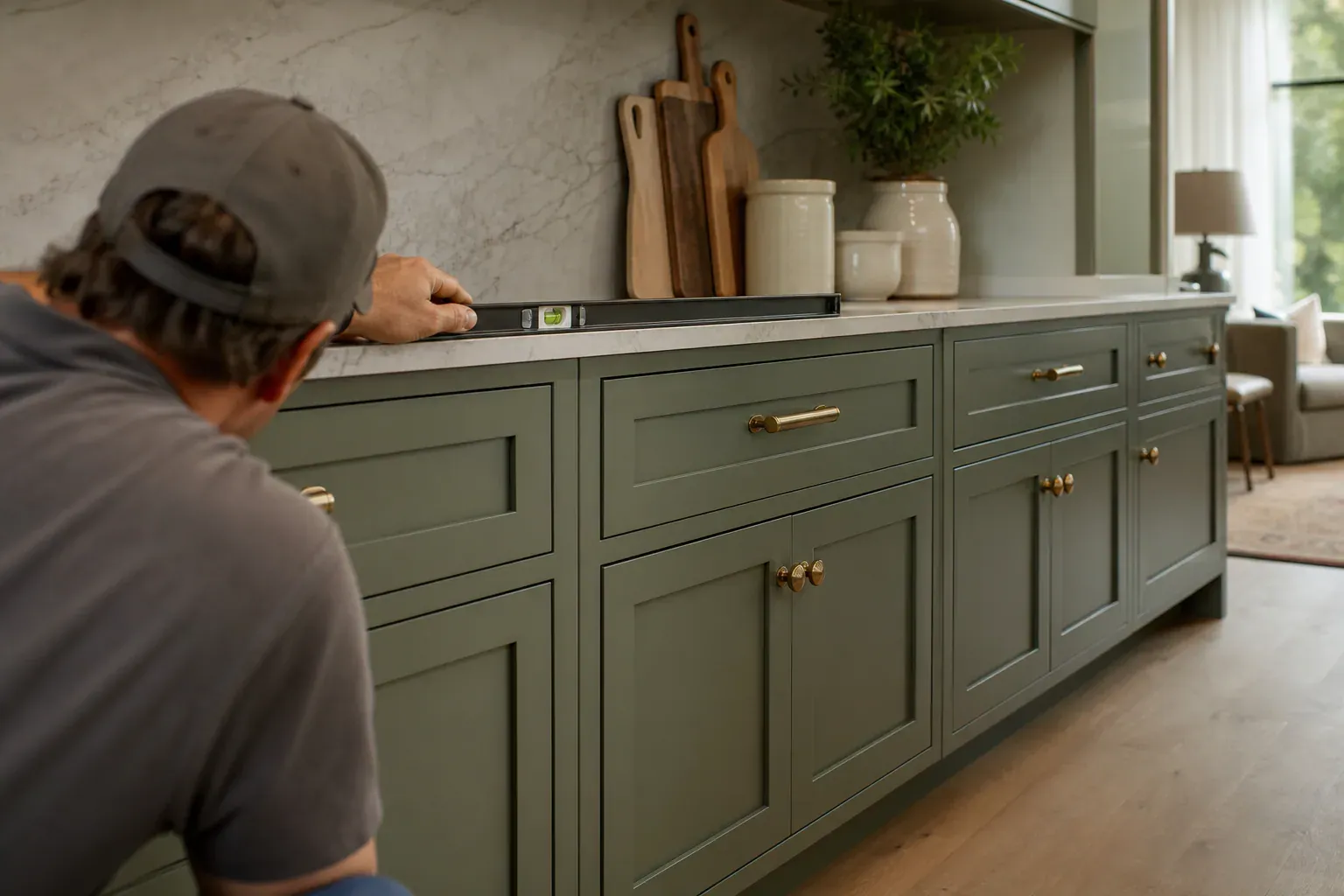
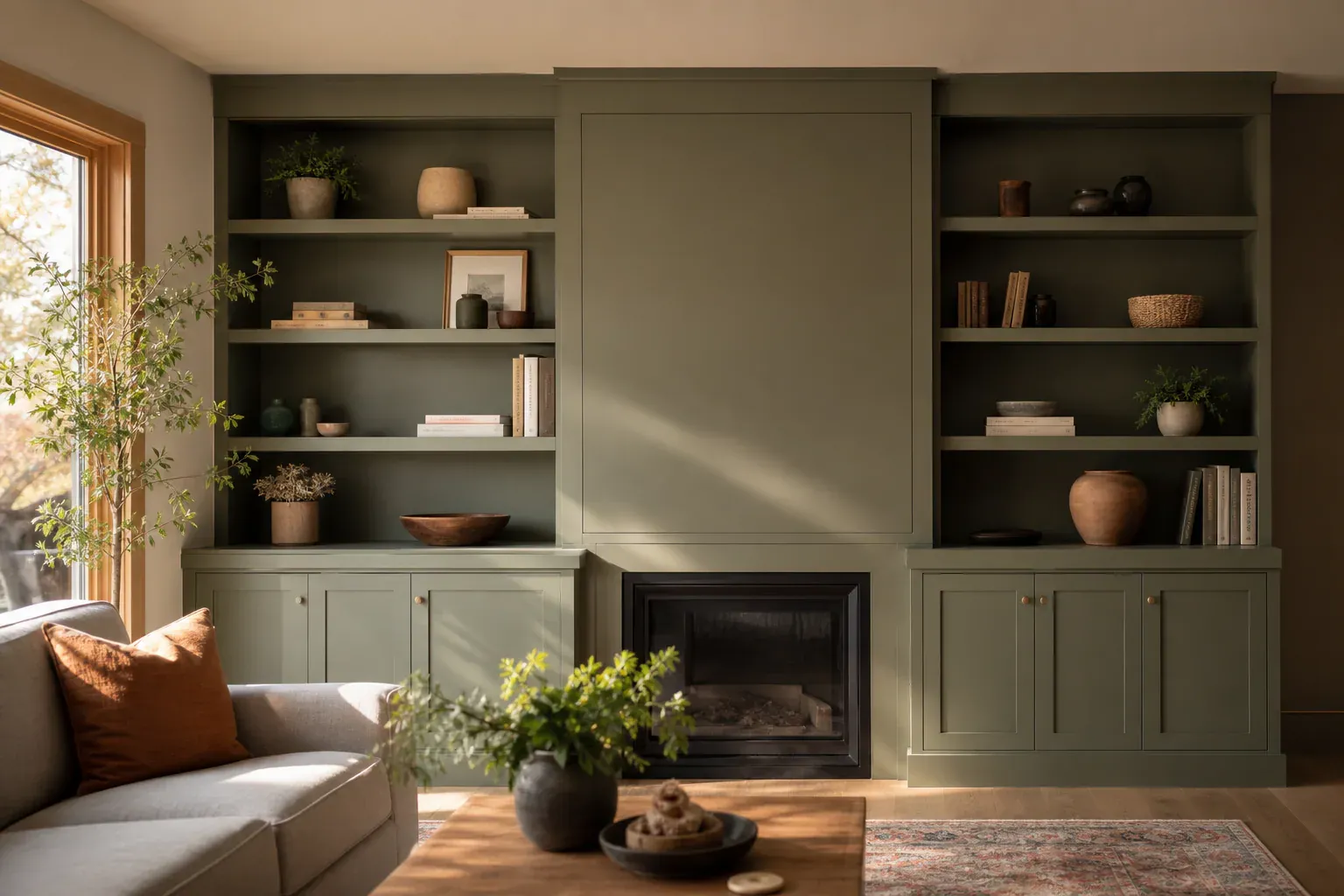
Boise Custom Cabinets provides kitchen cabinet repair, cabinet refacing, and hardware upgrades across Boise, ID homes and businesses. When cabinet doors sag, drawer slides jam, or water swells the frames, repair often costs a fraction of replacement—and keeps your existing layout and storage intact. We handle everything from loose hinges and misaligned drawers to water-damaged boxes and structural reinforcement.
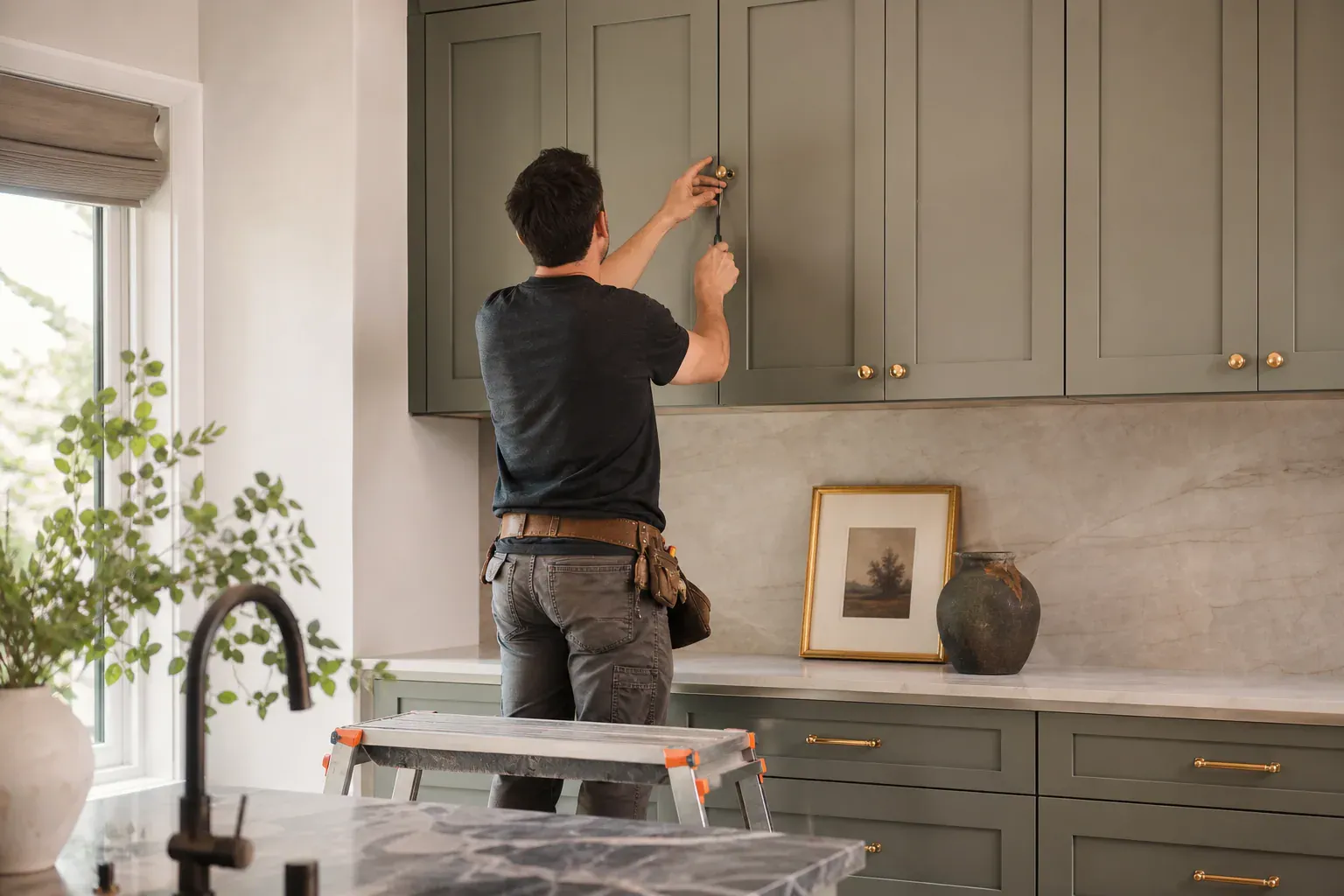
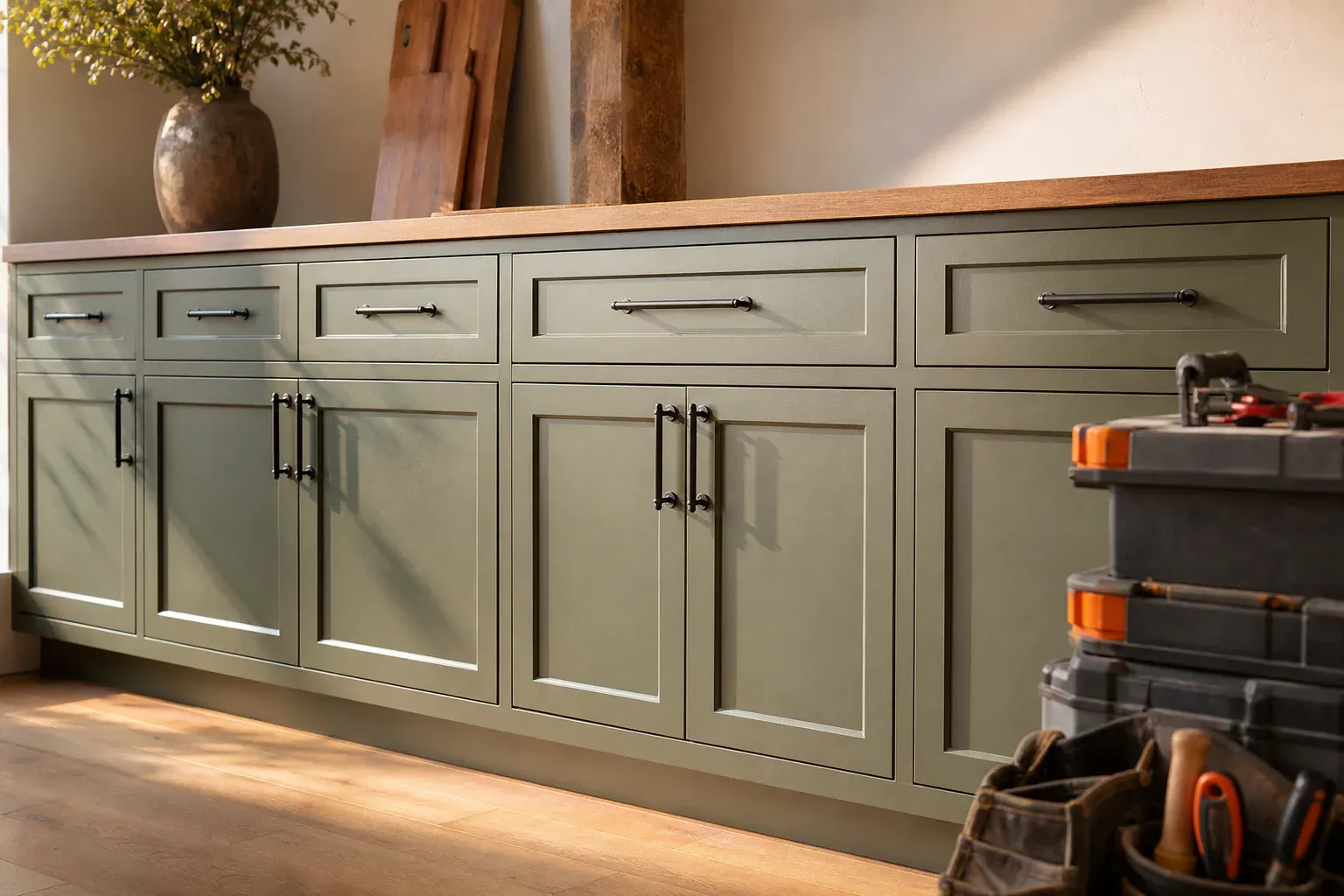
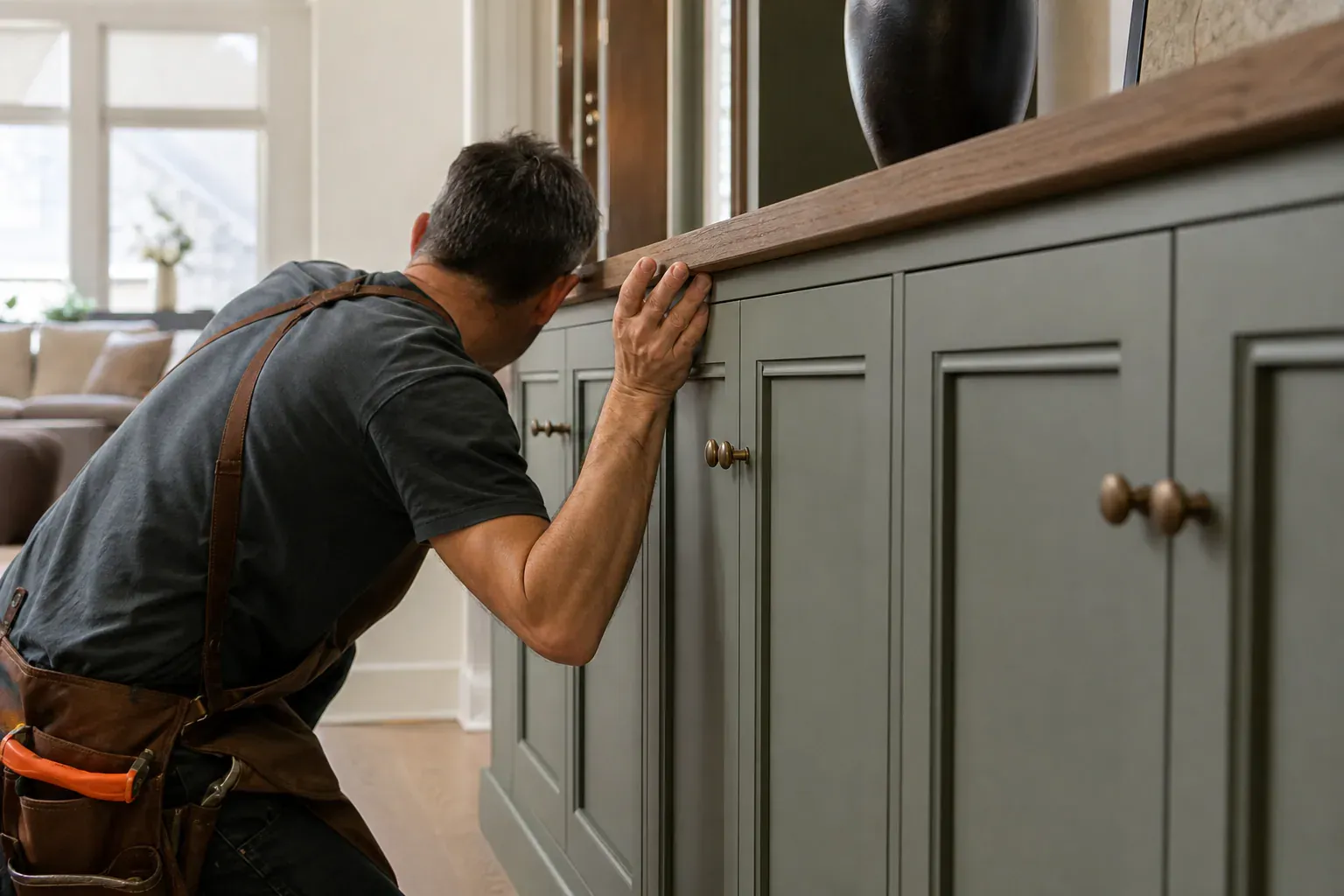
Cabinet doors and drawers account for the majority of repair calls. Doors sag because hinges wear or hinge holes strip out. Drawers jam because slides bend, the cabinet box has twisted, or the drawer itself has warped.
A sagging cabinet door gets a shim under the bottom hinge or a new hinge altogether. We check the 1/8-inch reveal gap between the door and the frame to make sure it sits flush. If the hinge holes are stripped, we drill them out slightly larger and install wooden dowels glued in place, then re-drill the original hole diameter for a tight hinge screw seat.
Sagging shelves are reinforced with a center support underneath or replaced with thicker stock—typically 3/4-inch plywood instead of 5/8-inch. We use pocket hole joinery or a continuous support rail to distribute weight evenly and prevent the bow from returning. Cabinet shelf repair and reinforcement stops the sag permanently.
Drawer slides often fail because the cabinet box itself is out of square or because heavy items overload the slide. We check the box with a framing square, shim it plumb if needed, then replace worn slides with new full-extension drawer slides. Upgrading to soft-close hinges and soft-close drawer slides adds expense but transforms daily use and protects fine china from slamming.
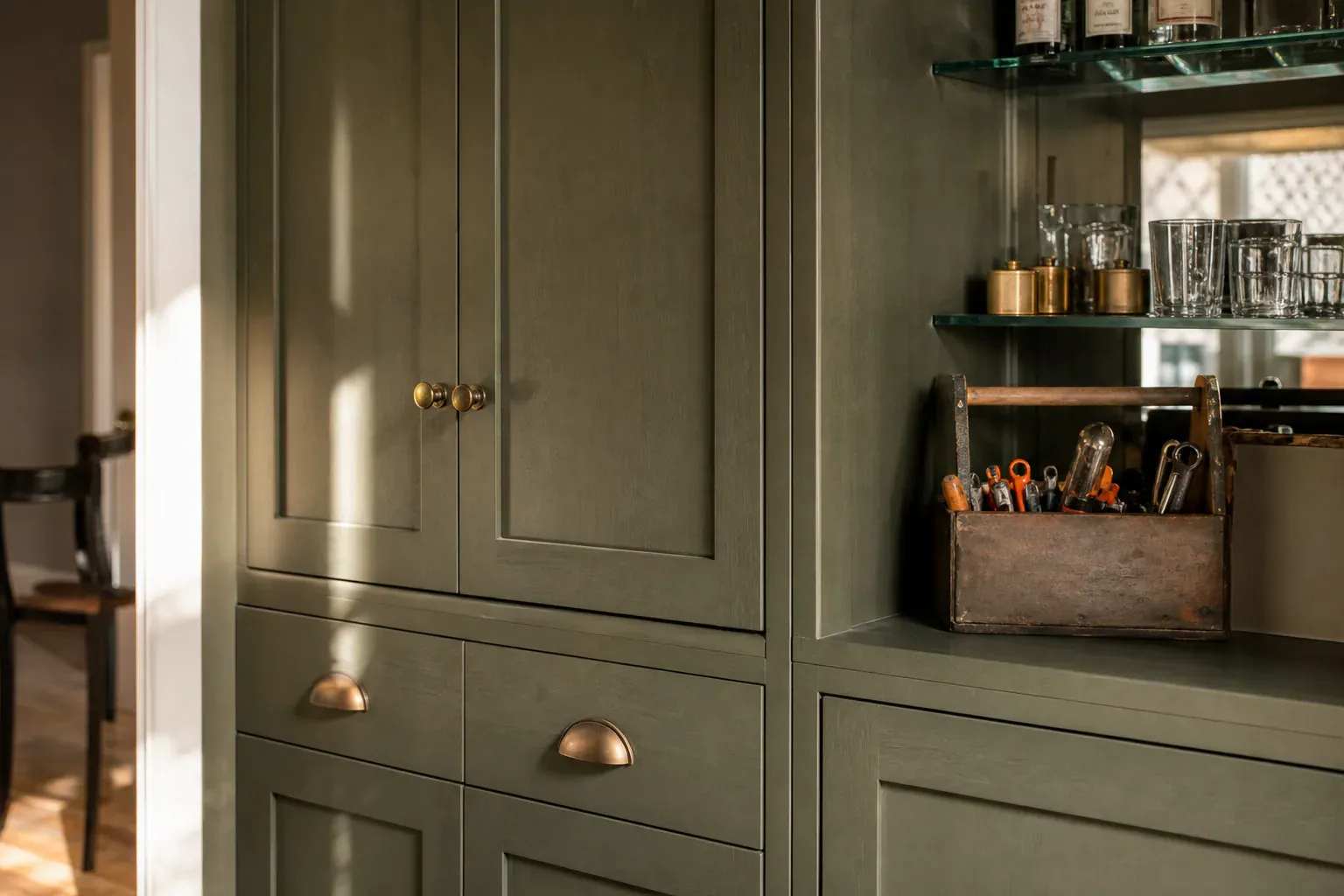
Cabinet hardware wears out and styles change. Knobs and pulls loosen, hinges fatigue, and what felt modern ten years ago may feel dated now. Hardware replacement is one of the quickest cabinet repairs and one of the most visible.
Standard cabinet knobs and pulls sit at 3-inch or 96mm bore centers—the distance between the screw holes. Before we drill new holes, we verify your existing spacing and match it, or we plug old holes and drill new ones if you want a different pull style. Brushed nickel hardware and matte black finishes are current popular choices in Boise homes. Misaligned pulls look amateurish and create alignment problems if doors swing against adjacent cabinetry.
Soft-close hinge installation replaces standard hinges and nearly eliminates slamming. They add $20 to $40 per hinge but reduce impact wear on cabinet boxes. They're especially valuable in homes with children or in kitchens where cabinet noise echoes constantly.
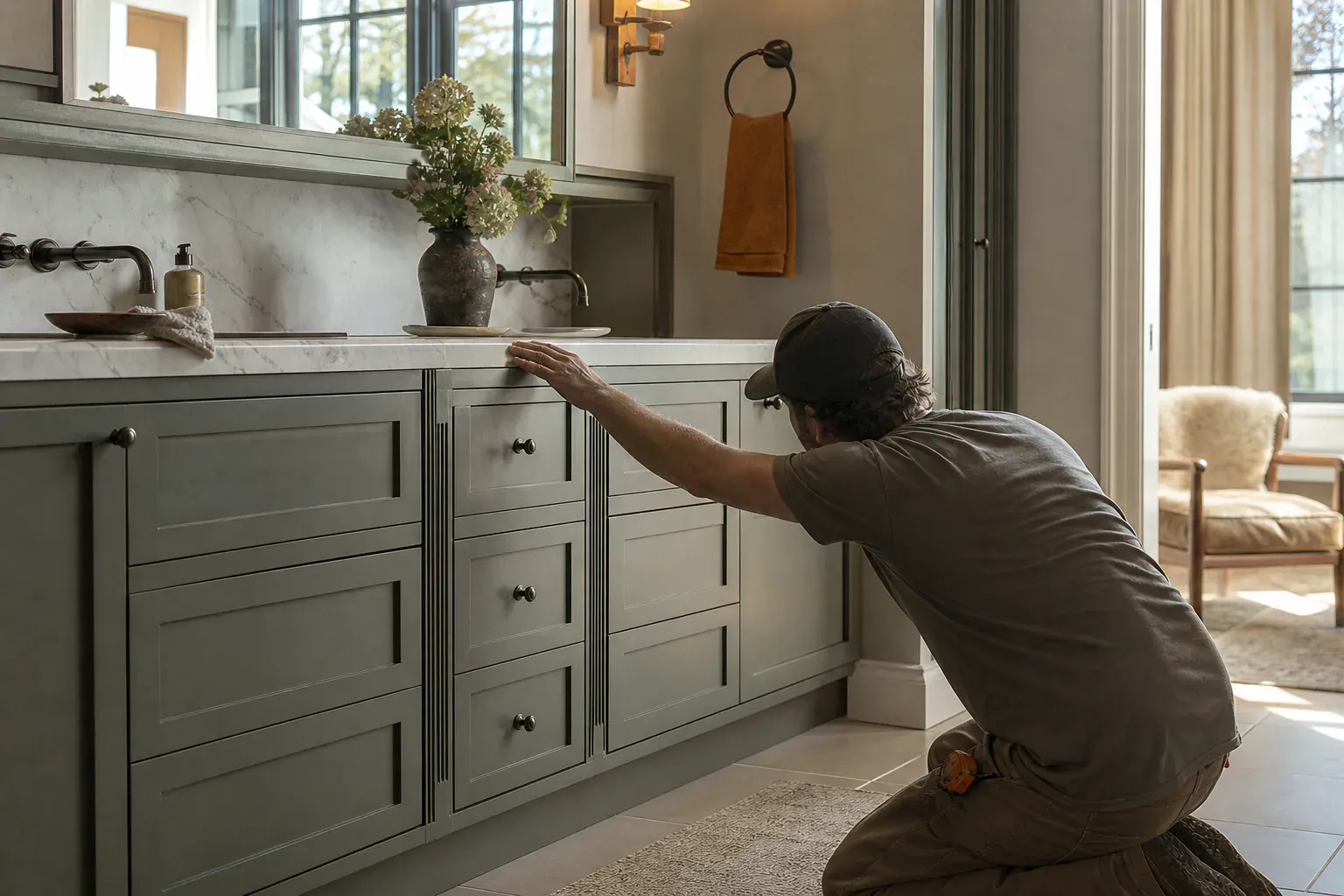
Water intrusion is the silent killer of cabinet longevity. A slow leak from under the sink, a splash zone from the dishwasher, or humidity in a poorly vented bathroom will swell particleboard and warp solid wood within months. Once water damage starts, it accelerates—wet substrate attracts mold, wood rots from the inside out, and structural failure follows.
Swollen particleboard toe-kicks and warped face frames are the first visible signs. The cabinet boxes may still be dry inside, or moisture may have penetrated the interior shelves and dividers. We assess the damage by probing suspect areas and looking for soft wood or visible mold. Severely rotted stiles, rails, or shelves get replaced rather than patched.
Water-damaged cabinet repair starts with drying the substrate fully—we remove doors, open shelves, and ensure air circulation for several days before refinishing. We add countertop bracing in areas where water has weakened corner blocks or joints. We may replace the affected cabinet box entirely if the damage is structural, or we may reinforce the frame with additional support and seal all joints to prevent re-wetting.
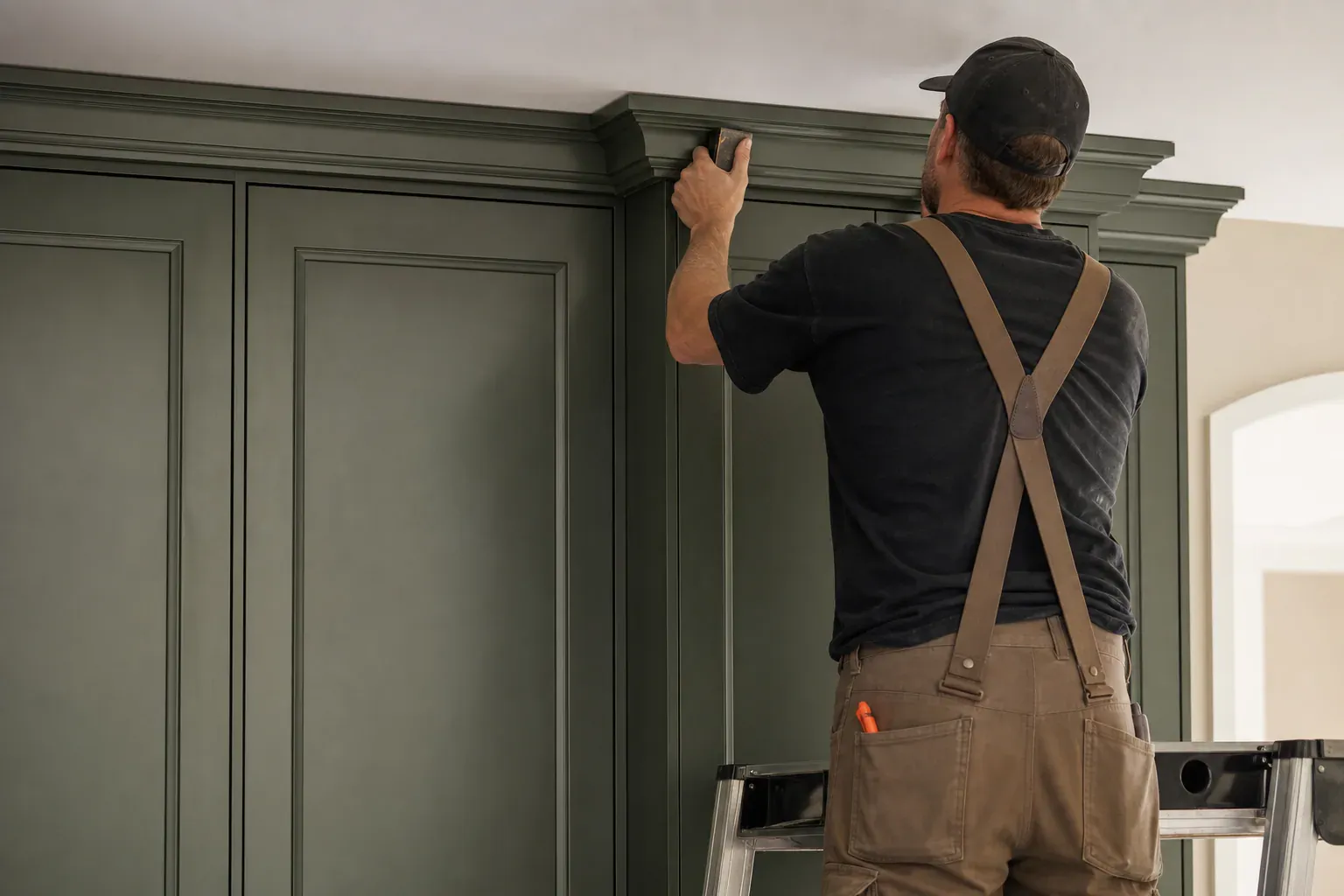
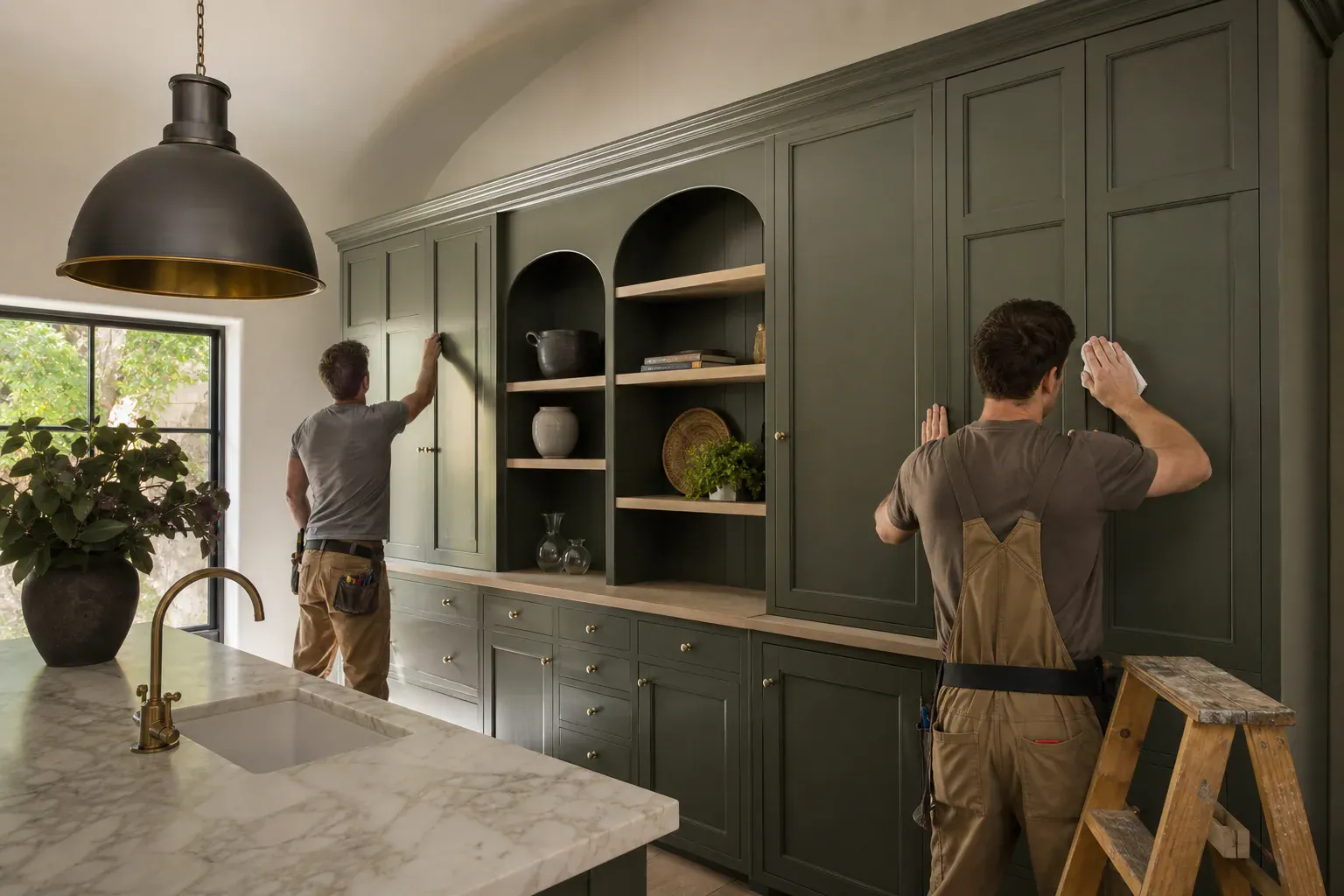
Cabinet refinishing transforms tired cabinetry without removing it from the wall. The choice between stain and paint depends on the substrate and your aesthetic goal. Cabinet paint works on veneer and laminate cabinet fronts where wood grain variation would be undesirable. Wood stain shows off grain and character on solid wood doors and frames but requires a wood-grade substrate and more surface prep.
Cabinet painting and refinishing start with sanding and filling. High-gloss finishes highlight surface imperfections, so they demand extra prep sanding—usually 120-grit to 180-grit progression—to create a smooth base. Matte and satin finishes are more forgiving but still require clean, dust-free surfaces. Cabinet paint finish also depends on the topcoat: lacquer, polyurethane, or UV-curing products each have different cure times, durability, and sheen profiles.
Cabinet staining vs painting is a decision that locks in your aesthetic direction for the next decade. We color-match against existing cabinetry or adjacent rooms before committing to a full run, so you see the finish in natural light and under your kitchen lights first.
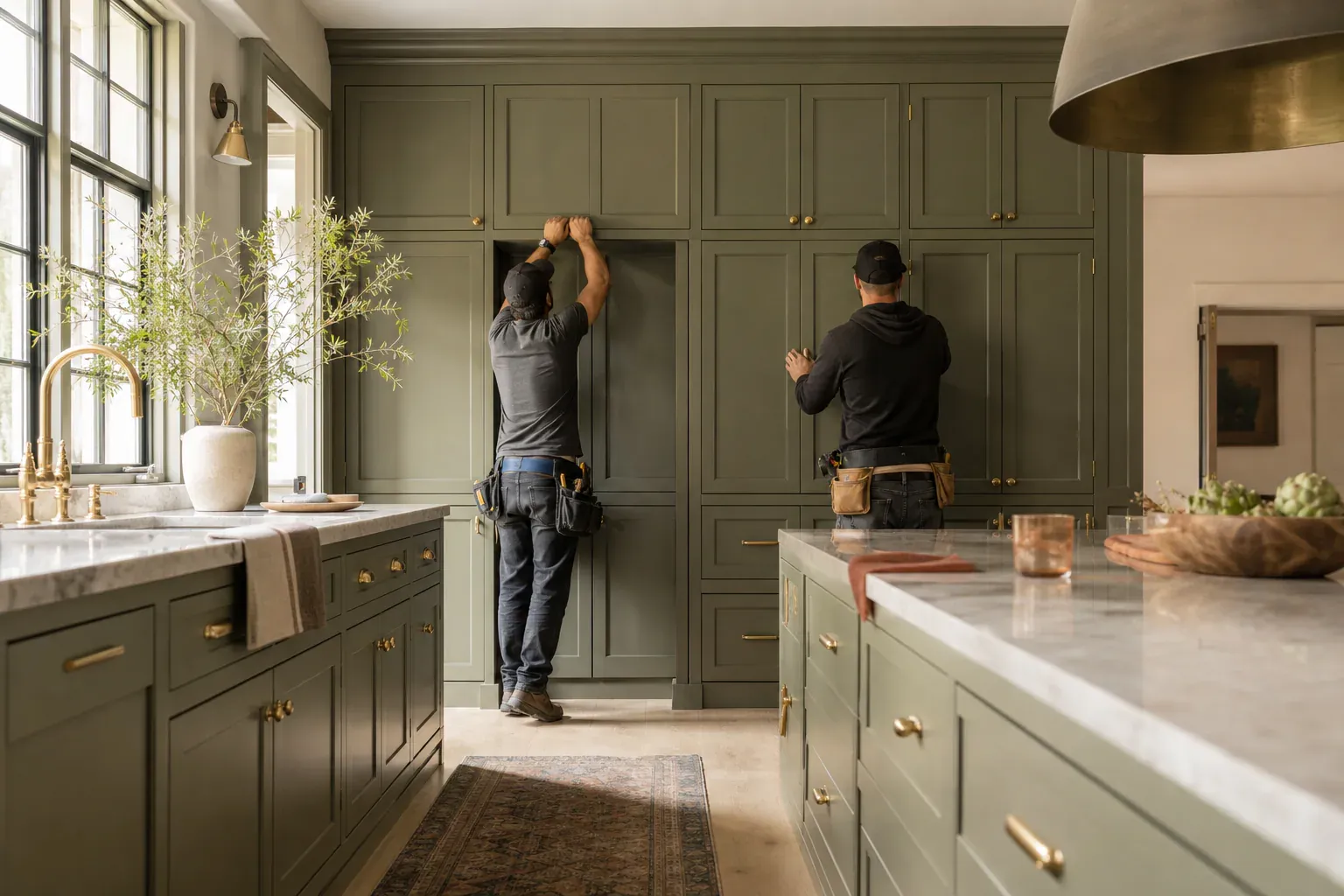
Your cabinet door style sets the tone for the whole kitchen. Raised panel doors suit traditional Boise homes with crown molding and darker stains. Flat panel doors fit modern remodels and pair well with matte paint finishes. Glass cabinet doors are popular in upper display cabinets, especially when you want to showcase dinnerware.
Door replacement is faster than full refinishing if you want a dramatic style shift. Raised panel to flat panel, or adding glass inserts to upper doors, changes the visual weight and formality of the space. New doors arrive prefinished and hardware-ready, so installation is a matter of removing old hinges and hanging the new ones.
Cabinet refacing removes cabinet doors and replaces them with new ones, then covers the exposed frame. Refacing allows a bigger style shift but costs more and takes longer than refinishing. Refinishing sands, preps, and paints or stains existing cabinet doors and frames in place and is faster and less disruptive.
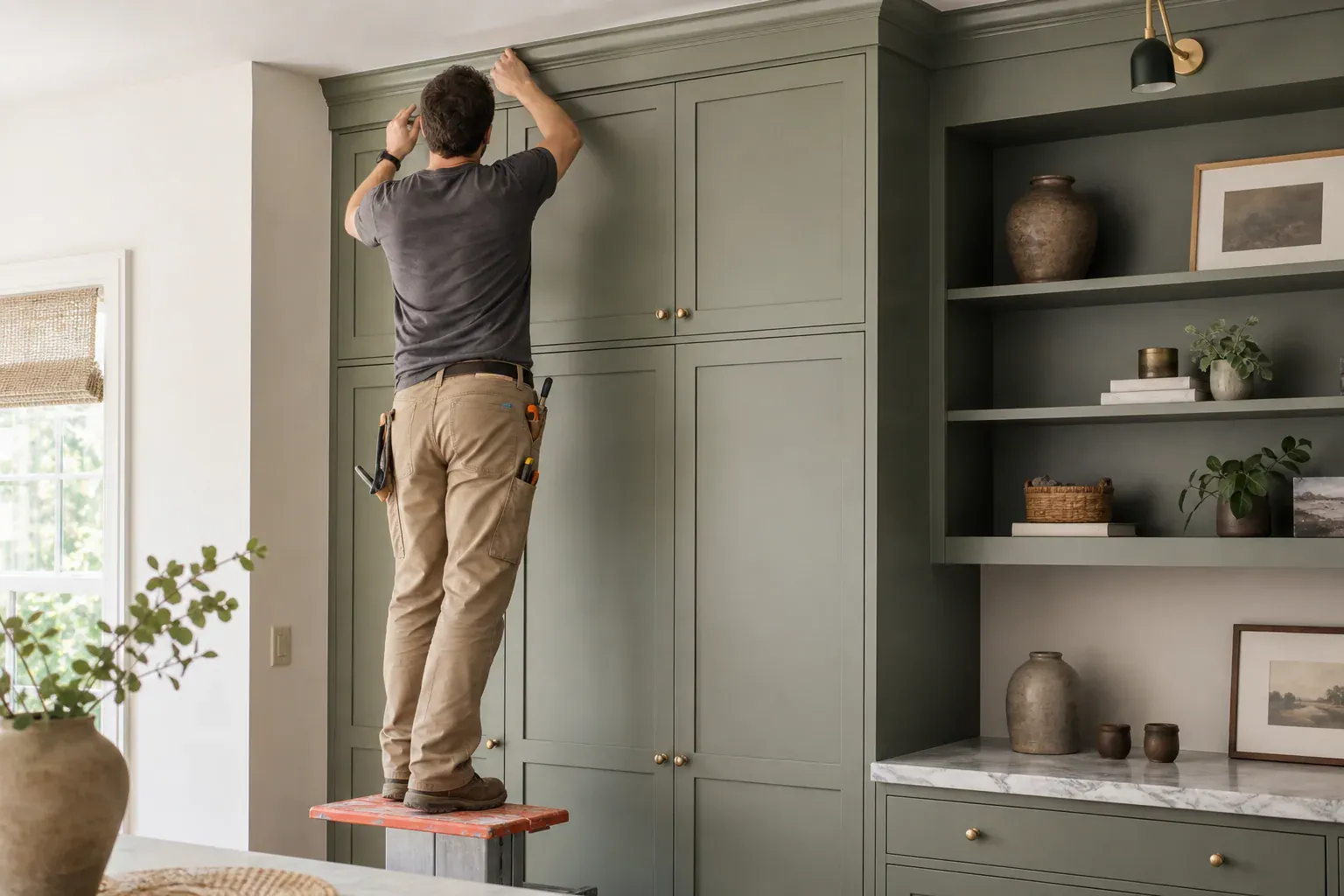
Proper installation is the foundation of long cabinet life. Cabinets must be level and plumb before they're fastened to studs, because a twisted cabinet box will cause doors to bind, shelves to sag, and drawers to jam.
Level setting and square and plumb mounting start with shimming the base. We use a long level to verify that the cabinet top is level front-to-back and side-to-side. We check corners with a framing square to confirm 90-degree angles. Only after cabinets are true do we fasten them to wall studs at 16-inch on-center spacing with structural fasteners. Cabinet box anchoring prevents movement over time.
Cabinet layout reconfiguration during kitchen remodeling with cabinets is where we add value beyond simple installation. If you're adding an appliance, relocating the sink, or increasing storage, we design the new cabinet arrangement to accommodate the change while maximizing efficiency. That might mean moving a corner cabinet, adding a pantry run, or converting lower cabinets to open shelving.
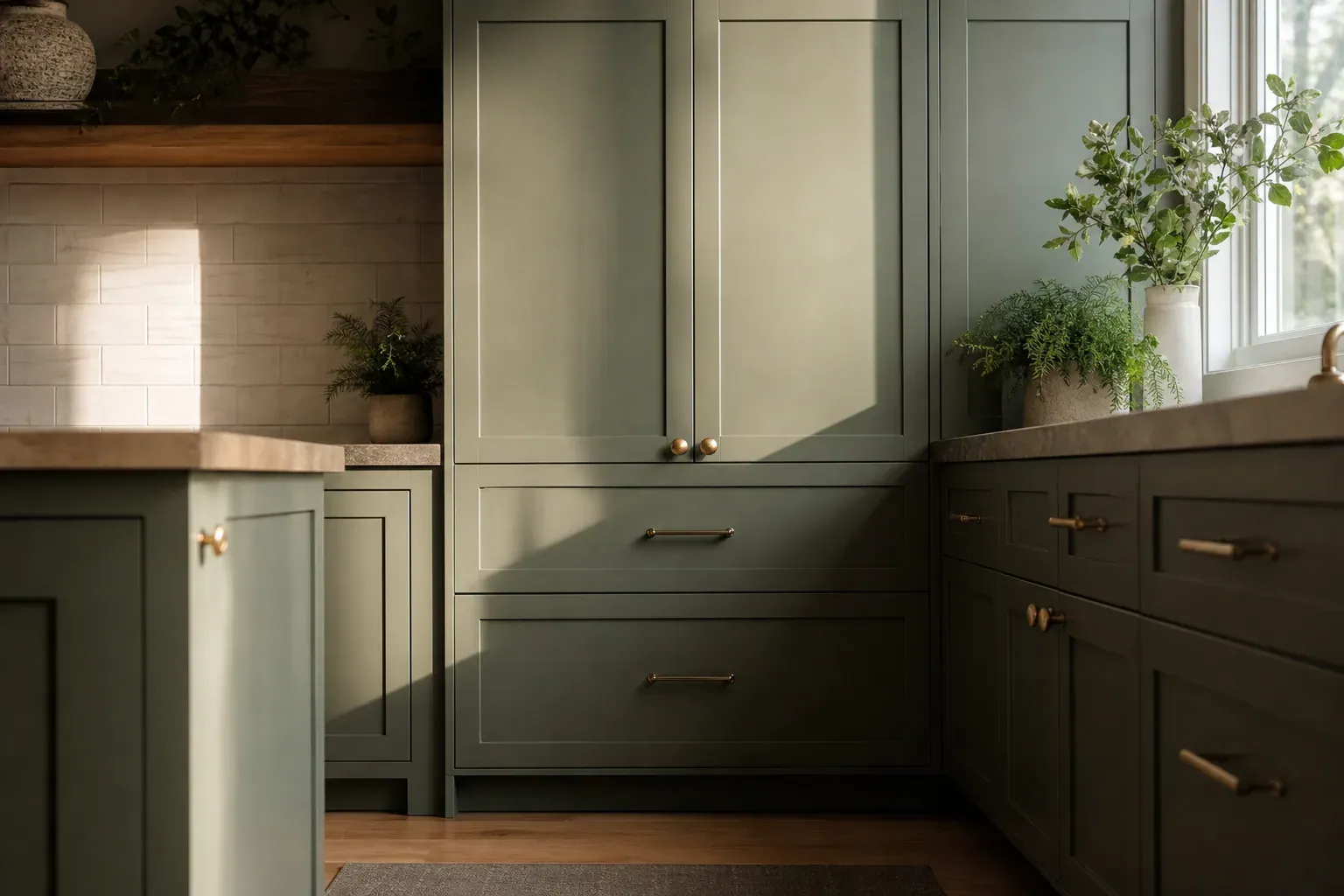
Scratches and dings are sanded and refinished or touched up with stain or paint. Surface-level marks come out with targeted sanding at 180-grit or higher and a matching topcoat. Deeper gouges may require wood filler or a replacement panel section if the damage is too extensive.
Cabinet touch-up work is cost-effective compared to full refinishing. If only one or two doors show visible wear, we can repair and refinish those pieces while leaving the rest untouched. Fire damage cabinet restoration follows the same assessment: if the structural core is sound, we sand, assess burn depth, replace severely charred parts, and refinish.
Cabinet refurbishment is what we do when a cabinet box is solid but the doors, drawers, and finish need a full reset. We pull everything apart, sand the frame, repair any loose joinery, refinish the interior and exterior, install new hardware, and rebuild the doors and drawers from the ground up. It costs less than replacement and keeps the cabinet's footprint in your kitchen or bathroom exactly where it is.
Bathroom vanity installation is its own job. A bathroom vanity takes more water abuse than kitchen cabinets do—splashing, humidity, condensation from showers. We measure your rough-in plumbing, build or deliver a vanity to spec, anchor it solid to the wall studs (not just the drywall), run supply lines and the drain, and seal every edge where water can creep in. If your current vanity is rotting out, we remove the old one, patch the wall, and install the replacement the right way.
Cabinet removal and restoration happens when you want to keep the cabinets but take them out temporarily—maybe you're remodeling the wall behind them, or you need access to plumbing. We unbolt them from the wall, disconnect any electrical or plumbing, label everything so it goes back in the right place, and store them safely. When the wall work is done, we reinstall them, reconnect everything, and make sure all doors and drawers operate smoothly.
Cabinet color consultation is something homeowners ask us about before they commit to paint or stain. Different colors show dust and watermarks differently. White and light grays look clean but need frequent wiping. Dark colors hide dust but can make a small kitchen feel cramped. We walk you through samples in your actual light, talk about your daily cleaning tolerance, and match your new cabinet color to your countertop and backsplash so everything feels planned instead of patched together.
Built-in cabinet repairs are trickier than standalone ones because they're integrated into the wall framing. A built-in might have shelves that sag because the support cleat pulled away from a stud, or doors that bind because the whole unit shifted when a floor joist sagged. We identify where the frame has moved, re-anchor it properly, and adjust doors and shelves so they work again without taking the whole thing out.
When you call for a cabinet painting cost estimate, tell us the cabinet type, the current finish, how many linear feet, and the condition. Surface prep—sanding, priming, and number of coats—drives the price more than the square footage does. If the finish is already peeling or if the wood underneath is stained, expect prep to take longer and cost more. We give you a real number after we see the job, not a guess over the phone.
Cabinet doors and drawers account for the majority of repair calls. Doors sag because hinges wear or hinge holes strip out.
Cabinet doors and drawers account for the majority of repair calls. Doors sag because hinges wear or hinge holes strip out.
Cabinet hardware wears out and styles change. Knobs and pulls loosen, hinges fatigue, and what felt modern ten years ago may feel dated now.
Water intrusion is the silent killer of cabinet longevity. A slow leak from under the sink, a splash zone from the dishwasher, or humidity in a poorly vented bathroom will swell…
Cabinet refinishing transforms tired cabinetry without removing it from the wall. The choice between stain and paint depends on the substrate and your aesthetic goal.
Your cabinet door style sets the tone for the whole kitchen. Raised panel doors suit traditional Boise homes with crown molding and darker stains.
Why homeowners call us
Every custom cabinets job is scoped and priced in writing, so the number you approve is the number you pay. If something behind the wall changes the work, we stop and price it first.
You speak to the people doing the work, not a call centre, and cover certificates go to your building manager or general contractor on request.
Containment, floor protection and same-day debris removal on every interior job — the space stays usable while the work is going on.
Crews work Boise and the surrounding cities every week, so a walkthrough is usually available within the same week you call.
FAQ
Yes, in most cases. If the cabinet boxes and frames are structurally sound, repairs to doors, drawers, hinges, hardware, and shelves extend the cabinet life significantly. Repair costs a fraction of replacement and preserves your existing kitchen layout and storage configuration.
Repair costs depend on damage scope and finish choices. A single soft-close hinge installation costs $50–$150. Door and drawer repair runs $200–$600 per unit. Shelf reinforcement and water-damaged cabinet repair typically range $500–$2,000. Refinishing a full kitchen run costs $2,000–$8,000 depending on square footage and paint versus stain.
Yes to all three. Scratches are sanded and refinished or touched up with stain or paint. Water-damaged cabinets are dried, swollen parts replaced, and joints sealed. Sagging shelves are reinforced with center supports or replaced with thicker stock. Sagging doors are shimmed, hinges replaced, or hinge holes re-drilled and doweled if stripped.
Yes. Soft-close hinges replace standard hinges and eliminate slamming. Cabinet hardware installation includes knobs, pulls, hinges, and drawer slides. We verify existing bore spacing—typically 3-inch or 96mm centers—and match it or drill new holes if you want a different style.
Refinishing sands, preps, and paints or stains existing cabinet doors and frames in place. Refacing removes cabinet doors and replaces them with new ones, then covers the exposed frame. Refinishing is faster and less disruptive. Refacing allows a bigger style shift but costs more.
Simple repairs—hinge replacement, hardware upgrade, single shelf fix—take one to three days. Full kitchen refinishing takes one to two weeks depending on square footage, finish complexity, and drying time. We confirm the timeline during your site visit based on your specific scope.
Call (208) 555-0116 for a walkthrough, usually within the same week.