Custom Oak Cabinets Built For Boise Homes
Stock cabinets arrive pre-finished with fixed door styles and dimensions. Custom work starts from your layout, wall conditions, and design direction.
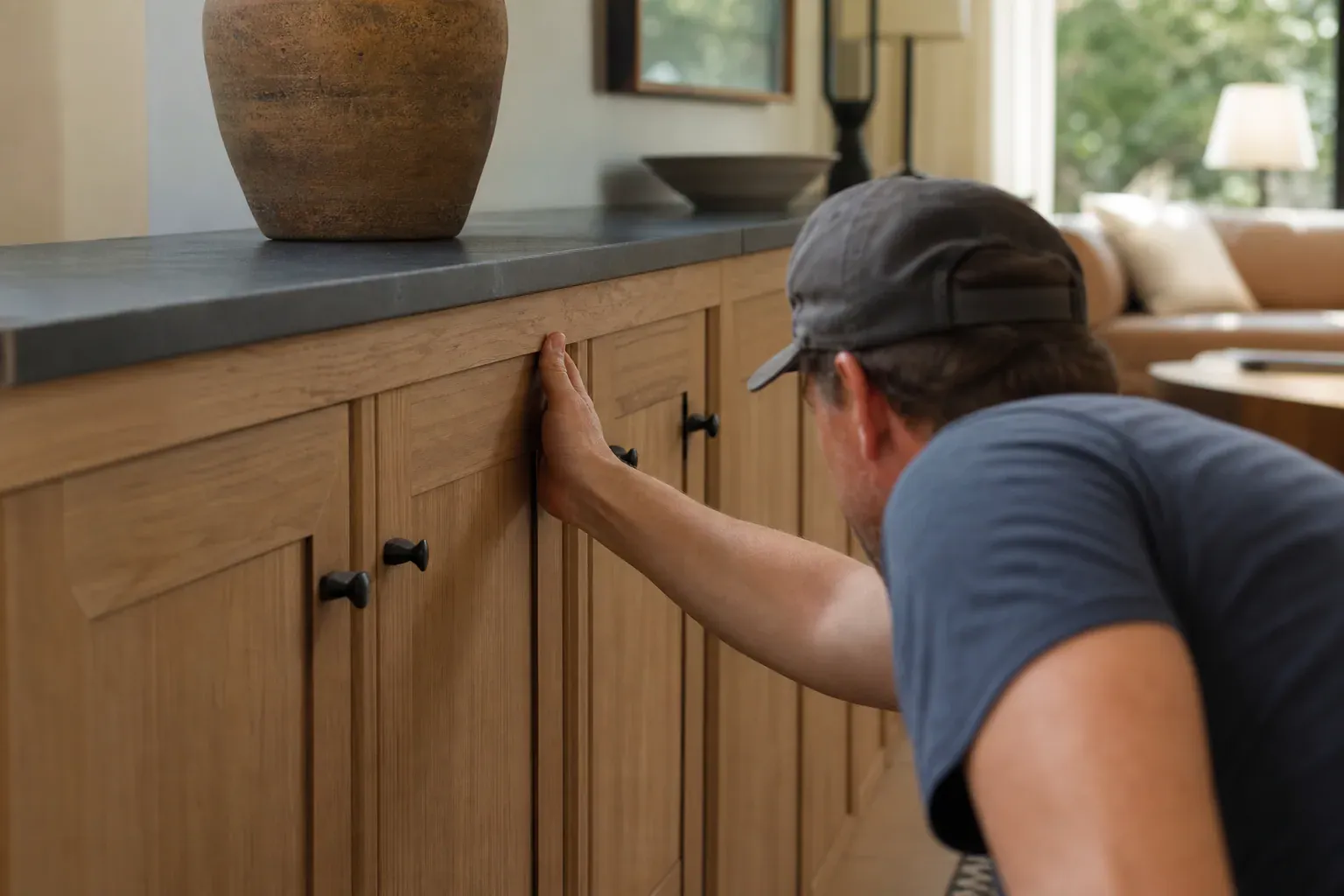
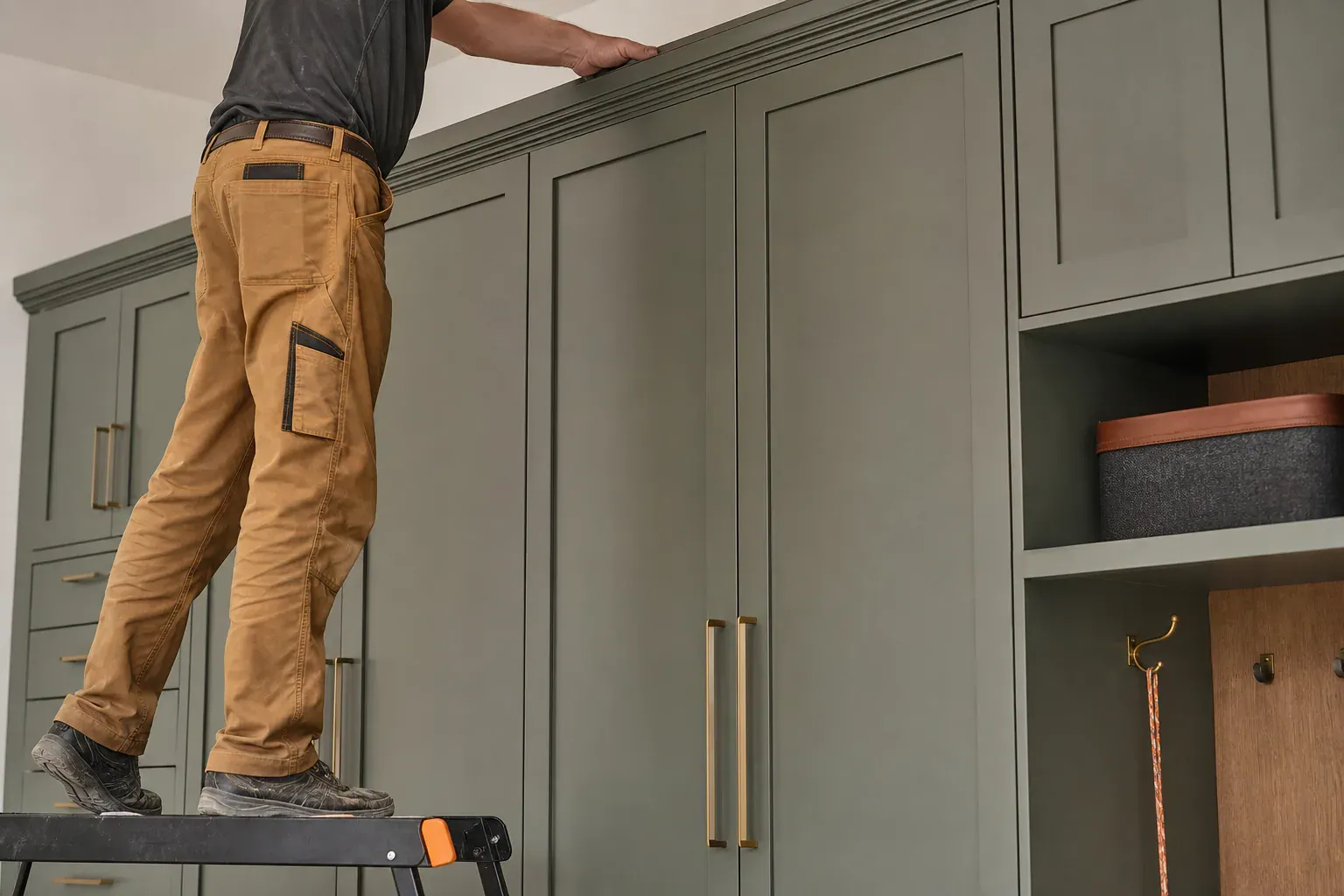
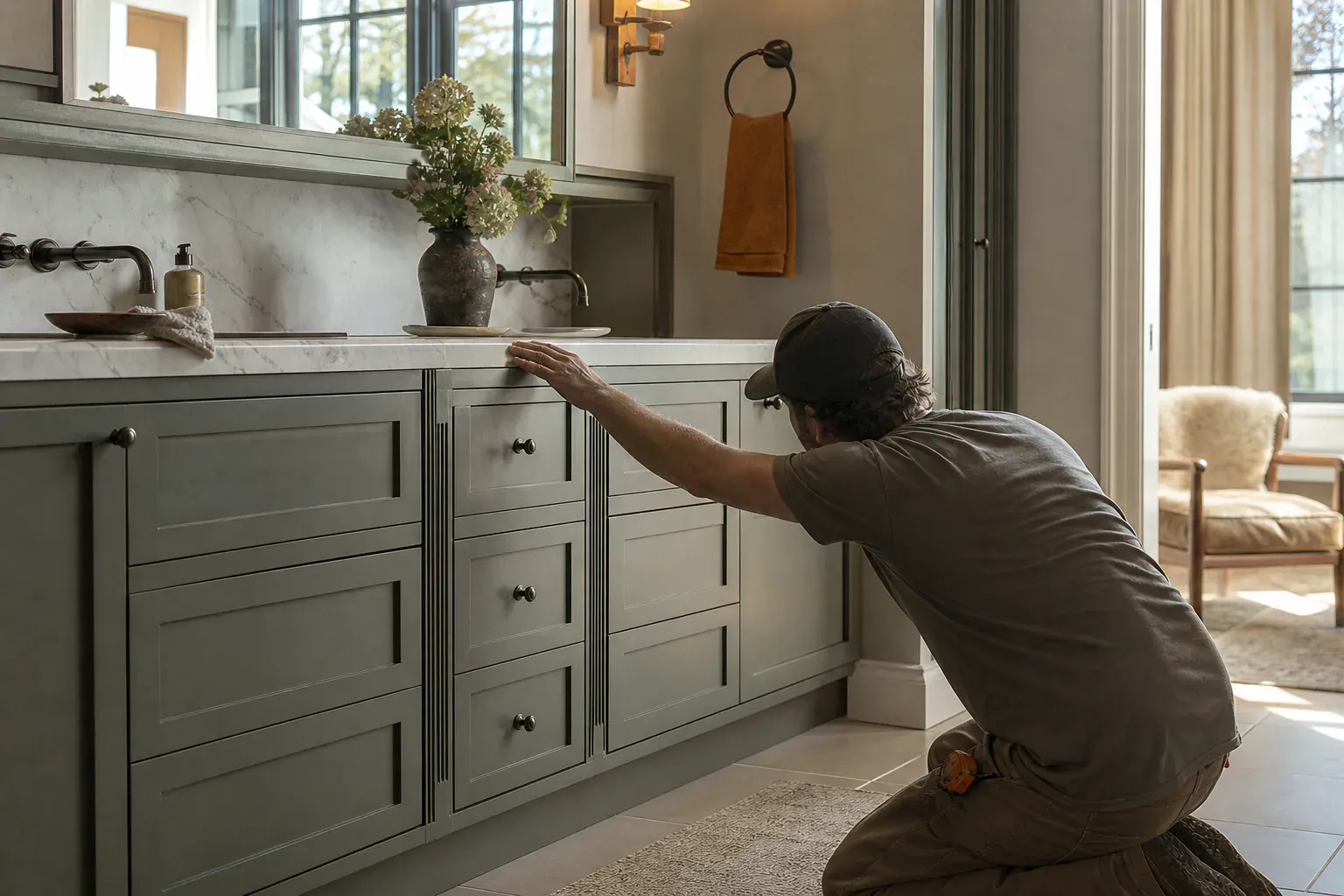
Boise Custom Cabinets builds and installs custom oak cabinets for kitchens, bathrooms, and built-in spaces across Boise, ID. We mill each job from solid oak and hardwood veneers, fit cabinet boxes to your actual wall dimensions, and finish every door and drawer to match your color and sheen preference.
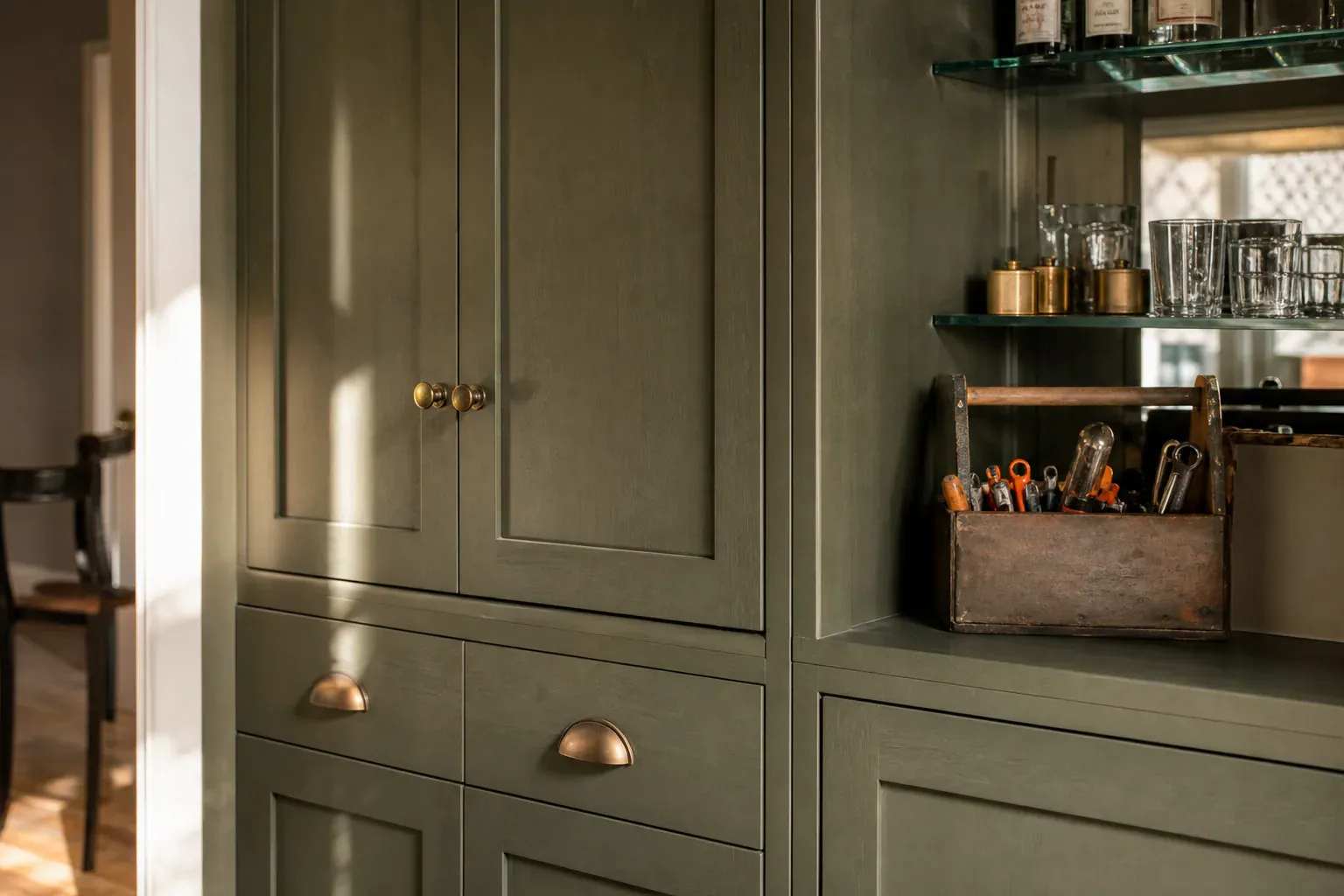
Stock cabinets arrive pre-finished with fixed door styles and dimensions. Custom work starts from your layout, wall conditions, and design direction. We build framed cabinets with solid oak stiles and rails joined at corners using mortise-and-tenon or dowel joinery. The face frame creates the visual frame around doors and drawers, typically set at 1/8 inch reveals for a clean appearance.
We use cope and stick construction on recessed center panels. The cope-and-stick joint locks the panel into a groove routed along the inside edges of the frame; the panel floats unglued so it expands and contracts with seasonal humidity swings. This engineering prevents the cupping, cracking, or warping that happens when solid wood is glued tight and the climate changes.
The cabinet boxes use plywood construction rather than particleboard. Plywood maintains rigidity over decades; particleboard swells when exposed to moisture and sags under load. We veneer plywood with hardwood species on visible exterior surfaces, reserving solid oak for frames and doors where joinery and edge-banding matter most.
White oak has a closed-pore structure that resists moisture better than red oak's open pores. Its heartwood carries an olive-gray to warm honey tone. Red oak is lighter in color with a pinkish undertone. Both rate around 1360 on the Janka hardness scale, but white oak's finer pore structure takes stain more evenly.
How you cut the lumber reshapes the grain character. Quartersawn oak exposes prominent medullary ray figuring—the wood's ray cells cut at a 60 to 90 degree angle to the growth rings, creating distinctive fleck patterns. Rift-sawn produces straight linear grain with minimal fleck because the cut angles the rings at 30 to 60 degrees. Quartersawn commands a cost premium and delivers that classic, formal look. Rift-sawn appears more understated and works better in transitional kitchen design where grain should stay quiet.
For stain color options, white oak reads warmer and accepts golden or amber tones naturally. Red oak pairs better with cherry or mahogany undertones. The right choice depends on your countertop and flooring—whether they lean warm or cool.
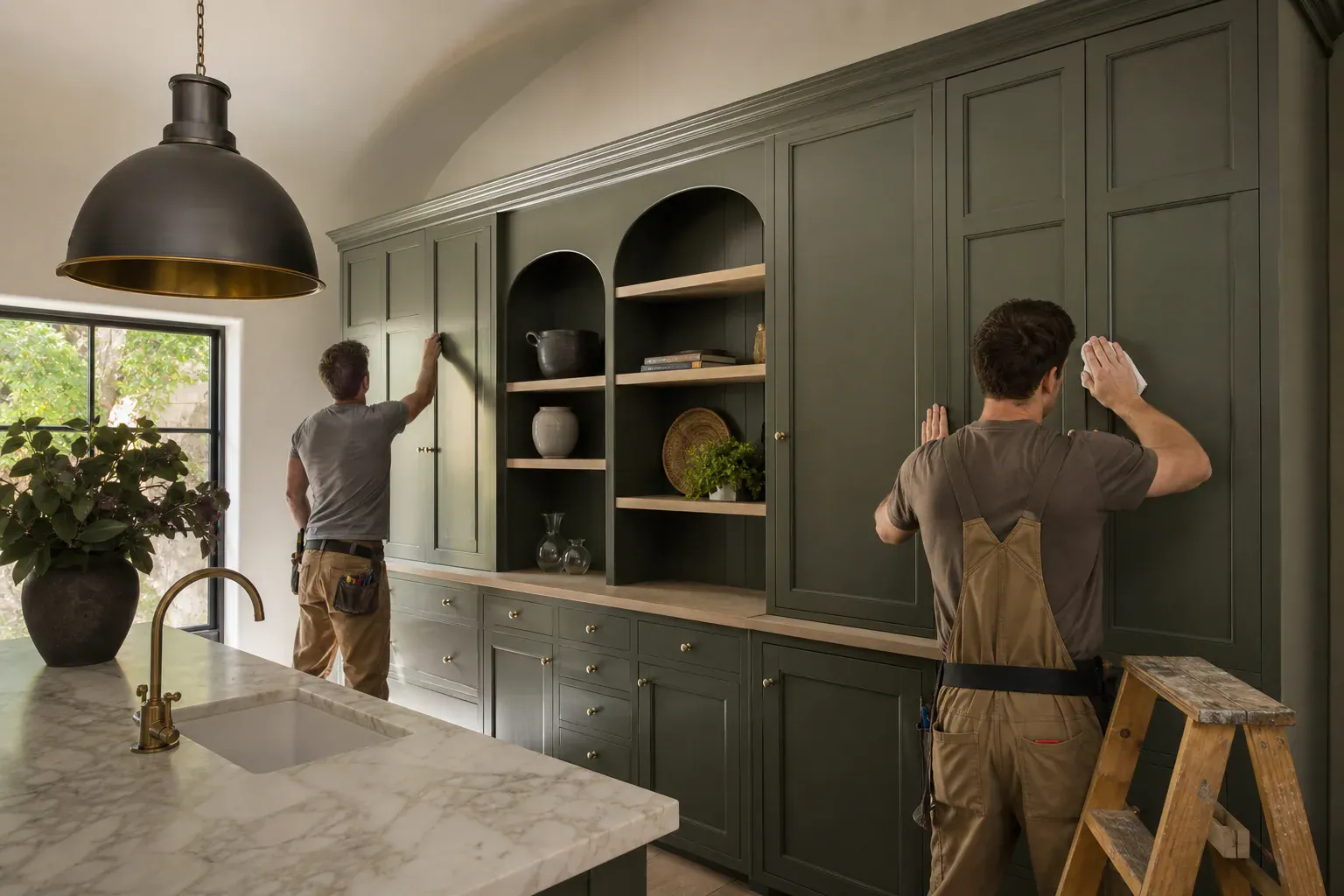
A shaker cabinet door runs a recessed center panel—typically 3/4 inch thick—inside a five-piece frame of stiles and rails. It's timeless. Flat-panel doors skip the frame-and-panel structure and use a solid or wood-veneered slab, reading cleaner and more contemporary. Inset cabinet doors sit flush with the face frame rather than overlaid on top, requiring 1/16 inch reveals and far more precise hinge boring to prevent binding.
For finishes, matte conversion varnish on oak grain resists fingerprints better than gloss and cures to a harder film than shellac. If stain is your direction, we test mocked-up boards in your kitchen light before committing to the full build. Paint sits over a color blocker primer that prevents grain raise and uneven absorption.
Oak-veneered MDF works on larger flat surfaces like cabinet end panels and tall door skins, where solid oak would cup and split. We reserve solid oak for frames, stiles, rails, and smaller doors where joinery and edge-banding benefit from wood's strength.
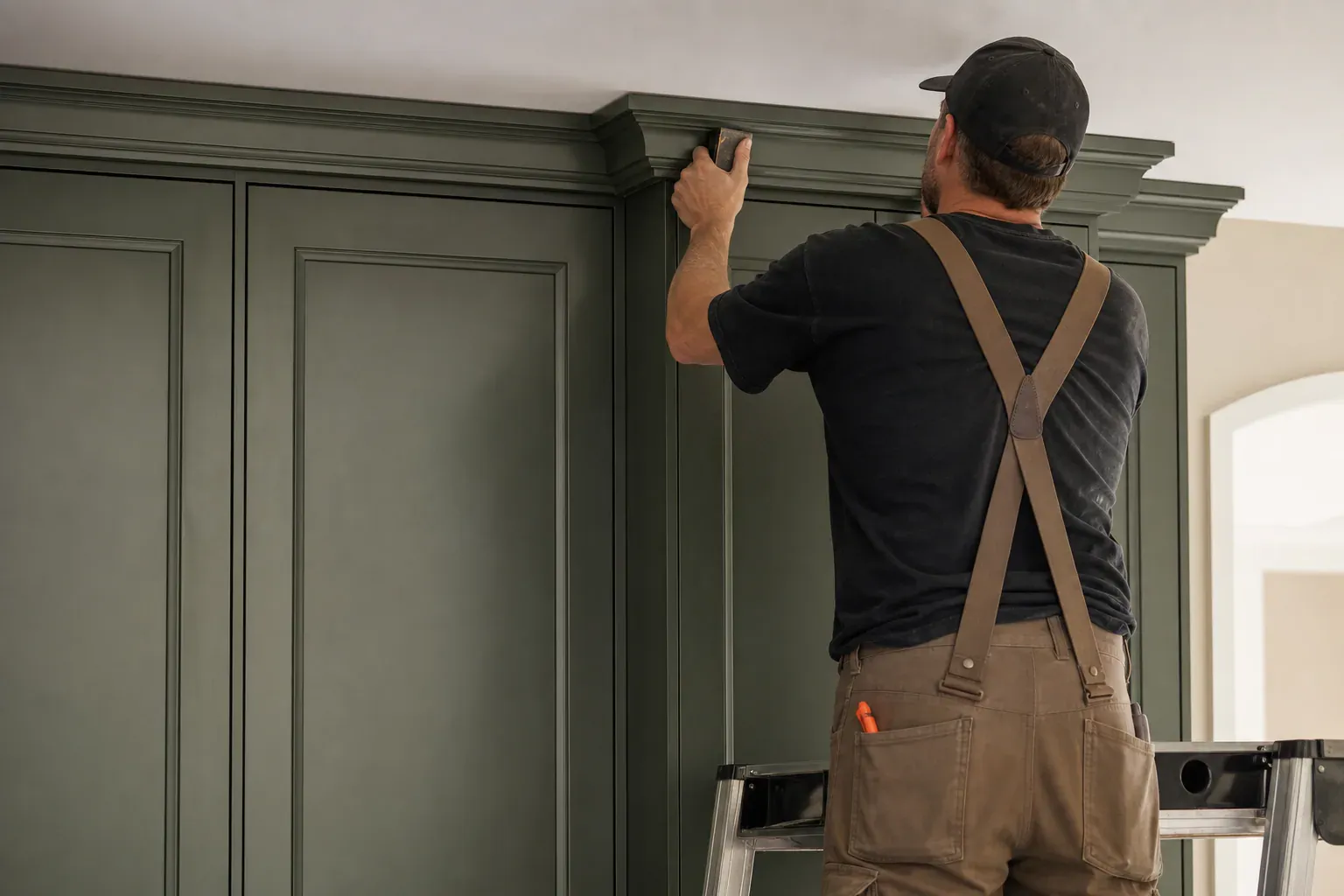
Cabinet hardware selection starts with function. Full-extension drawer slides ride on ball-bearing runners rated for 75 to 100 pound loads, opening fully without forcing you to reach past the depth. Partial-extension costs less but requires deeper reaching to access the back.
Soft-close hinges use a damper that engages in the final 2 to 3 inches of travel, easing doors shut instead of slamming. Concealed cam hinges allow three-way adjustment—height, depth, and side-to-side—so we dial in door alignment after installation without repeated screw tightening.
Hardware finish matters. Satin nickel reads cooler and pairs well with white oak. Unlacquered brass warms over time as it oxidizes, complementing red oak and creating a lived-in patina that hides fingerprints better than lacquered finishes.
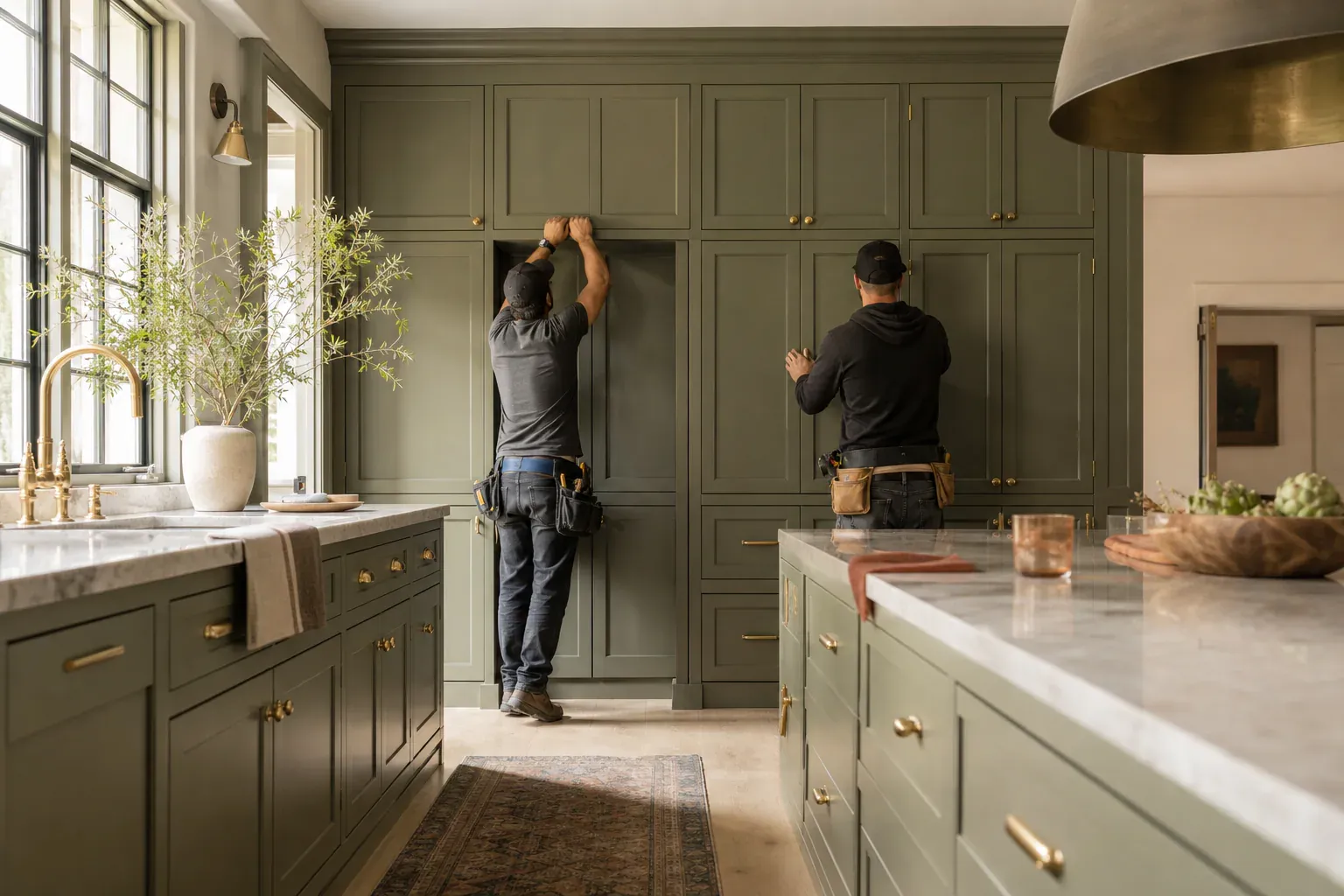
Before we build a single box, we plan the whole layout. Base cabinets run 24 inches deep and 34.5 inches tall before the countertop. Wall cabinets are typically 12 to 13 inches deep. Cabinet sizing and dimensions must account for appliances, sink placement, and walkable clearance. A custom island needs at least 42 inches of clearance on all walkable sides, measured center-to-center.
A 3D layout rendering confirms these dimensions, shows how handles clear your body when doors open, and previews how cabinet grain and stain color work in your kitchen light. We adjust island height, sink position, and appliance integration before sawing anything. Countertop overhangs are measured to accommodate seating without barstool bases crashing into base cabinets below.
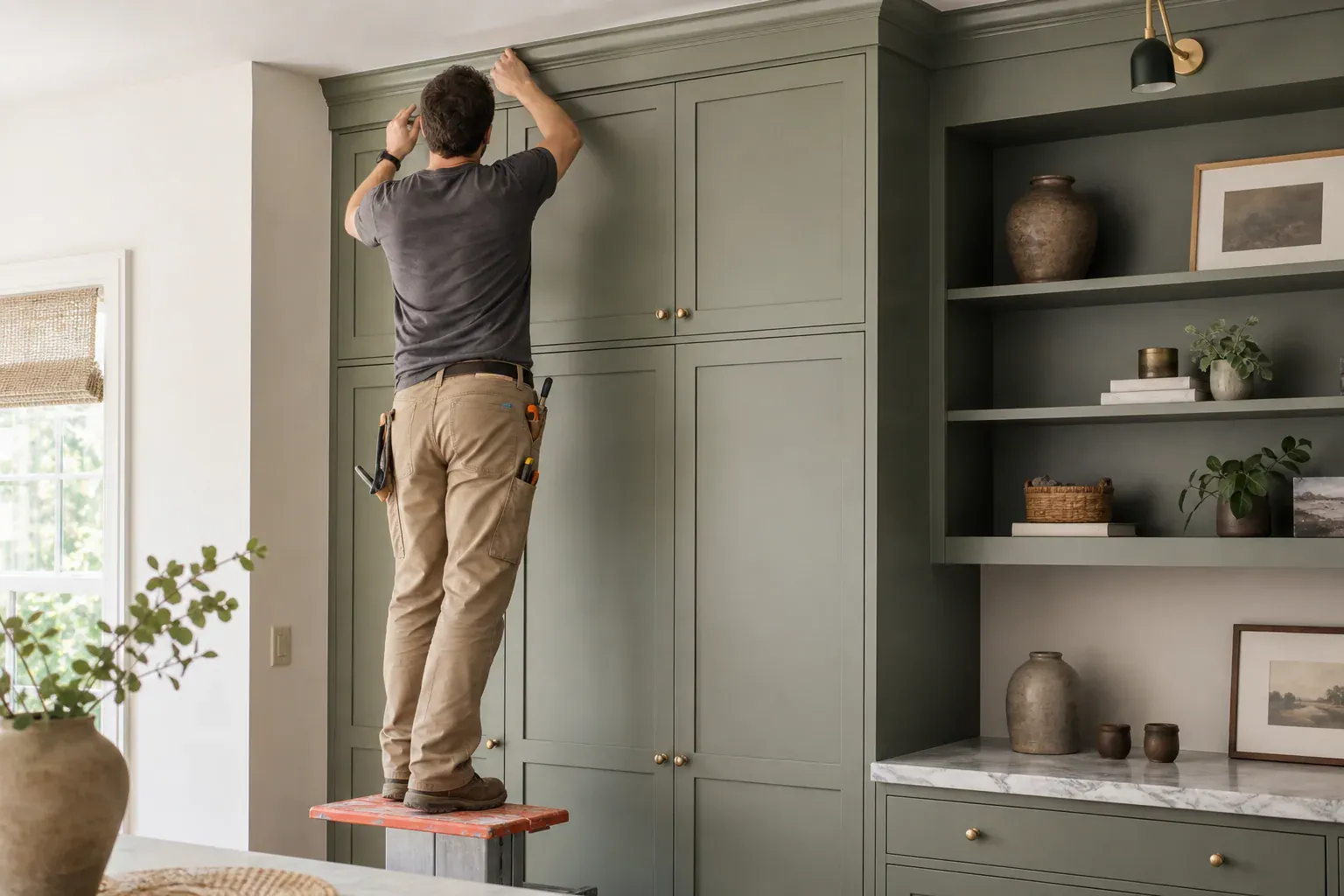
Cabinet accent materials extend beyond primary wood surfaces. Aluminum inlays in door frames, brushed stainless steel trim on island edges, and stone or quartz accent panels add visual contrast and durability in high-wear zones. Glass door inserts over open shelving create display opportunities without the dust.
Natural wood sealing protects oak from moisture infiltration and UV fade. Conversion varnish and polyurethane topcoats seal the grain after stain is dry, creating a protective barrier that resists water rings and kitchen grease. In high-moisture kitchens, refresh the topcoat every few years to maintain the seal. Unfinished or lightly sealed oak in humid environments absorbs moisture and raises grain fibers, roughening the surface and inviting mold growth in dark cabinet corners.
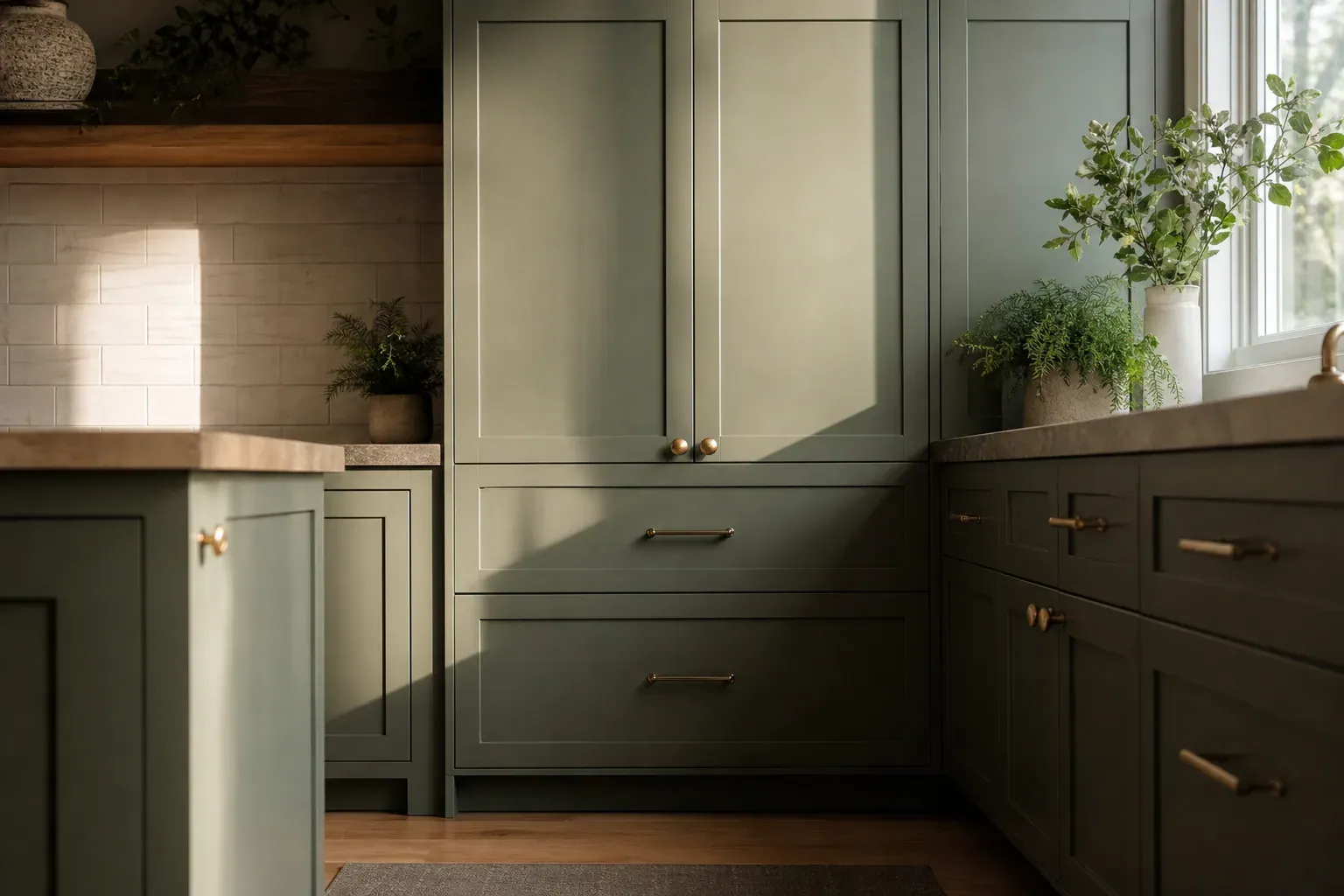
Cabinet refacing reuses your existing box structure and replaces doors, drawer fronts, and visible veneer skins. If your current cabinets are solid and level, refacing costs far less than full replacement. If boxes are water-damaged, sagging, or undersized for your new kitchen remodeling plan, replacement is the right call.
Installation runs in sequence: base cabinets first secured to wall studs, then uppers shimmed level and plumb, then trim and hardware last. A typical custom oak cabinet order takes several weeks from contract to installation because of milling, finishing cure time, and on-site fitting. We build and sand in-house, apply finish in a controlled environment, and let conversion varnish or polyurethane fully cure before delivery to avoid shipping damage and off-gassing in your kitchen.
Red oak and white oak are the two species we work with most in Boise kitchens, and they look and perform differently enough that the choice matters.
Red oak has larger, more open grain. The pores are visible and pronounced, which gives the wood a bolder, more textured appearance. Stain absorbs unevenly into those open pores, so red oak tends to show grain variation and depth. It's softer than white oak—around 1290 on the Janka scale—which means it dents and scratches more easily under daily use. Red oak is less expensive and finishes quickly, but you're committing to a wood that will show wear sooner.
White oak has tighter grain and smaller pores. The surface looks smoother and more refined, even before finish is applied. It's significantly harder—around 1360 on the Janka scale—so it resists dings better in high-traffic kitchens. White oak also contains tannic acid, which means it can react poorly to water and some finishes if the wood isn't sealed properly. The tighter grain means stain sits more evenly, giving you a more uniform look if that's what you want. White oak costs more upfront and takes longer to finish, but it's the better choice for cabinets that will see real use.
In Boise's dry climate, the tighter grain of white oak actually has an advantage: it's less prone to the wood movement and checking that open-grain species can develop as humidity swings between seasons. If you're refacing existing cabinets with new oak doors, matching the species matters—red oak doors on white oak frames, or vice versa, creates a visible mismatch in grain and color that only gets worse as the wood ages differently.
Stock cabinets arrive pre-finished with fixed door styles and dimensions. Custom work starts from your layout, wall conditions, and design direction.
White oak has a closed-pore structure that resists moisture better than red oak's open pores. Its heartwood carries an olive-gray to warm honey tone.
A shaker cabinet door runs a recessed center panel—typically 3/4 inch thick—inside a five-piece frame of stiles and rails. It's timeless.
Cabinet hardware selection starts with function. Full-extension drawer slides ride on ball-bearing runners rated for 75 to 100 pound loads, opening fully without forcing you to reach past…
Before we build a single box, we plan the whole layout. Base cabinets run 24 inches deep and 34.5 inches tall before the countertop. Wall cabinets are typically 12 to 13 inches deep.
Cabinet accent materials extend beyond primary wood surfaces. Aluminum inlays in door frames, brushed stainless steel trim on island edges, and stone or quartz accent panels add visual…
Why homeowners call us
Every custom cabinets job is scoped and priced in writing, so the number you approve is the number you pay. If something behind the wall changes the work, we stop and price it first.
You speak to the people doing the work, not a call centre, and cover certificates go to your building manager or general contractor on request.
Containment, floor protection and same-day debris removal on every interior job — the space stays usable while the work is going on.
Crews work Boise and the surrounding cities every week, so a walkthrough is usually available within the same week you call.
FAQ
Yes. White oak's closed pore structure resists moisture better than red oak, making it ideal for kitchens. Its olive-gray tone works in both traditional and contemporary designs. Hardness is sufficient for high-traffic use. The main trade-off is cost—white oak runs higher than red oak or maple—and the grain requires intentional finishing choices to prevent blotchy stain absorption on large panel areas.
White oak has closed pores, olive-gray undertones, and better moisture resistance. Red oak has open pores, pinkish tones, and lighter color character. Quartersawn white oak shows medullary ray fleck; rift-sawn cuts minimize fleck. White oak's pore structure stains more evenly. Red oak pairs better with warm stain tones like cherry or mahogany.
Oak falls in the middle. Maple is similarly priced but harder and grain-tighter, so it takes paint better and resists dents slightly more. Walnut is pricier and softer. Hickory is harder and costs more but shows dramatic grain that can overwhelm smaller spaces. Semi-custom cabinetry with veneer-faced boxes costs less than full custom solid wood but won't accommodate unusual wall dimensions without factory limitations.
Yes. Cabinet refacing reuses your box structure and replaces doors, drawer fronts, and veneer skins. It works if boxes are level, plumb, and structurally sound. Cabinet refacing cuts material and labor costs compared to full replacement. If boxes are sagging, water-damaged, or the layout doesn't fit your new design, replacement is the right approach.
From signed contract to cabinet doors closing in your kitchen typically runs several weeks. Milling and assembly take 1-2 weeks, finishing cure time adds another 1-2 weeks depending on the topcoat. Delivery and on-site installation runs 1-3 days depending on job size. Rush finishing is possible but commands a premium and risks quality if cure time gets cut short.
Clean with a soft cloth and pH-neutral cleaner—avoid ammonia-based products that strip the finish. Wipe spills promptly, especially near sinks. In high-moisture kitchens, refresh or reseal the topcoat every few years to prevent grain raise from water penetration. Oak grain naturally expands and contracts seasonally; recessed panels float unglued so they can move without stress.
Call (208) 555-0116 for a walkthrough, usually within the same week.