Custom Mudroom Cabinets Built For Boise Homes
Custom mudroom cabinet design begins with a simple truth: every entryway is different. The wall that runs beside your entry door may not be parallel to the opposite wall.
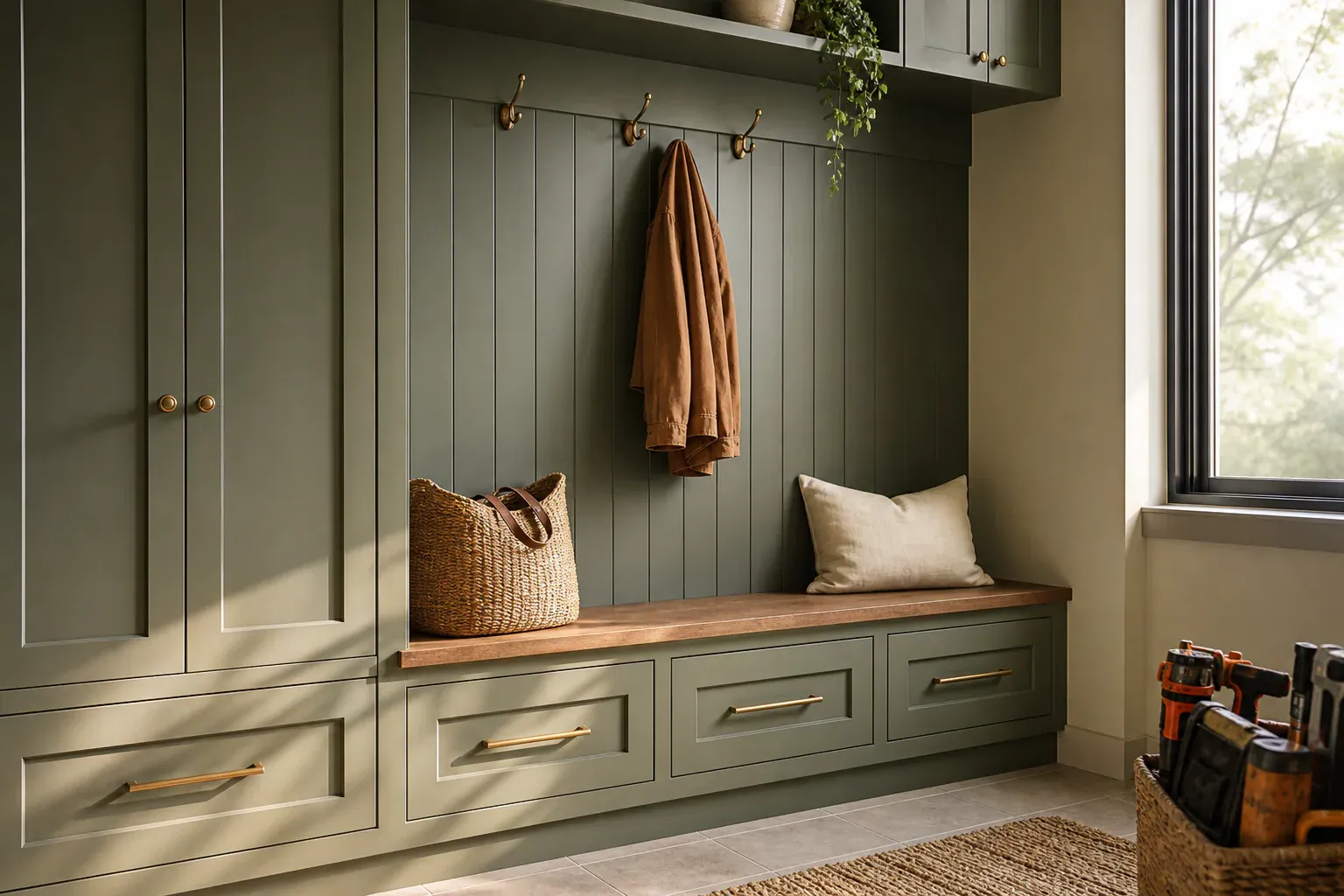
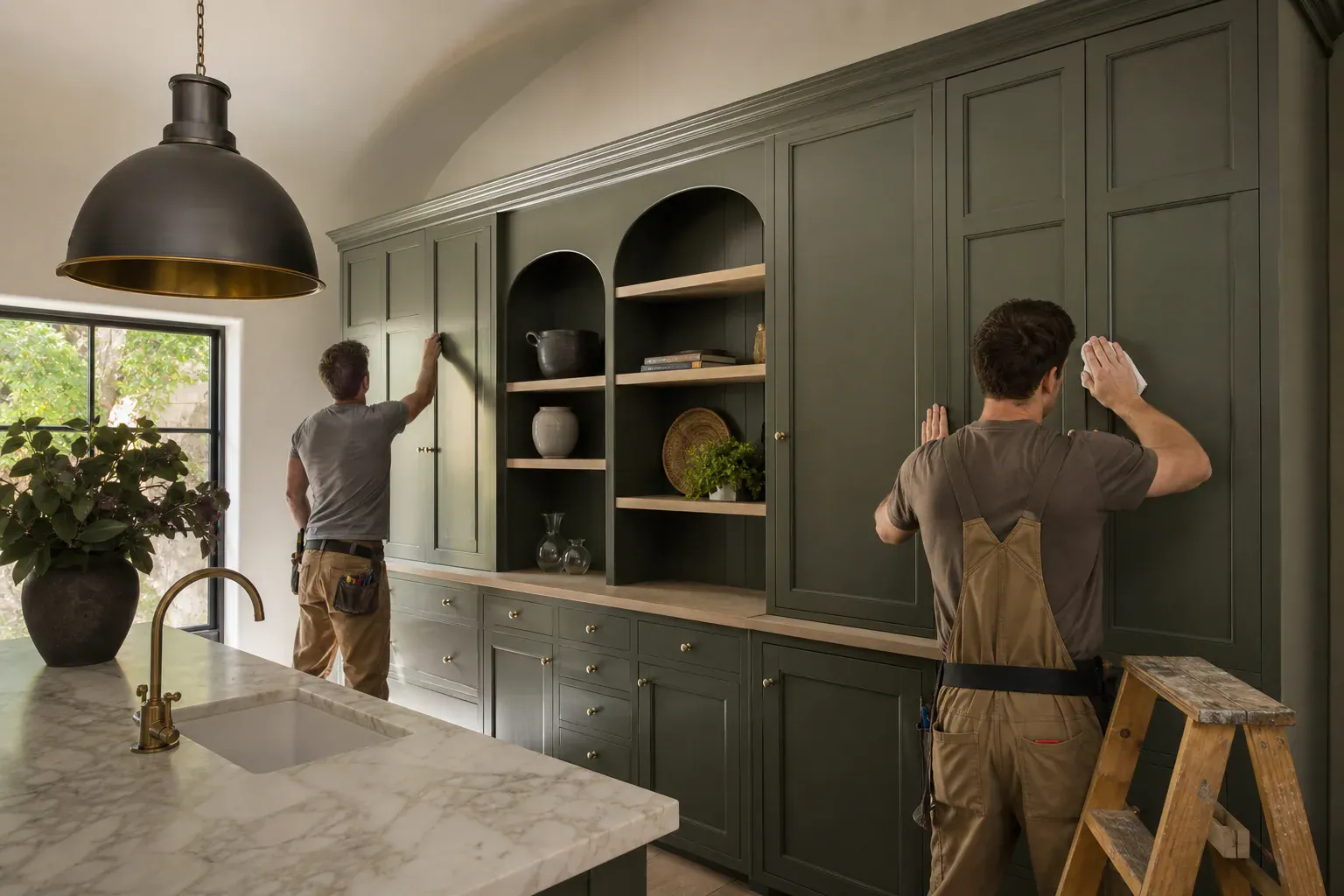
Boise Custom Cabinets designs, builds and installs custom mudroom cabinets for homeowners and builders across Boise, ID. A custom mudroom cabinet system handles the work of entry—coats, shoes, bags, mail, and the daily chaos of a family's arrival and departure—in a way that semi-custom modular units simply cannot. We start by measuring your space to the 1/8 inch, understand your family's actual storage needs, and then build a system that fits exactly what you need, with finishes that survive Boise's dry winters and muddy shoulder seasons.
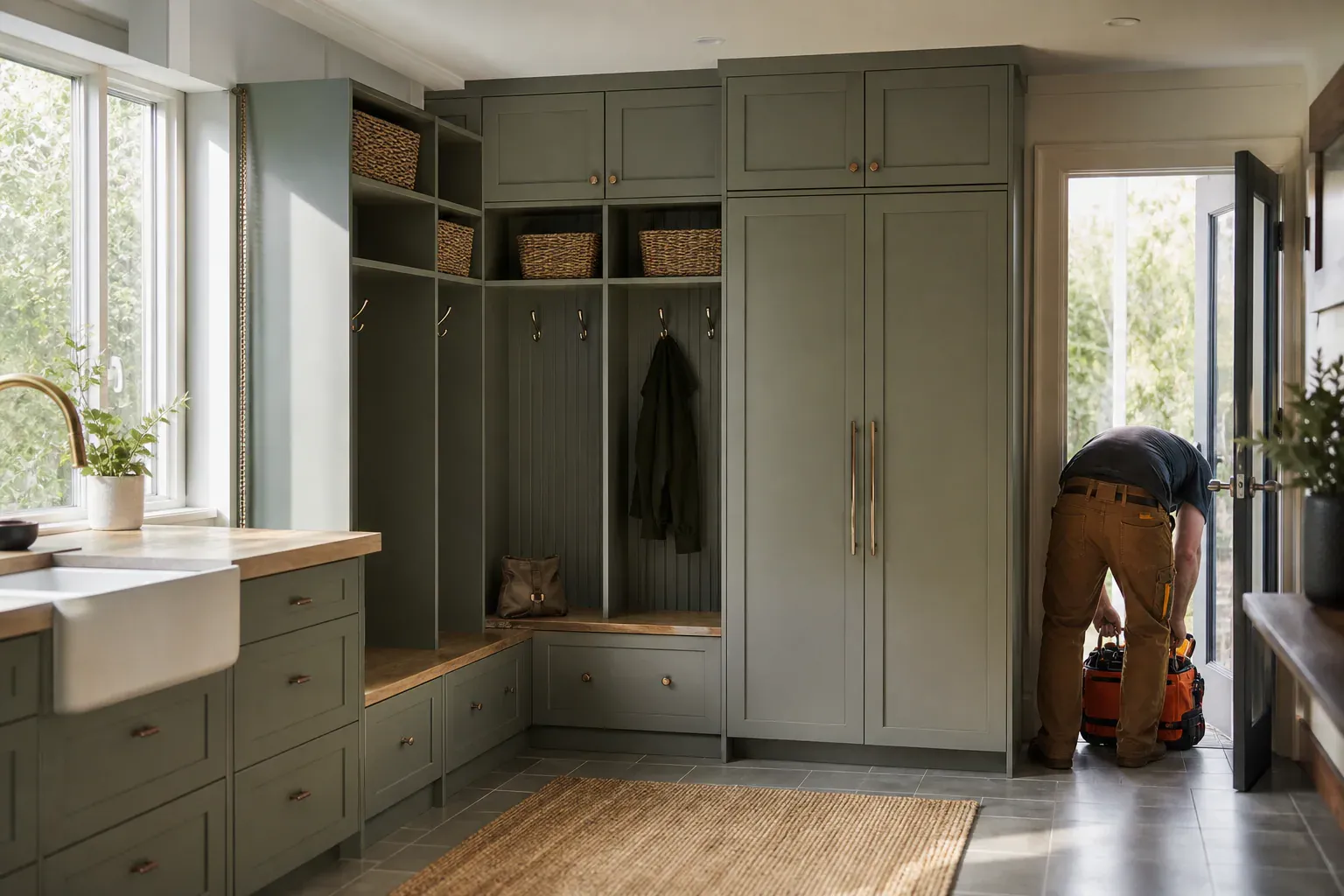
Custom mudroom cabinet design begins with a simple truth: every entryway is different. The wall that runs beside your entry door may not be parallel to the opposite wall. Ceilings may slope. Trim profiles may be irregular. Semi-custom modular units come in fixed widths—usually 3-inch increments—which means you either waste wall space or live with gaps. Full custom cabinetry allows us to adjust dimensions to the 1/8 inch, so every inch of your entry wall becomes usable storage.
Boise's climate shapes finish choice and material selection. The region sees little rainfall but gets heavy snow in winter, meaning salt and road grit end up on boots and coats. In shoulder seasons—April and October—moisture from melting snow and wet ground spikes. A mudroom cabinet system must handle this moisture exposure without warping or swelling. We choose wood species and protective finishes with this exposure in mind.
Custom mudroom cabinet design also means matching your home's style language. Shaker style cabinetry works in colonial and farmhouse homes. Mission style design suits arts-and-crafts and period-revival spaces. Euro slab cabinetry (flat-panel doors without profile) fits contemporary homes. The grain of the wood, the color of the stain, and the finish type all work together to make your mudroom feel like an intentional room, not an afterthought storage closet.
A mudroom locker system organizes the entry by family member or by function. Each locker bay holds coats, a bag, and boots for one person. Standard locker bay width runs 14 to 16 inches per person—wide enough for a winter parka without crushing. We build locker drawer systems within the base, pull-out drawers that sit beneath the coats and let family members stash gloves, scarves, and the small items that pile up at every entry.
Built-in bench seating serves dual duty: it is a place to sit while removing boots, and it becomes storage beneath the seat. Bench seat height should be 17 to 18 inches—the height of a standard stair step—so anyone from a tall adult to a child can sit comfortably. Below the seat goes either a hinged lid (which requires a lid support to prevent slamming) or a row of drawers. We often build both: a drawer bank on one side for shoes, a hinged storage compartment on the other for seasonal items.
Hook and cubby placement matters more than most homeowners expect. Decorative hooks should be spaced 6 to 8 inches apart and installed at two heights: one at 36 to 48 inches for adults' coats and bags, a second at 24 to 32 inches for children. Cubbies (open shelves in the locker bay) give quick visual access to backpacks and daily bags. In a locker system, cubbies stack three high above the bench, creating a family drop zone that stays organized because every person has their own vertical space.
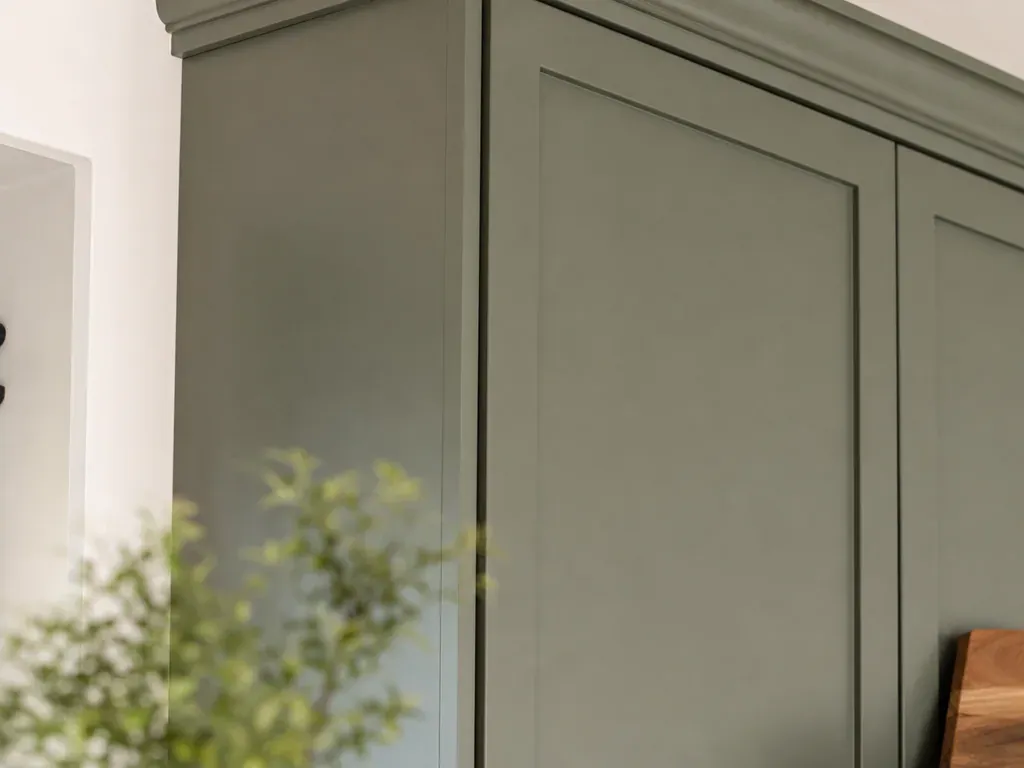
Shoes are the hardest item to store in a mudroom. Wet boots need airflow or they mildew. Dress shoes take up less room but scratch easily. Outdoor shoes bring in mud and salt. A custom mudroom storage organization approach uses angled shoe shelves at a 15-degree slope—the angle lets air circulate under the boot and keeps water or melt from pooling. Cubby depth should be 12 to 14 inches to fit a large winter boot without forcing it sideways.
Coat and hook placement supports the mudroom drop zone layout. Coats on hooks at the entry mean they dry. Bags on hooks or in cubbies at eye level mean kids can grab their own backpack without asking. A mail sorting station—a shallow wall-mounted organizer or a built-in shelf—sits at 54 to 60 inches and lets you sort incoming papers immediately instead of piling them on a table.
Many families want mudroom charging stations where devices can charge near the entry. We cut USB and outlet openings into the back or side panels of your cabinetry and wire them during the build phase. Charging drawers—pull-out organizers with built-in USB ports—sit at 18 inches above a counter surface, within reach but out of daily sight. Cords route through cable management channels we rout into the cabinet sides.
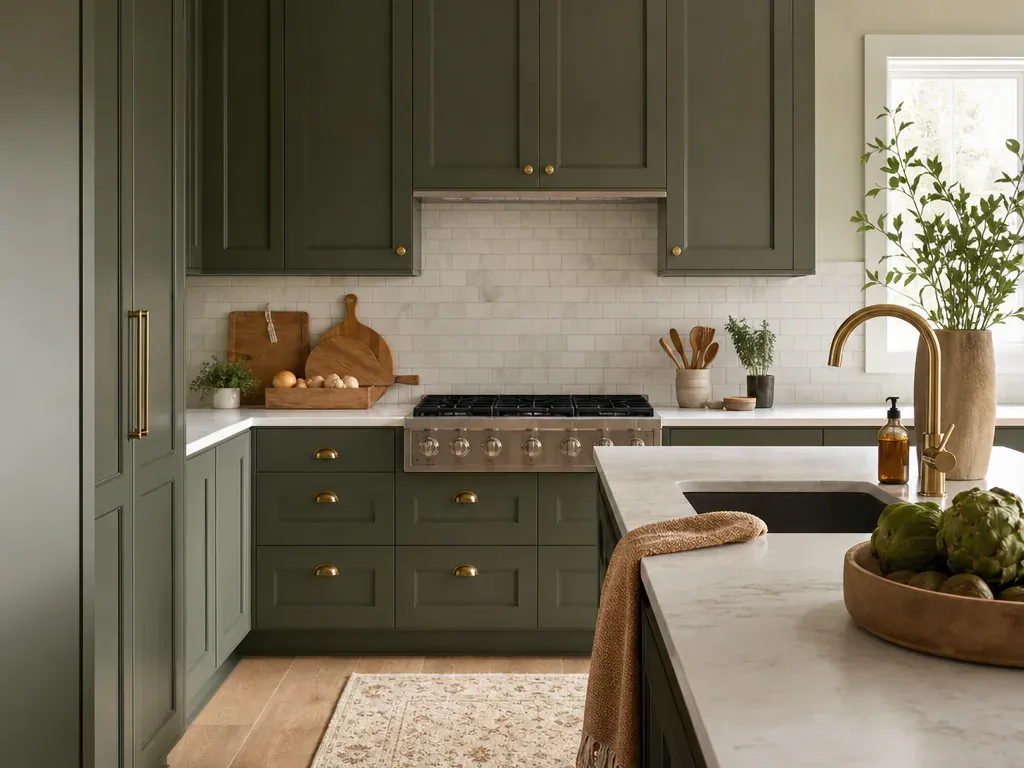
Choosing between open cubbies and closed cabinetry depends on your traffic patterns and maintenance tolerance. Open mudroom cubbies let you grab a coat or backpack in seconds and see everything at a glance. But open storage also collects dust, requires frequent tidying, and puts wet items on display. Closed mudroom closed storage—a run of base cabinets with doors—protects contents from dust and mud spatter, hides clutter from the living room view, and looks more finished.
Most mudroom entryway solutions use a hybrid: lockers are open cubbies above, with closed storage below. The visual weight of solid cabinetry sits at floor level where it grounds the room. The open cubbies above let you move quickly. Upper cabinetry—closed cabinets above the lockers—stores off-season items like snow boots or hiking gear that you reach for less often.
Traffic flow analysis determines cabinet placement. A mudroom walkway should have a minimum 36-inch clearance to allow two people to pass or to accommodate someone bending to remove shoes. If your mudroom is tight, a narrower bench or a corner configuration may work better than a central island. Laundry integration is common: many mudroom designs include a fold-down counter or a washer and dryer tucked into a run of base cabinets on the side wall, so you can separate kids' muddy clothes directly at entry rather than tracking it through the house.
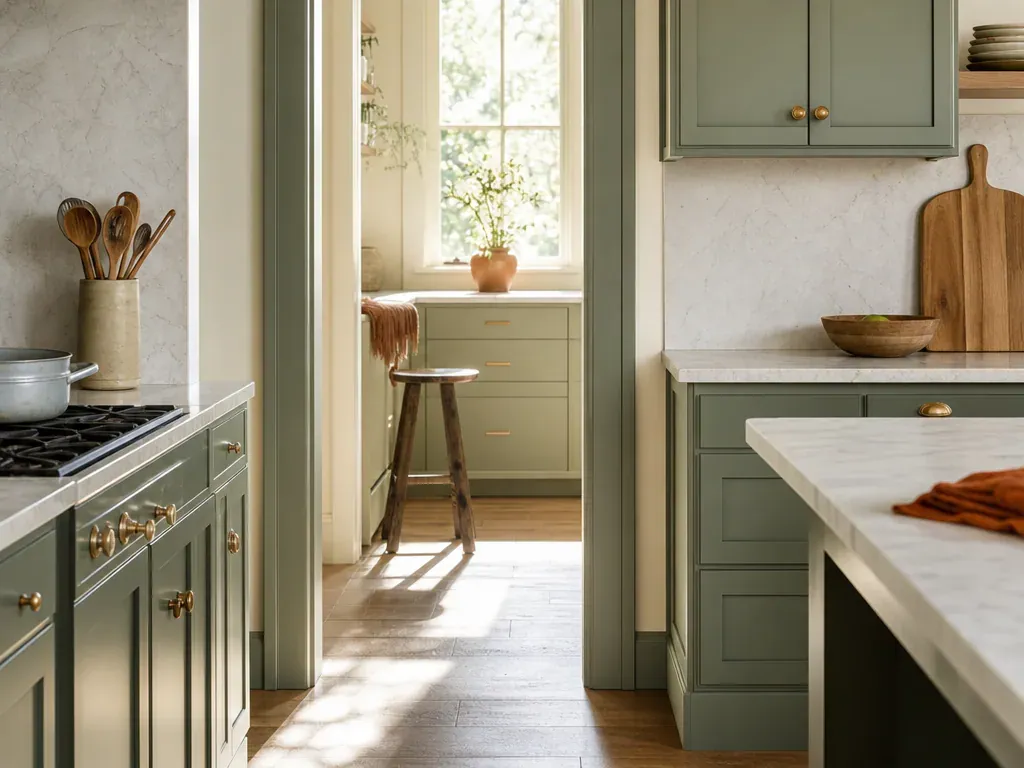
Quarter sawn white oak is prized in mudrooms because the ray fleck grain (the medullary rays visible in the wood) runs perpendicular to the grain direction, which makes the wood more stable and less prone to warping from moisture swings. Red oak is more affordable but shows less ray fleck and can move more with humidity. Walnut wood and cherry wood are harder and more durable but also more expensive, and both darken naturally with UV exposure over time—a quality some homeowners love and others find undesirable.
Maple wood takes paint finishes more smoothly than oak because the grain is tighter and takes sanding finer. Hickory wood shows the most color variation in a plank, which is a practical advantage in a mudroom—the natural color streaking hides scuffs and dirt better than a uniform stain. Elm wood falls in the middle of the price and durability range and has a pronounced grain pattern that suits farmhouse and transitional styles.
Cabinet wood species selection should also match your home's existing trim. If your baseboards and door trim are oak, quarter sawn white oak mudroom cabinetry feels cohesive. If your trim is painted, a paint-grade maple cabinet body costs less and gives you the flexibility to match any color. The cabinet style—whether you choose shaker doors with a simple frame-and-panel profile, mission style with heavier muntins, or euro slab with flat fronts—should echo the style language of your kitchen and bathroom cabinetry so the whole home feels intentional.
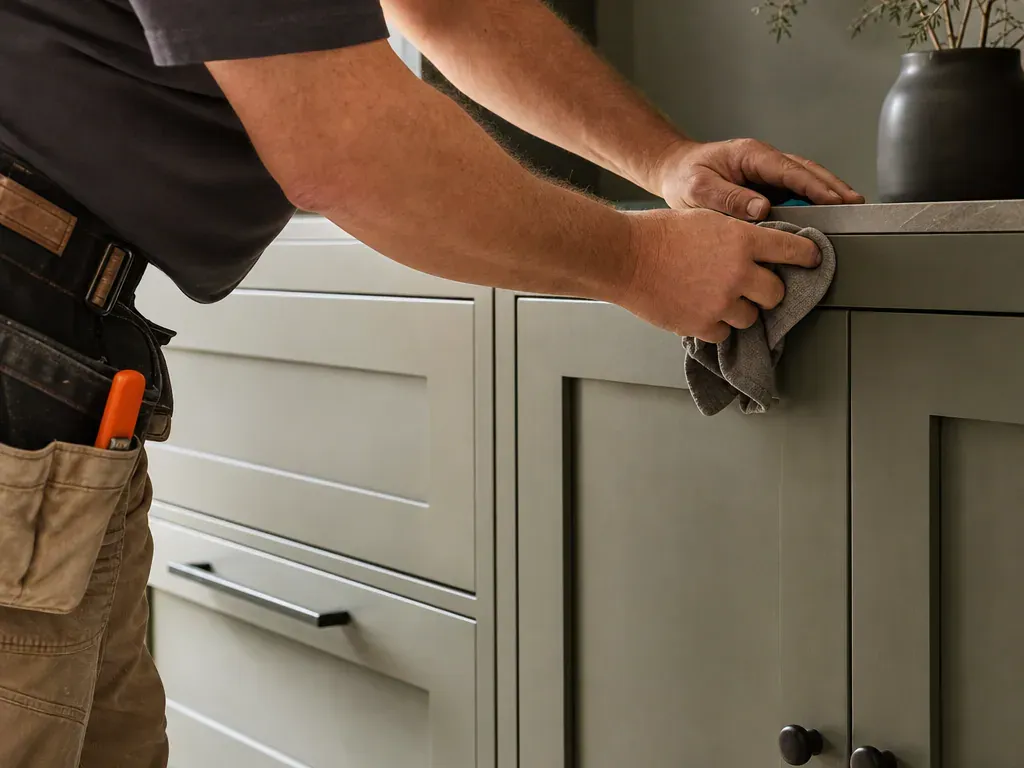
A mudroom cabinet finish must resist moisture, salt, mud abrasion, and UV fading. Catalyzed conversion varnish is a two-part finish that cures to a hard protective film—much harder than standard polyurethane. We apply 2 to 3 coats with a 24-hour recoat window between coats, then let it cure fully for a week before you load the cabinets. This finish stands up to the salt and grit that comes in on winter boots.
UV resistant finish prevents yellowing near south-facing entry windows, where sunlight exposure is intense. A waterproof finish is critical on the tops of mudroom benches and any horizontal surface where boots sit. Waterproof finish prevents water absorption and wood swelling.
Cabinet hardware styles should be practical and durable. Matte black and brushed nickel hardware finishes hold up far better against grit and salt than polished chrome, which shows fingerprints and water spots immediately. Pull handles should be recessed or low-profile so they don't catch coat sleeves. Soft-close hinges cost more but prevent slamming, which matters when kids are rushing out the door.
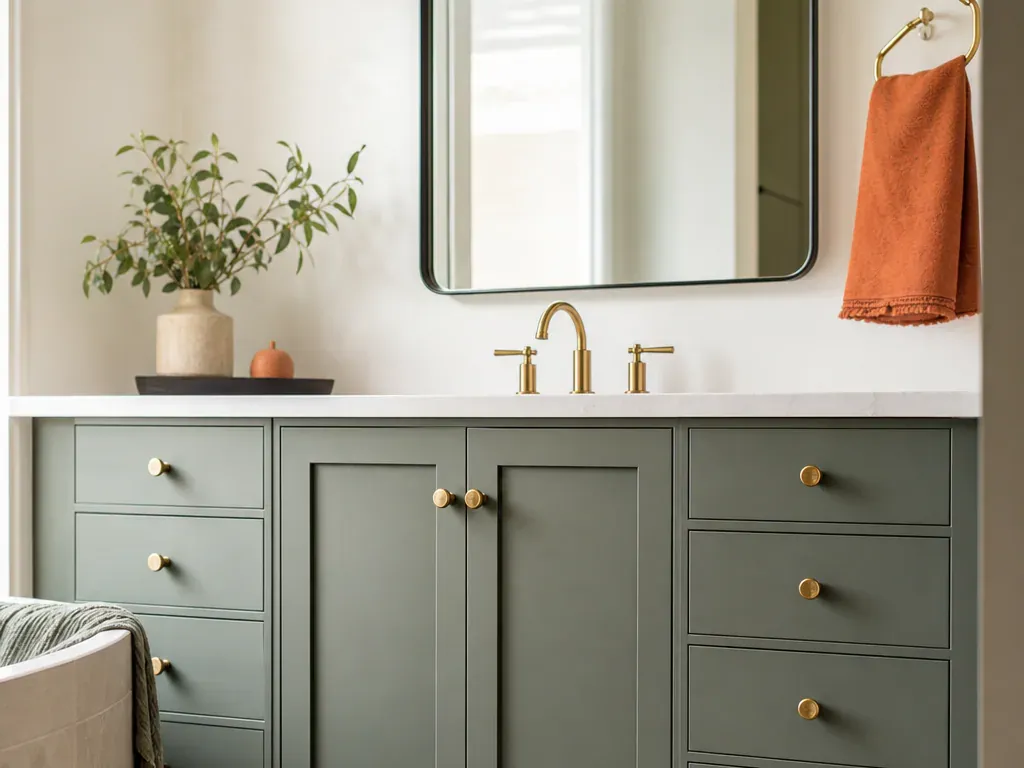
Our custom cabinet design process starts with an in-home consultation and space assessment. We measure the wall run in multiple places (because walls are rarely perfectly square), the ceiling height at both ends, the door swing, the electrical outlet locations, and any baseboards, trim, or obstacles. We photograph the space and note the existing style, flooring, and light sources.
From these measurements, we draft elevation drawings showing the layout, locker configuration, bench height, and hook placement. You review the draft and suggest changes—wider lockers, more cubbies, a different bench depth. Once we agree on the layout, we move to material and finish selection. We bring samples: wood species in the stain colors you're considering, finish samples you can test with water, hardware finishes in actual size.
The shop build phase takes several weeks depending on complexity. We cut, join, sand, and finish each component. During install, we carefully fit the cabinetry to the wall, which often means using a scribe (a tool that traces the wall's contour) to fit the side panel to an uneven wall. We install the bench, hang the doors, attach the hardware, and wire any outlets. Aesthetic lighting integration—puck lights or LED strips mounted into the toe-kick or under upper cabinetry—adds visual interest and functional task lighting for early mornings.
The most common mudroom cabinet mistake is building lockers too narrow. Many semi-custom systems offer 12-inch-wide cubbies to save cost and space. Winter coats need at least 14 inches without crushing. A 12-inch locker forces you to fold a parka or hang a coat at an angle, which prevents it from drying properly.
A second mistake is selecting non-sealed wood species near the entry door. Some builders use plain red oak or pine with only a standard polyurethane finish, expecting that it will hold up. Boise's muddy seasons cause wood swell, and unfinished end grain absorbs moisture rapidly. We always seal the end grain of our shelves and use waterproof finish on horizontal surfaces.
Hook and height planning is a third error. Setting hooks at a single height of 48 inches assumes everyone is tall enough to reach that height comfortably. Children, shorter adults, and people with mobility considerations cannot reach a high hook, so coats and bags end up on the floor or draped over the bench. Custom mudroom cabinet design includes tiered hook rails so multiple users can hang items at their own height.
A fourth mistake is underestimating the space needed for a mudroom bench. Many homeowners think a 14-inch-deep bench is enough, but the actual range is 16 to 20 inches for comfortable sitting. A bench that is too shallow feels cramped and unstable. We size the bench depth based on your actual space and your preference for sitting comfort versus walkway clearance.
A hall tree is a vertical accent piece that pulls together coat storage, seating, and shoe organization in one footprint. We build them as part of the mudroom system or as a standalone element when floor space is tight. The structure anchors to wall studs and typically combines a bench base with hooks mounted above and cubbies or open shelving on the sides. This layout lets family members hang jackets, set down bags, and sit to remove boots without spreading activity across the whole entry.
Hardwood options shape both the look and the durability of a hall tree in a Boise mudroom. We use white oak for its strength and visible grain pattern, which stands up to the moisture swings that come with frequent exterior-door use. Red oak costs less and takes stain well, though it's slightly softer and shows footprints faster on bench seats. Maple is harder still and works for a lighter natural finish, though it's less forgiving if you want a dark stain to hide wear. Hickory brings visual texture with its color variation and grain movement, and it's tougher than oak in high-traffic zones. For mudrooms facing direct sunlight through entry windows, we sometimes recommend alder or cherry in a closed finish rather than open-grain woods that trap dust in the pores.
The design of a mudroom hall tree depends on your family's actual traffic pattern. If you have three kids and two adults all leaving at once, the bench needs to be wide enough for two people to sit and lace boots side by side. Hook height matters—we set lower hooks at 48 inches for children and coat storage, with upper hooks at 66 to 72 inches for adult jackets. Shoe cubbies work best as individual compartments sized for one pair rather than open shelves where boots tumble together. We integrate a small ledge or tray on the bench back to catch keys and pocket change, and we sometimes add a boot tray that slides under the bench to catch drips before they reach the floor.
Custom mudroom cabinet design begins with a simple truth: every entryway is different. The wall that runs beside your entry door may not be parallel to the opposite wall.
A mudroom locker system organizes the entry by family member or by function. Each locker bay holds coats, a bag, and boots for one person.
Shoes are the hardest item to store in a mudroom. Wet boots need airflow or they mildew. Dress shoes take up less room but scratch easily. Outdoor shoes bring in mud and salt.
Choosing between open cubbies and closed cabinetry depends on your traffic patterns and maintenance tolerance.
Quarter sawn white oak is prized in mudrooms because the ray fleck grain (the medullary rays visible in the wood) runs perpendicular to the grain direction, which makes the wood more stable…
A mudroom cabinet finish must resist moisture, salt, mud abrasion, and UV fading. Catalyzed conversion varnish is a two-part finish that cures to a hard protective film—much harder than…
Why homeowners call us
Every custom cabinets job is scoped and priced in writing, so the number you approve is the number you pay. If something behind the wall changes the work, we stop and price it first.
You speak to the people doing the work, not a call centre, and cover certificates go to your building manager or general contractor on request.
Containment, floor protection and same-day debris removal on every interior job — the space stays usable while the work is going on.
Crews work Boise and the surrounding cities every week, so a walkthrough is usually available within the same week you call.
FAQ
Quarter sawn white oak resists warping from moisture swings because its grain structure is more stable. Hickory shows color variation that hides scuffs in high-traffic areas. Maple takes paint smoothly if you prefer painted cabinetry. Walnut and cherry are harder and durable but darken over time with UV exposure. Choose based on your home's style and your tolerance for natural color change.
Cost depends on square footage, finish level, wood species, and hardware choice. A basic mudroom with lockers, bench, and open cubbies costs less than a fully enclosed system with multiple drawers and upper cabinetry. Catalyzed conversion varnish finishes and premium hardware add cost. Semi-custom modular systems cost less upfront but may waste wall space or require awkward gaps.
Semi-custom units come in fixed width increments—usually 3 inches—and standard heights and depths. Full custom allows adjustment to the 1/8 inch, so every wall is used and no gaps exist. Custom design also means your layout can be tailored to your family's actual needs rather than forced into a modular template.
Yes. A built-in mudroom bench seating unit is a foundation element of most custom mudroom designs. Bench height is 17 to 18 inches, and storage below the seat uses either a hinged lid or pull-out drawers. The bench can run the full length of the wall or be sized to fit your space.
We cut USB and outlet openings into the cabinet sides or back panels and wire them during the build. Charging drawer inserts—pull-out organizers with built-in USB ports—mount at 18 inches above a counter surface, keeping cords hidden and within reach. Cable routing channels rout into the cabinet sides to manage cord clutter.
Catalyzed conversion varnish cures to a hard protective film that resists salt, grit, and moisture far better than standard polyurethane. Apply 2 to 3 coats with 24-hour recoat windows. UV resistant topcoats prevent yellowing near south-facing windows. Waterproof finish on horizontal surfaces (benches, shelves) prevents water absorption and swelling.
Call (208) 555-0116 for a walkthrough, usually within the same week.