Custom Maple Cabinets Built for Boise Homes
Northern hard rock maple is the species we reach for most often because it has tight, uniform grain structure that means fewer blotches when stained, and it resists dents and wear better…
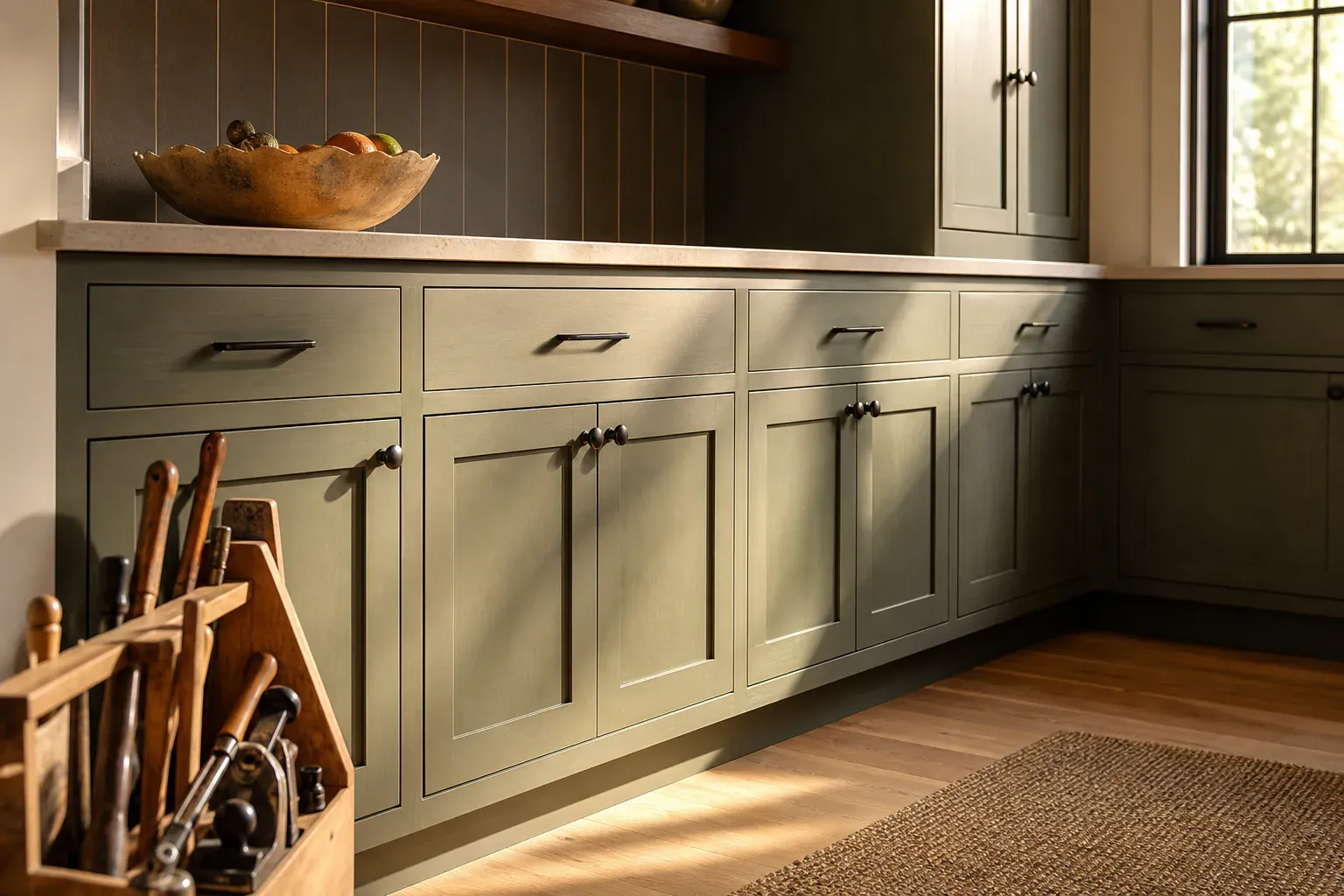
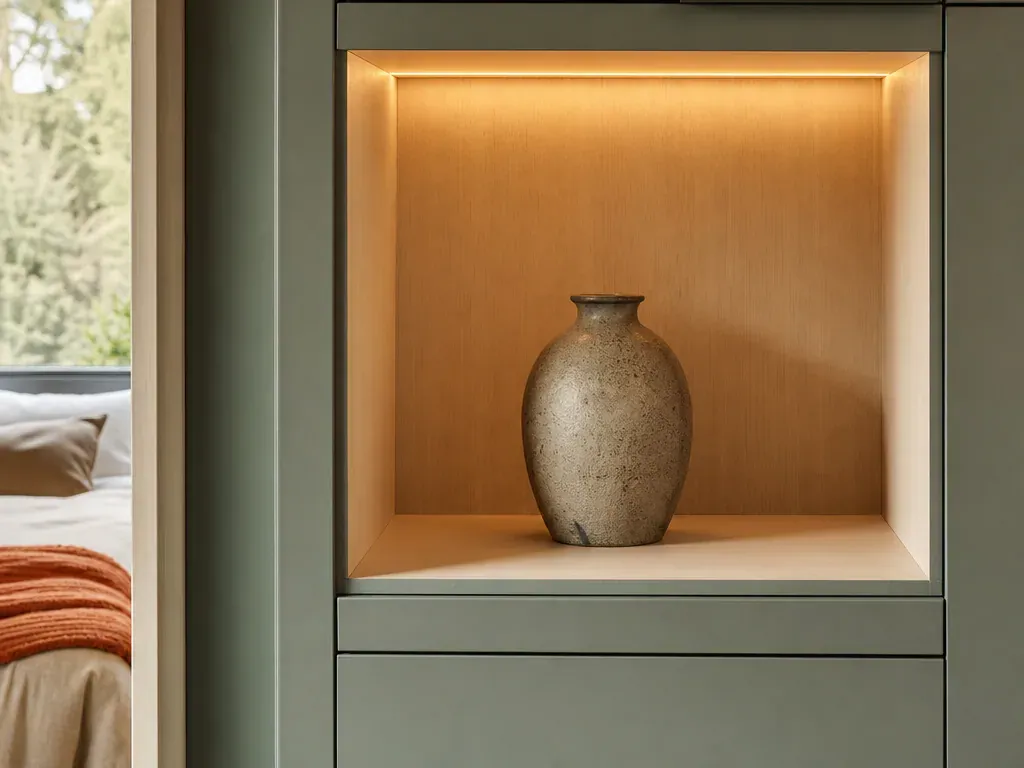
Boise Custom Cabinets provides custom maple cabinets, semi-custom cabinet solutions, and specialty cabinetry across Boise, ID and the surrounding areas. Maple resists dents and wear better than softer woods, takes stain and paint evenly, and holds up reliably in kitchens where moisture and temperature swings are everyday events. We build cabinets as fully custom built-to-order or semi-custom modular systems, handling everything from initial design consultation through installation and hardware finishing.
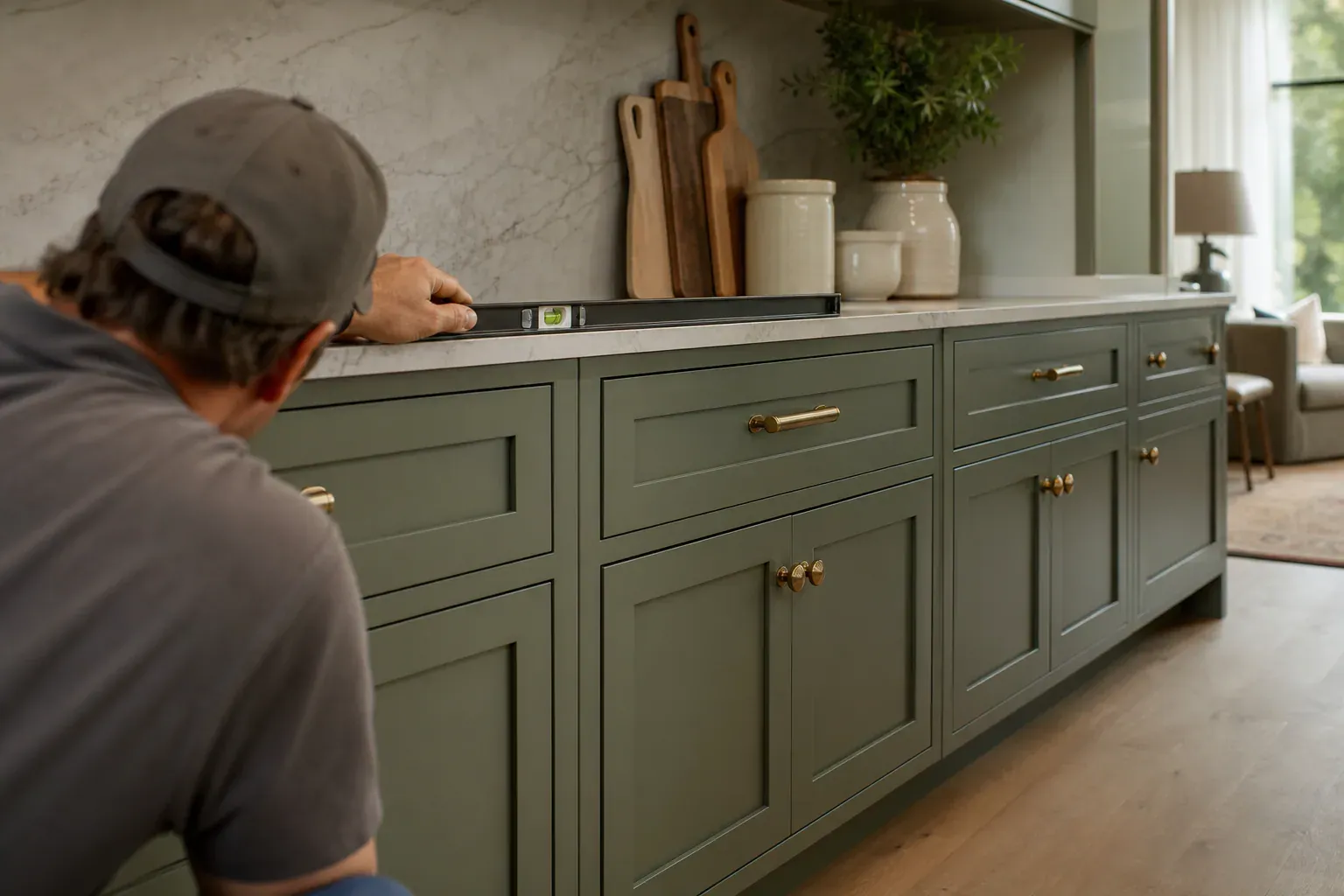
Northern hard rock maple is the species we reach for most often because it has tight, uniform grain structure that means fewer blotches when stained, and it resists dents and wear better than softer woods like pine. Most of our maple cabinets are built with plywood cabinet boxes—typically 1/2 inch for wall cabinets and 3/4 inch for base cabinets—rather than particleboard, which swells and fails when it absorbs moisture from sinks, dishwashers, or high-humidity bathrooms. The maple faces, doors, and trim go over that solid core, so you get the wood species you want on the outside with the structural durability you need underneath.
We also build maple-veneered MDF cabinets for clients who want paint-grade finishes or who are budget-conscious on larger kitchen remodels. Veneer is actual wood—thin maple sliced and glued to a substrate—not plastic, and it's stable under paint and topcoat. The key difference is construction cost and the flexibility to sand and refinish real wood versus a veneered surface later on.
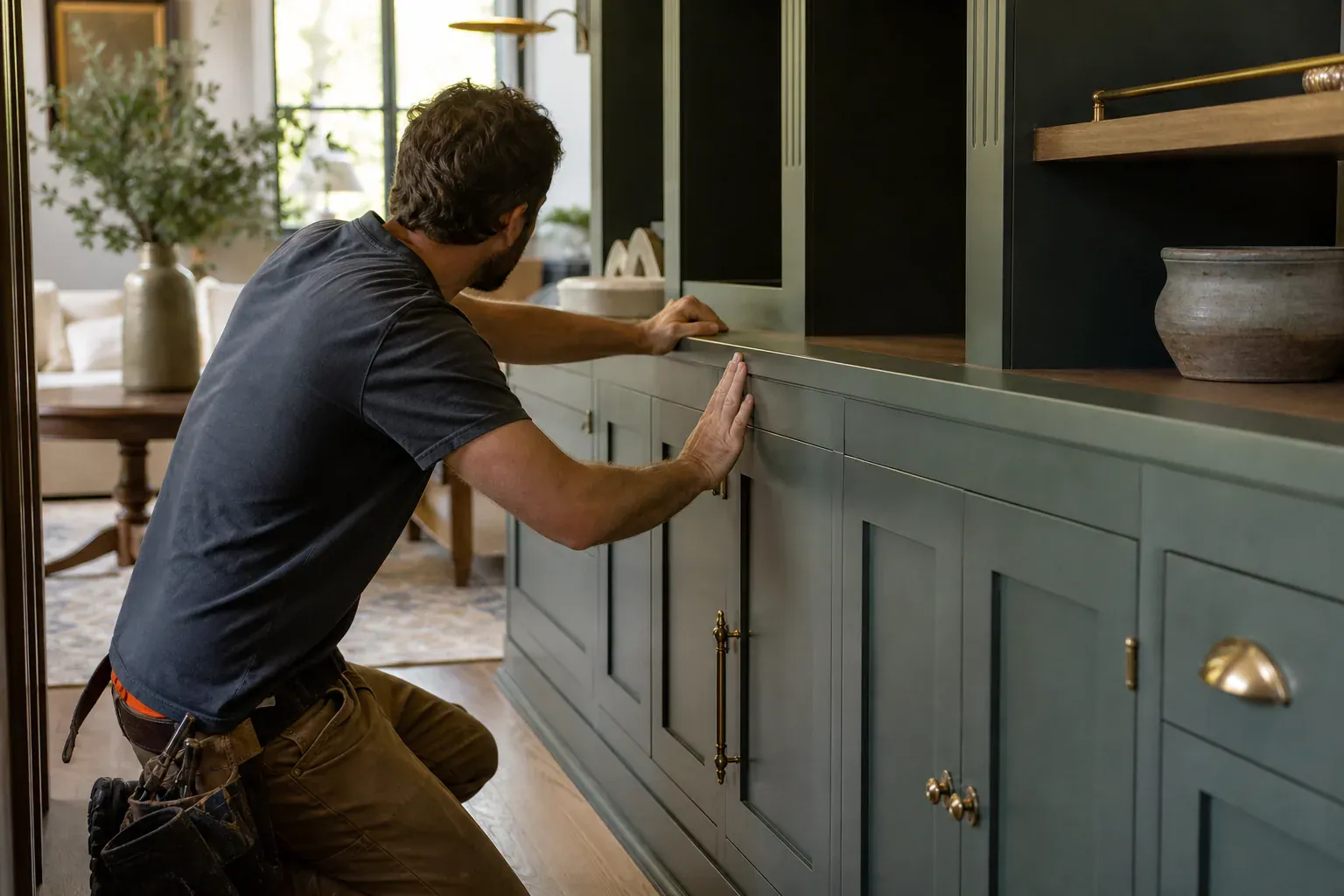
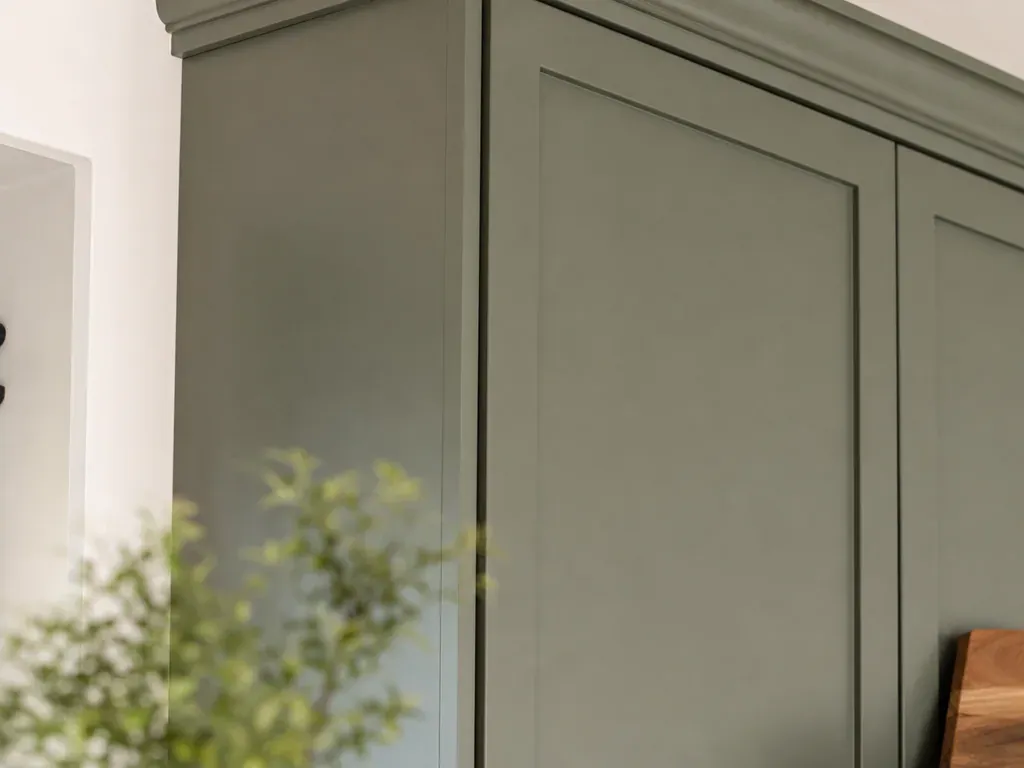
Door style sets the visual tone of the entire kitchen. Shaker-style maple cabinets have a five-piece solid wood door—two vertical stiles, two horizontal rails, and a recessed center panel that floats inside a mortise-and-tenon frame. That joinery allows the solid wood panel to expand and contract with seasonal humidity without splitting the frame, and it's what makes a shaker door last.
Raised panel doors have a deeper profile, with the center panel shaped in a curve or architectural profile rather than flat and recessed. They work well in traditional Boise homes or when you want the kitchen to feel detailed and intentional.
Slab doors are flat, single-piece maple with no frame around a panel. CNC machining lets us add profile details around the edge—a shaker-inspired edge, a slight bevel, or a full shadow line—without the cost of a five-piece door. Slabs are clean, modern, and still solid maple.
Inset doors sit inside the cabinet frame rather than overlaying it, which means they need tighter tolerances: typically a 1/8-inch gap all around. Overlay doors, the more common choice, sit flat on top of the box with a 3/8-inch reveal, and they're more forgiving during installation and across seasonal wood movement.
Hudson-style doors split the difference—a frame-and-panel door with a narrower rail and stile profile, giving you real wood joinery and panel construction with a more contemporary proportional look. We use CNC machining to profile rails, stiles, and center panels consistently across your entire kitchen run, so every door matches.
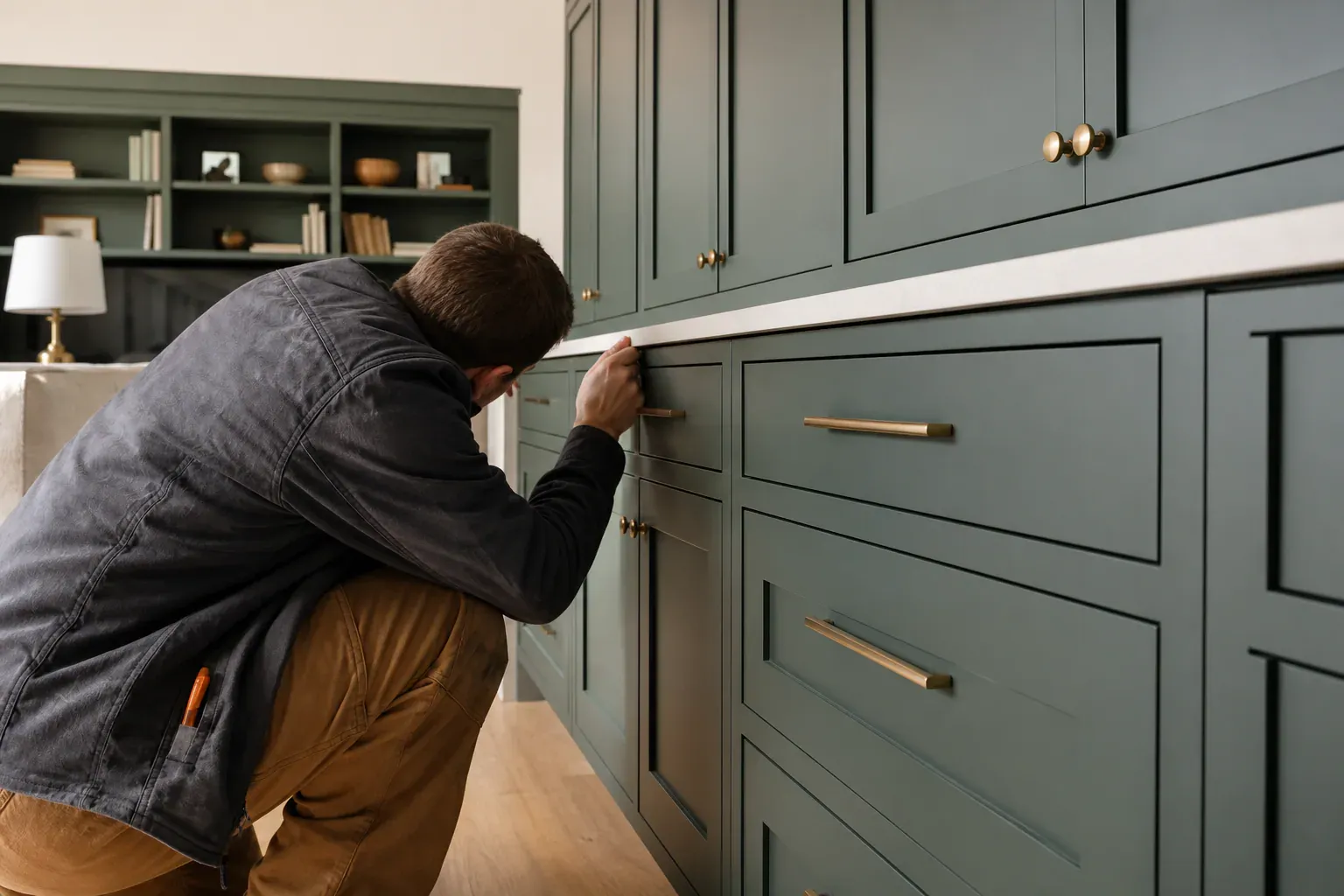
Paint-grade versus stain-grade selection happens before we start building. Paint-grade maple cabinets are built from stock that allows minor grain variations or knots because paint will cover them. Stain-grade maple needs to be clearer and more uniform because the wood itself becomes the visual feature.
Maple's tight grain can blotch under dark wood stain without proper preparation. We use a pre-stain conditioner to even out absorption before the stain goes on, which gives you a uniform color from light honey tones through medium amber and into darker browns. Conversion varnish topcoat cures harder and more moisture-resistant than lacquer, which matters in kitchens where steam, heat, and spills are everyday events.
Two-tone maple cabinet designs have become standard in Boise kitchens. A typical layout pairs painted upper cabinets—white, cream, or soft gray—with a stained island or base run in a medium to dark maple tone. The contrast adds visual interest and lets you keep upper storage feeling open and light while grounding the room with richer wood tones below. Paint finishes can be gloss, satin, or flat depending on how much sheen and cleanability you want. Maple stain colors range from natural (almost no stain, just topcoat showing the wood) through golden honey, medium amber, chocolate, and espresso. We bring finish samples to your home so you can see how your actual lighting brings out undertones.
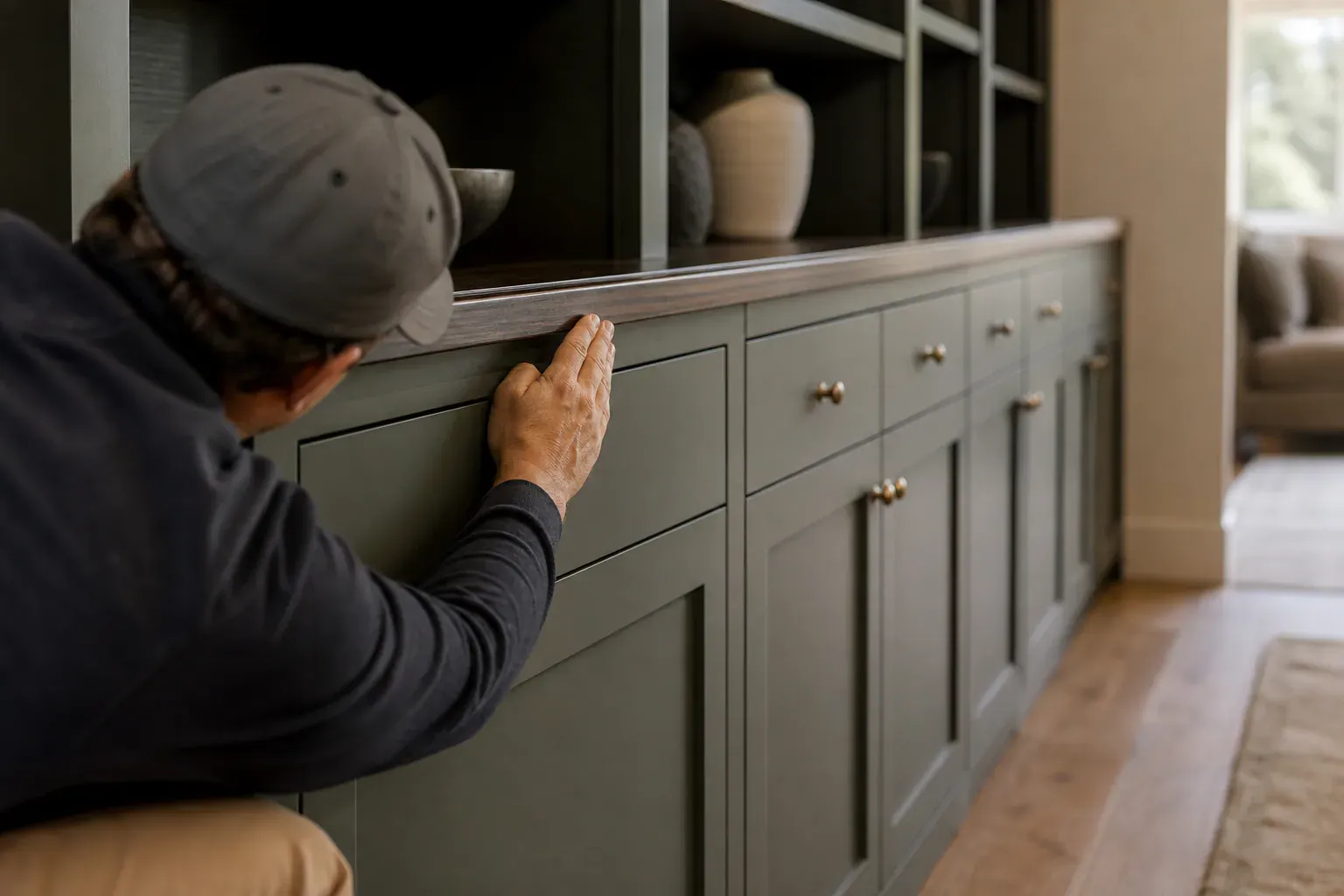
Semi-custom cabinets come from a manufacturer's library of standard widths, usually in 3-inch increments: a 36-inch base cabinet, a 39-inch, a 42-inch, and so on. You pick the door style, finish, and hardware, and the boxes ship in a few weeks. That's the fast and affordable route when your kitchen or bathroom footprint fits those standard widths.
Full custom maple cabinets are built to exact dimensions. If you need a 37.5-inch base cabinet to fit a tight space, or if your wall angles slightly and you want the cabinet to follow it, we build it. Cope and stick construction allows us to match door profiles across varying widths without compromising on fit or appearance. The lead time is longer—several weeks for production—but the fit is pixel-perfect. Most Boise kitchen remodels use a mix: semi-custom boxes and doors where the layout is standard, and a few custom pieces where walls don't square or you need a unique size.
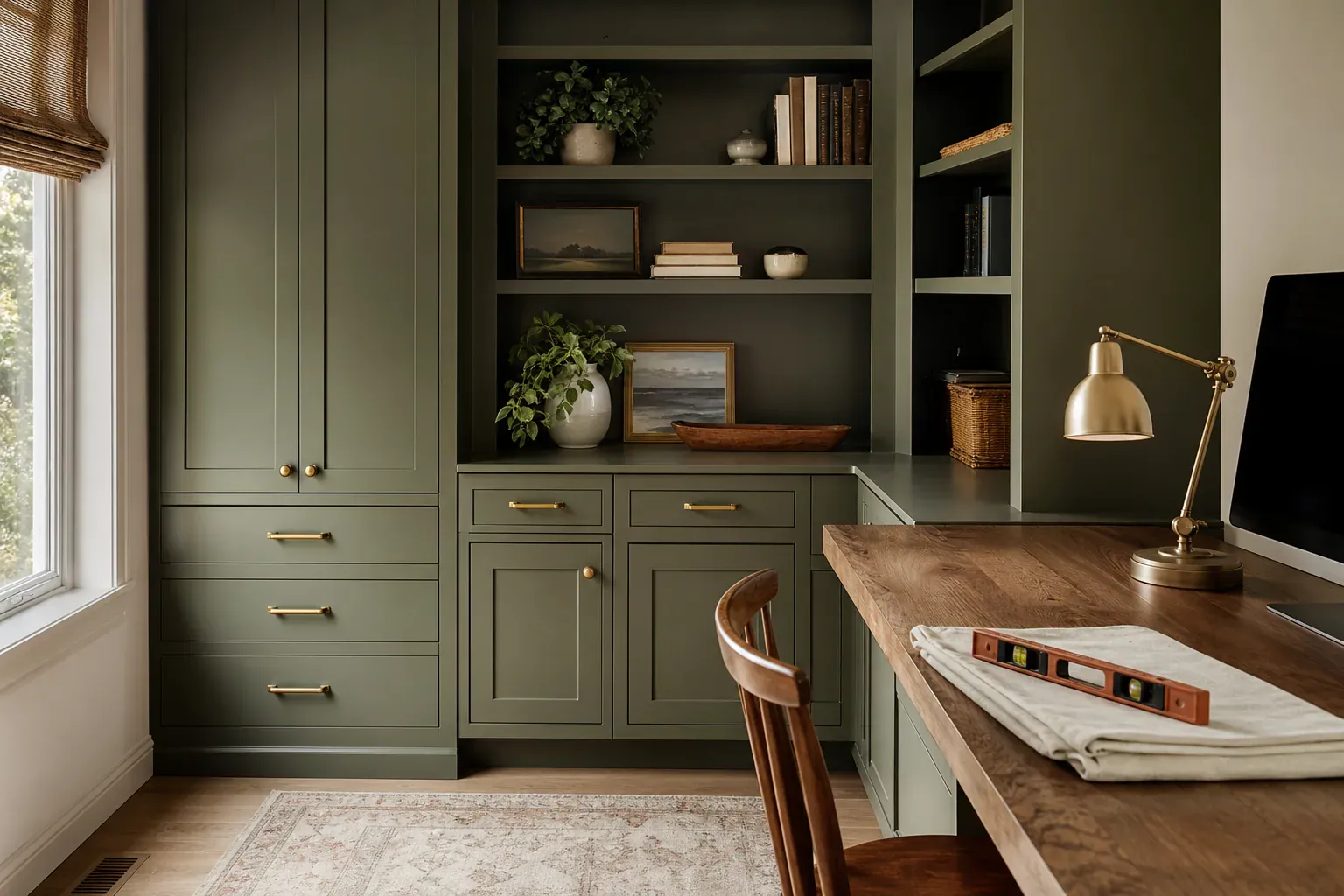
Concealed European hinges are the standard on nearly all custom cabinets now. They mount inside the cabinet box, invisible from the front, and they allow 3-way adjustment during installation—height, depth, and side-to-side—so the doors line up perfectly even if the cabinet wasn't quite square. Soft-close hinges use a damping mechanism to slow the door at the end of its swing, preventing slamming and protecting both the cabinet and whatever's inside.
Full extension drawer glides rated for 75 to 100 pound loads let you pull the drawer all the way out without tipping. That matters in base cabinets and vanities where deep drawers hold heavy pots, pans, or bathroom supplies. Standard glides stop 3/4 of the way out, which gets frustrating fast if you can't access the back corners.
Interior storage accessories include pull-out trays for base cabinets, adjustable shelf dividers, drawer dividers in custom configurations, and lazy susans sized for corner cabinets. These fit standard 15-inch through 36-inch base cabinet widths. A pull-out spice rack or utensil tray changes how usable your drawer becomes. Hardware finishes—the knobs and pulls—come in stainless, polished nickel, oil-rubbed bronze, matte black, and brass. They're the jewelry of your cabinet, and we size and place them so they feel proportional to your door style.
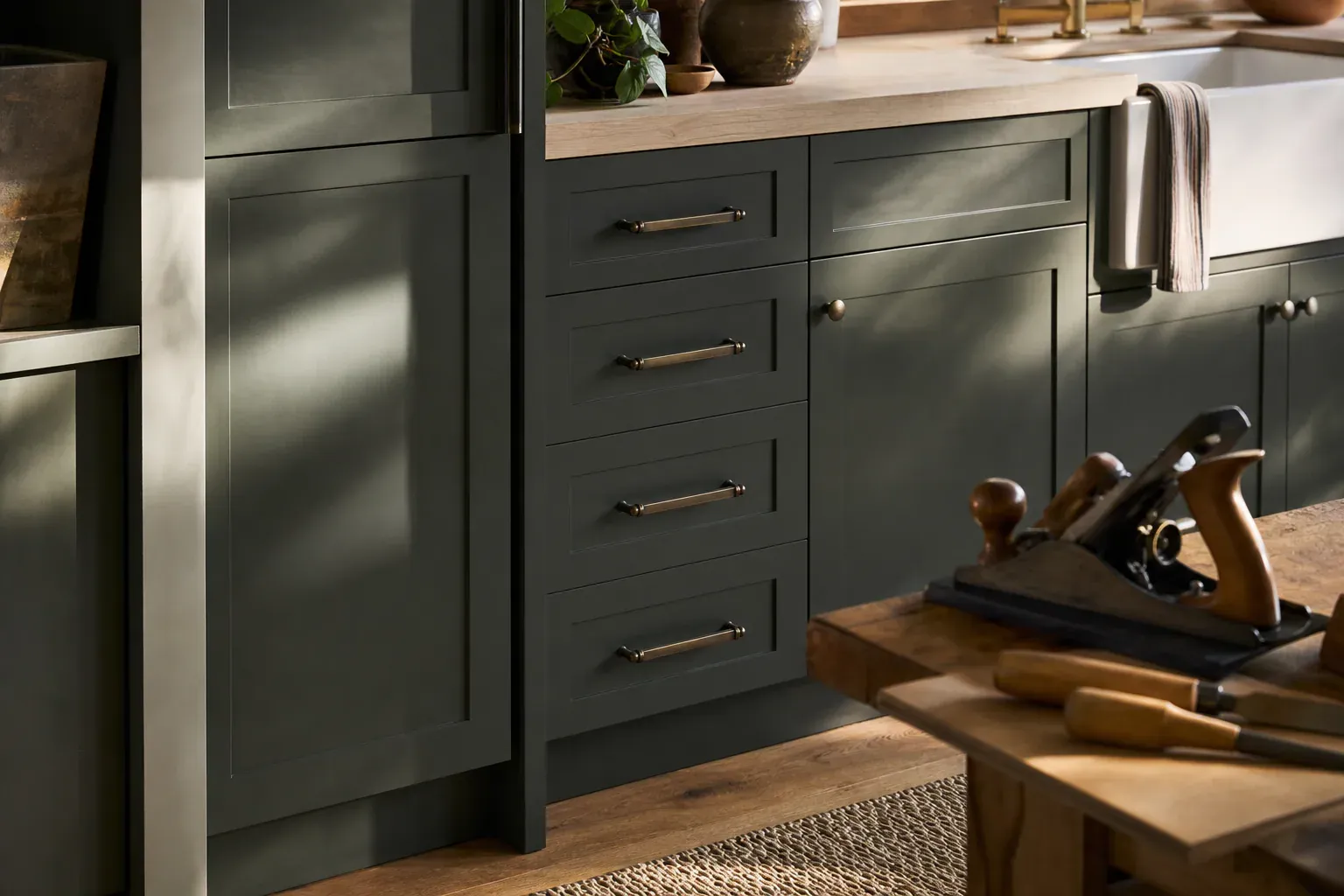
Bathroom vanities built from maple are typically set at 34 to 36 inches from the floor to the countertop, though we can customize height if you have accessibility needs or different proportions. Plumbing rough-ins need clearance—at least 18 inches from center of the drain to the back wall—which shapes how we configure interior storage. We build the vanity cabinet around those constraints rather than forcing them to fit.
Dovetail construction in vanity drawer boxes is worth the cost because bathroom vanities get daily use and moisture exposure that stress the joints. The interlocking tails and pins in a dovetail joint are inherently stronger than butt joints or pocket-hole joinery, and they'll hold up through years of pulling open wet drawers.
Built-in shelving and entertainment centers in maple work the same way as kitchen cabinets: custom sizing, choice of door styles, and integration with your room's crown molding and trim details. Crown molding caps built-ins at the ceiling line so the installation feels like it belongs in the architecture. We shim everything level before securing into studs at 16-inch on-center spacing.
Home office cabinetry in maple—desk-height base cabinets with shelving above, or glass-door upper storage—can be as simple or as detailed as your workspace needs. Dovetail-jointed drawer boxes handle daily use, and we can add cable management cutouts behind desks or shelving units for a clean installation.
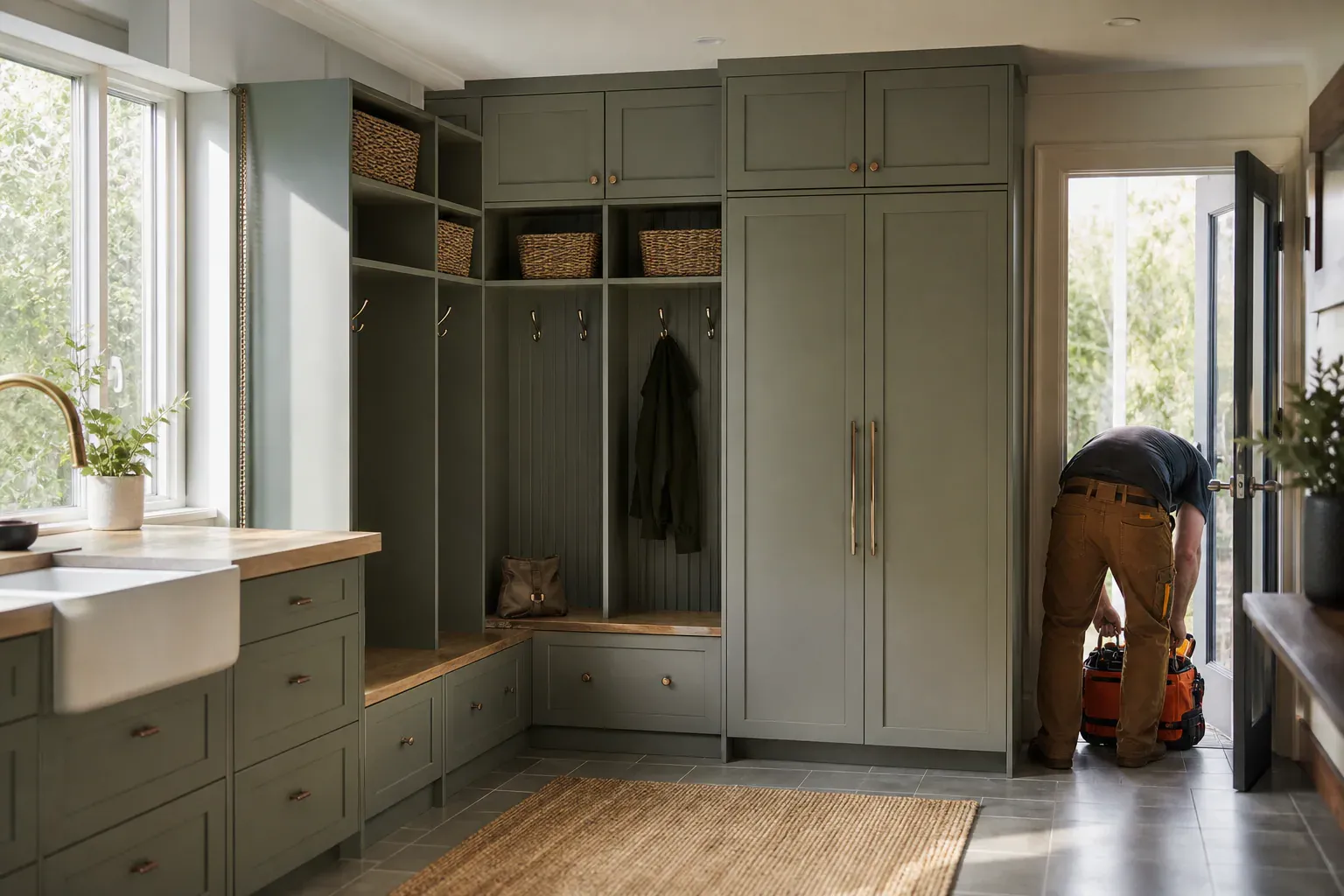
The process starts with an in-home consultation where we measure your space, talk through how you cook or use the bathroom, look at your home's architectural style, and understand your budget. We take detailed measurements—widths, heights, wall angles, electrical outlet locations, window placements, and any obstructions like beams or plumbing vents.
From those measurements, we create shop drawings that show cabinet elevations, dimensions, door swing directions, and hardware placement. You review and approve the drawings before we order materials or start production. That approval step prevents surprises and ensures we're building what you actually want.
Production typically runs several weeks for full custom work, longer if we're matching existing cabinet finishes or waiting on special hardware. Once built, cabinets are delivered to your home. Installation begins with shimming the first base cabinet level and fastening it to wall studs. Subsequent cabinets are fastened to each other and to the wall, then doors are hung and adjusted, hardware is installed, and any trim or crown molding is coped and fitted to match your walls and ceiling. We caulk visible gaps where cabinets meet walls or trim and do not leave cabinets unfastened, loose, or with gaps that collect dust.
Maple and birch are both hardwoods and common choices for custom cabinets, but they have real differences. Maple has a much tighter, finer and more uniform grain pattern. Birch shows more color variation and speckles, and it tends to blotch more noticeably under stain, especially darker stains.
Maple's Janka hardness rating is higher than birch, which means maple resists dents and dings better in high-traffic kitchens or bathrooms. That's measurable, not marketing—maple genuinely holds up better to daily wear. Birch is less expensive and takes stain beautifully if you choose lighter or medium tones, so it's often the right call when budget is tight and you're okay with visible grain variation.
Other species we sometimes use include cherry, which darkens and richens over time with UV exposure; walnut, which is darker and more dramatic; and hickory, which has bold grain and color character. Maple is still the most versatile: it works with almost any design direction, from modern to traditional, and it performs reliably in moisture-prone areas.
Maple cabinets in Boise homes sometimes need a second life. If your existing maple cabinetry has surface damage, worn finish, or just looks tired, maple cabinet refinishing restores the wood without replacing the boxes. We sand the doors and frames to bare wood, repair any gouges or dents with wood filler, and apply new stain and topcoat. The cost runs lower than new cabinets and preserves the cabinet structure you already have—important in older Boise homes where wall and appliance cutouts fit tight. Refinishing also lets you shift color; many homeowners move from a golden maple to a darker stain or a painted white or gray finish on the same framework.
Some jobs call for unfinished vs finished maple cabinets from the start. We build cabinet boxes in maple, then you choose whether we apply stain and polyurethane at our shop before delivery, or ship the cabinets unfinished so you can stain them on-site or hire a local finisher. Unfinished cabinets cost less upfront and give you control over the final color—useful if you're matching existing trim or have a specific paint color in mind. Finished cabinets arrive ready to install, which cuts your timeline and eliminates the dust and fume mess of finishing indoors.
Maple cabinet staining and painting splits into two workflows. Staining shows the grain; we apply wood conditioner first (maple absorbs stain unevenly without it), then brush or spray your chosen stain, then seal with polyurethane or conversion varnish. Painting hides the grain under primer and acrylic or polyurethane paint; it's faster, masks grain variation, and holds up well in Boise's dry climate. We sand between coats and spray in a booth to avoid dust nibs.
The choice between assembled vs ready-to-assemble cabinets affects installation time and durability. We build assembled cabinets—solid boxes with all joints reinforced, doors pre-hung and adjusted, shelves installed. You unload them and we set them level and plumb, shim gaps, connect them, and install hardware. Ready-to-assemble (RTA) cabinets ship flat and require on-site assembly with cam locks and dowels; they're cheaper but joints loosen over time and assembly takes a crew half a day per small kitchen. For Boise custom work, we build assembled so the cabinet goes straight to the wall.
Maple cabinet construction methods determine longevity. We use face frame construction—a solid maple frame around the perimeter of the box provides rigidity and a surface to hang doors and hinges. The box itself is typically maple plywood (veneer over maple core) for the sides and back, with solid maple for the frame, shelves, and face edges. Joints are pocket-hole screwed, doweled, or mortise-and-tenon depending on the detail level. Drawer boxes get solid maple sides with plywood bottoms and full-extension undermount slides. This method resists racking (twisting) and lasts through decades of daily use.
Semi-custom vs full custom cabinets represents the real divide in how the work flows. Semi-custom cabinets start with a manufacturer's standard sizes and styles—you pick from door profiles, finishes, and hardware, but the box heights and widths are fixed. Full custom cabinets are built to your exact dimensions, layout, and style. We measure twice, build to your specs, and modify for odd walls or appliance cutouts. Full custom costs more but solves problems semi-custom can't: fitting a sloped soffit, creating a 36-inch-wide opening where stock only goes 30 or 36, or matching an unusual door profile you saw somewhere. In Boise kitchens with older homes and non-square walls, custom is often the only answer.
Kitchen cabinet remodeling is where most of this work happens. We remove old cabinets, patch walls, check the floor and base for square and level, then install new maple cabinetry and hardware. If appliances stay, we work around their footprints. If appliances move, we patch old holes and modify cabinet openings. Backsplash, countertop, and floor work happens after cabinets are set. A full kitchen remodel with new maple cabinets typically takes two to three weeks from demolition to final cleanup.
Specialty cabinet types expand beyond standard base and wall layouts. We build pantry cabinets with deeper shelves for bulk storage, spice pull-outs and vertical dividers, wine racks and stemware holders, appliance garages that hide the toaster and blender behind a roll-up door, and open shelving with solid maple shelves and support brackets for display. Bathroom vanities get drawers instead of a traditional cabinet door for easier access, and we size them to your sink and counter depth. Built-in desks, mudroom lockers, and media centers follow the same logic: solid maple frames, maple plywood panels, custom shelving and hardware.
Free kitchen design services help you see the space before we build. We visit your kitchen, measure carefully, photograph the layout, and bring sketches or digital renderings to your next meeting. You see door styles, colors, and hardware options laid out in your actual room. This step prevents costly mistakes—discovering mid-build that your island is two inches
Northern hard rock maple is the species we reach for most often because it has tight, uniform grain structure that means fewer blotches when stained, and it resists dents and wear better…
Door style sets the visual tone of the entire kitchen. Shaker-style maple cabinets have a five-piece solid wood door—two vertical stiles, two horizontal rails, and a recessed center panel…
Paint-grade versus stain-grade selection happens before we start building. Paint-grade maple cabinets are built from stock that allows minor grain variations or knots because paint will…
Semi-custom cabinets come from a manufacturer's library of standard widths, usually in 3-inch increments: a 36-inch base cabinet, a 39-inch, a 42-inch, and so on.
Concealed European hinges are the standard on nearly all custom cabinets now. They mount inside the cabinet box, invisible from the front, and they allow 3-way adjustment during…
Bathroom vanities built from maple are typically set at 34 to 36 inches from the floor to the countertop, though we can customize height if you have accessibility needs or different…
Why homeowners call us
Every custom cabinets job is scoped and priced in writing, so the number you approve is the number you pay. If something behind the wall changes the work, we stop and price it first.
You speak to the people doing the work, not a call centre, and cover certificates go to your building manager or general contractor on request.
Containment, floor protection and same-day debris removal on every interior job — the space stays usable while the work is going on.
Crews work Boise and the surrounding cities every week, so a walkthrough is usually available within the same week you call.
FAQ
Maple cabinets are not outdated. The tight, uniform grain works with contemporary, traditional, transitional, and farmhouse aesthetics depending on door style, finish color, and hardware. Modern two-tone designs—painted uppers with stained maple islands—are very current in Boise kitchens. Maple's hardness and finishing stability make it as functional today as it was decades ago.
Yes. Stain-grade maple cabinets can be sanded and restained to a different color later, though darker stains require careful prep and conditioning to avoid blotching. Paint-grade cabinets that were originally stained are harder to paint over unless they're sanded completely smooth. Cabinets painted originally can be repainted easily. Plan for the refinish you might want years down the road when you choose your initial finish.
Maple has a finer, tighter grain than birch and resists dents better due to higher hardness. Birch shows more color variation and grain character, and it blotches more easily under dark stain. Maple works better in high-traffic kitchens and takes stain more evenly. Birch is generally less expensive and suits lighter or medium stain tones where grain variation reads as texture rather than inconsistency.
Dovetail construction joins drawer sides by interlocking wedge-shaped tails and pins cut into the mating edges. The interlocking geometry is inherently strong and resists pulling apart under load or repeated use. In cabinets, dovetailed drawer boxes handle heavy items and daily motion better than butt joints or pocket-hole joinery, making them worth the cost in vanities, base cabinets, and desk drawers.
Initial consultation and measuring takes one visit. Shop drawing approval usually takes a week or two. Production for full custom cabinets typically runs four to eight weeks depending on complexity and finish. Delivery and installation take one to three days depending on project scope. Plan on ten to twelve weeks total from first conversation to cabinets hanging on your walls.
Wipe spills immediately with a soft cloth and mild soapy water, then dry with a clean cloth. Use a wood-specific cleaner on stained cabinets a few times a year to refresh the finish. Avoid abrasive scrubbers and harsh chemicals. Conversion varnish topcoats are durable but not indestructible—heavy cutting boards or standing hot pans can mark the surface. Use trivets under hot items and cutting boards as a matter of habit, and your cabinets will look good for decades.
Call (208) 555-0116 for a walkthrough, usually within the same week.