How Much Do Custom Cabinets Cost In Boise
Custom cabinet pricing in Boise scales primarily by linear foot measurement. A typical kitchen runs 10 to 25 linear feet of cabinetry, and that linear-foot span is where the dollar figure…
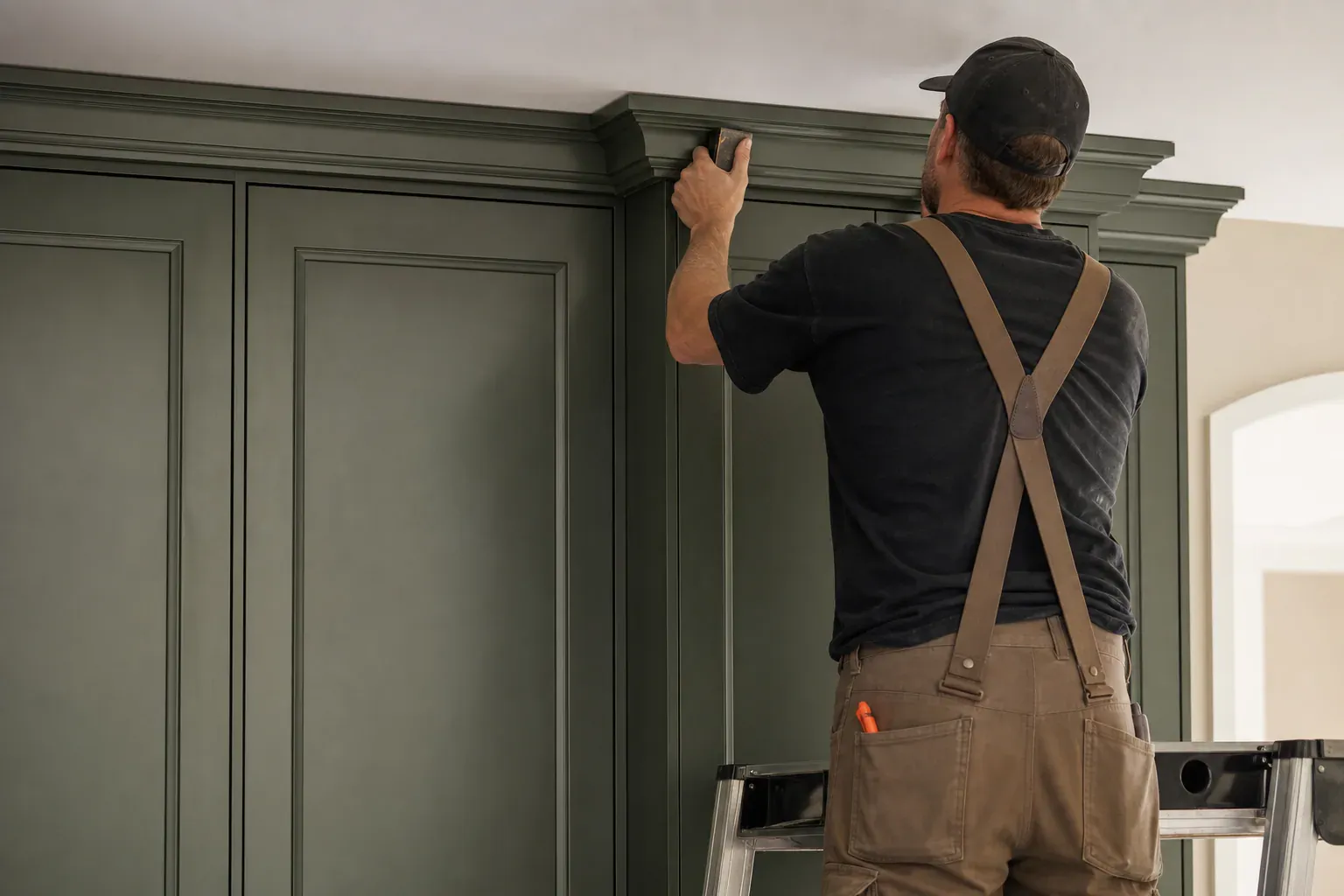
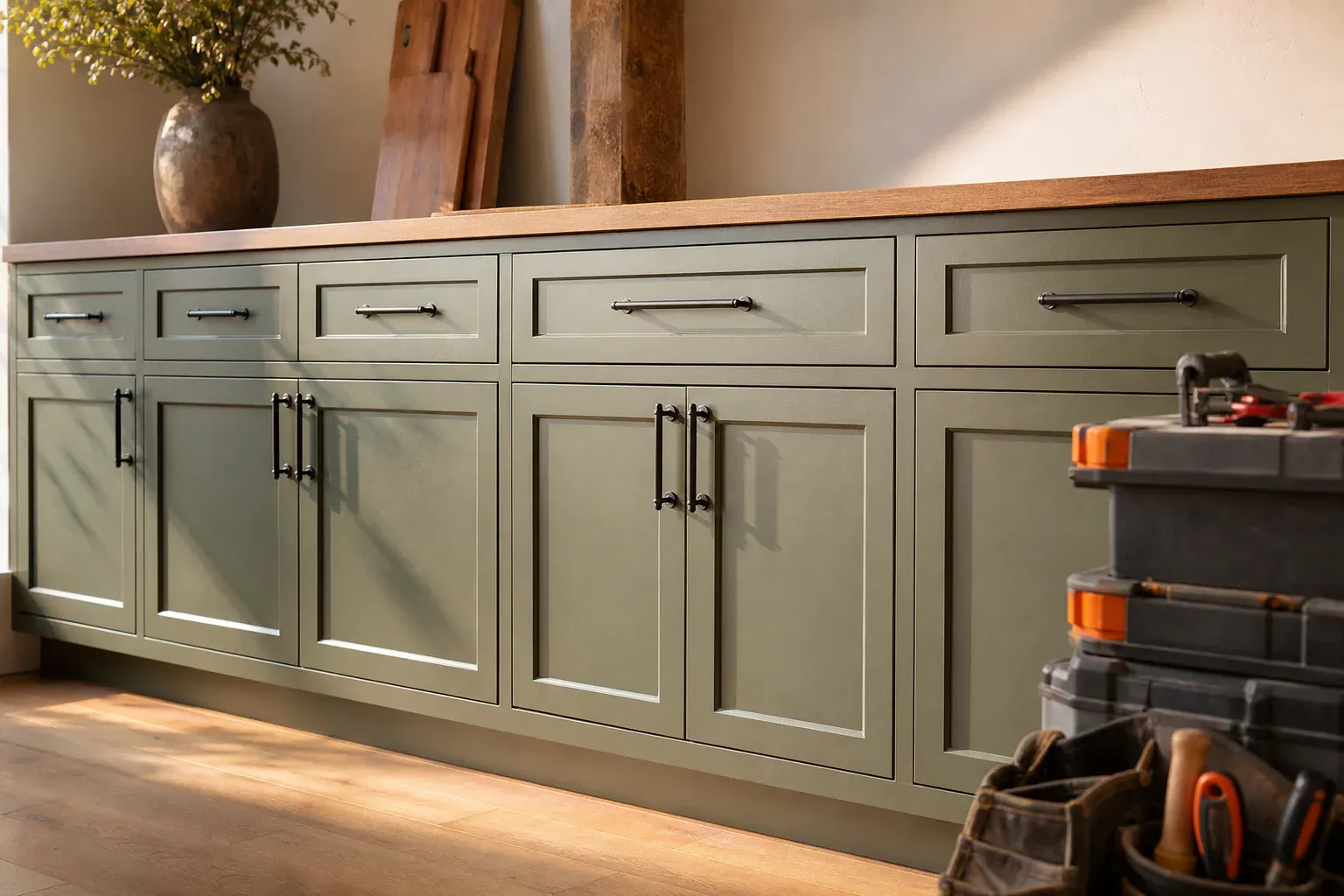
Boise Custom Cabinets provides custom cabinet quotes, design consultation, and full installation for homeowners and builders across Boise, ID. We measure each space, discuss your materials and finish preferences, and deliver a written estimate that breaks down cost by linear footage, construction method, hardware, and labor before you commit to anything.
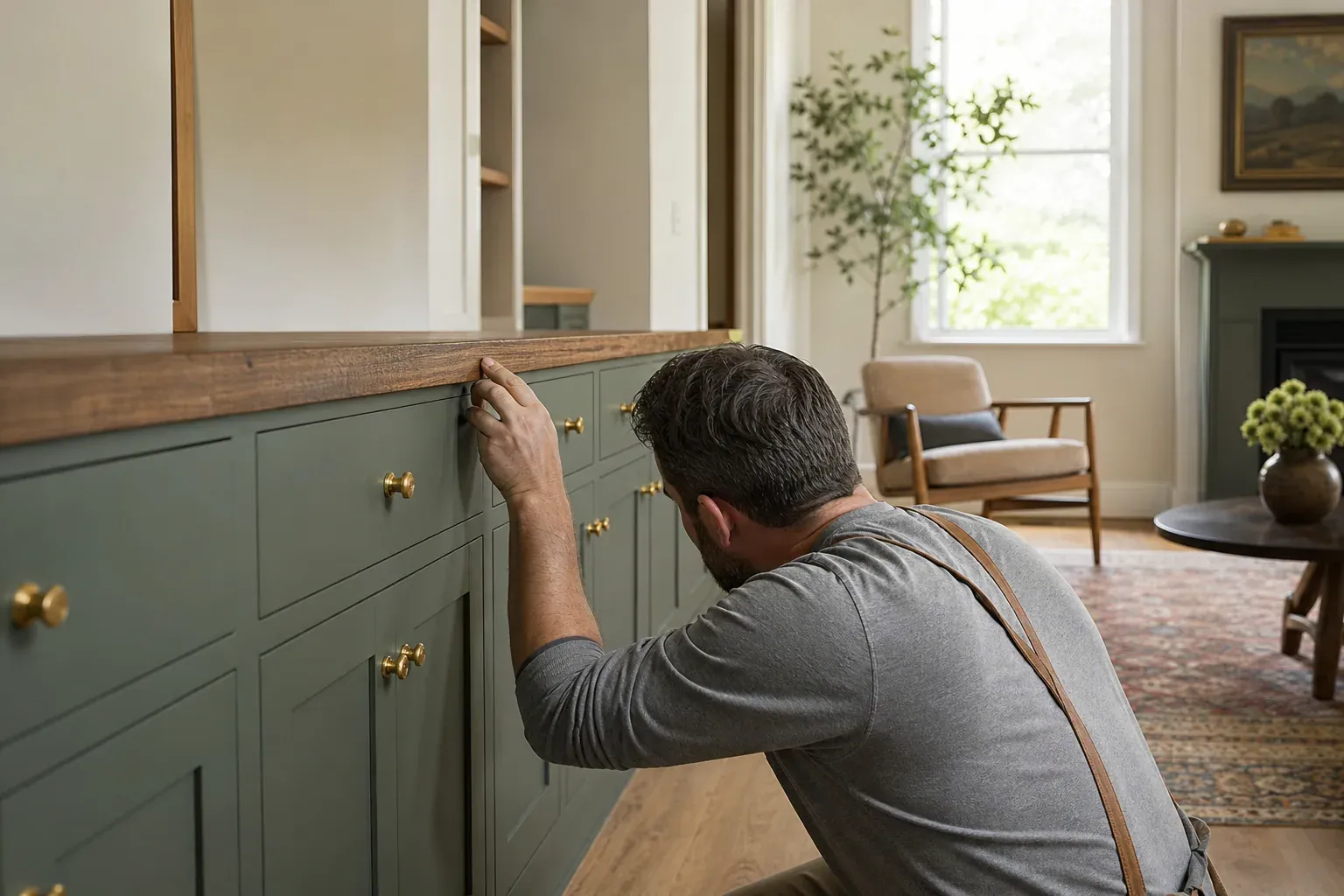
Custom cabinet pricing in Boise scales primarily by linear foot measurement. A typical kitchen runs 10 to 25 linear feet of cabinetry, and that linear-foot span is where the dollar figure lives. You'll see quotes anywhere from the low end to the premium end depending on what you choose for box material, door style, wood species, and finish quality.
Kitchen cabinet budget allocation matters here. Most homeowners budget 20 to 35 percent of their total kitchen remodel spend on cabinetry alone. If your kitchen remodel sits at $50,000, expect to spend $10,000 to $17,500 on the actual cabinet boxes, doors, hardware, and installation labor. That number climbs or falls based on whether you're choosing stock cabinets, semi-custom options, or full custom builds.
Linear foot pricing reflects the work that goes into each run. A 12-foot kitchen with standard 36-inch countertop cabinets plus a wall run will quote differently than a 12-foot kitchen with a 48-inch island, a butler's pantry, and floor-to-ceiling shelving. More linear footage means more material, more hardware, more finishing work, and more installation time.
Bathroom vanity cabinets cost less overall because they run shorter linear footage—typically 3 to 10 linear feet for a single vanity or double vanity—but they often include specialty components like open shelving or custom drawer configurations that bump the per-foot price up relative to standard kitchen runs.
Stock cabinets use particleboard box construction with mdf cabinet doors in preset widths: 9, 12, 15, 18, 24, 30, 36, and 42 inches. The boxes come finished from the factory. You order, receive, and install them. The trade-off is that your opening has to fit the standard sizes, or you accept filler panels and shims to make it work. Cost per linear foot runs lowest here because there is no custom fitting.
Semi-custom cabinets offer more flexibility. You can choose from a wider range of widths, depths, and heights. You pick door styles and finish colors from a manufacturer's catalog. The boxes still use a mix of particleboard or plywood, depending on the line. Lead times are slightly longer than stock, and the per-linear-foot price climbs because you're choosing specifics rather than taking what came off the assembly line.
Full custom cabinets are built to your exact specifications. The box construction typically uses plywood sides—usually 1/2 inch to 3/4 inch thickness—instead of particleboard. Hardwood face frames are milled to fit your opening precisely. You specify door style, wood species, finish type, and every hardware detail. The labor cost is higher because the work is made-to-measure rather than mass-produced. Lead times are longer, but you get cabinets that fit the space, match your vision, and use the material quality you want.
When does stock or semi-custom make more sense? If you're renovating a space with standard wall openings, level walls, and a budget-first priority, stock cabinets deliver function quickly and cheaply. If you want design input but your walls are plumb and your openings are square, semi-custom splits the difference. Full custom becomes the better choice when your openings are non-standard, your walls aren't plumb, you're using high-end materials like cherry wood or walnut wood, or your design involves features that stock lines don't offer.
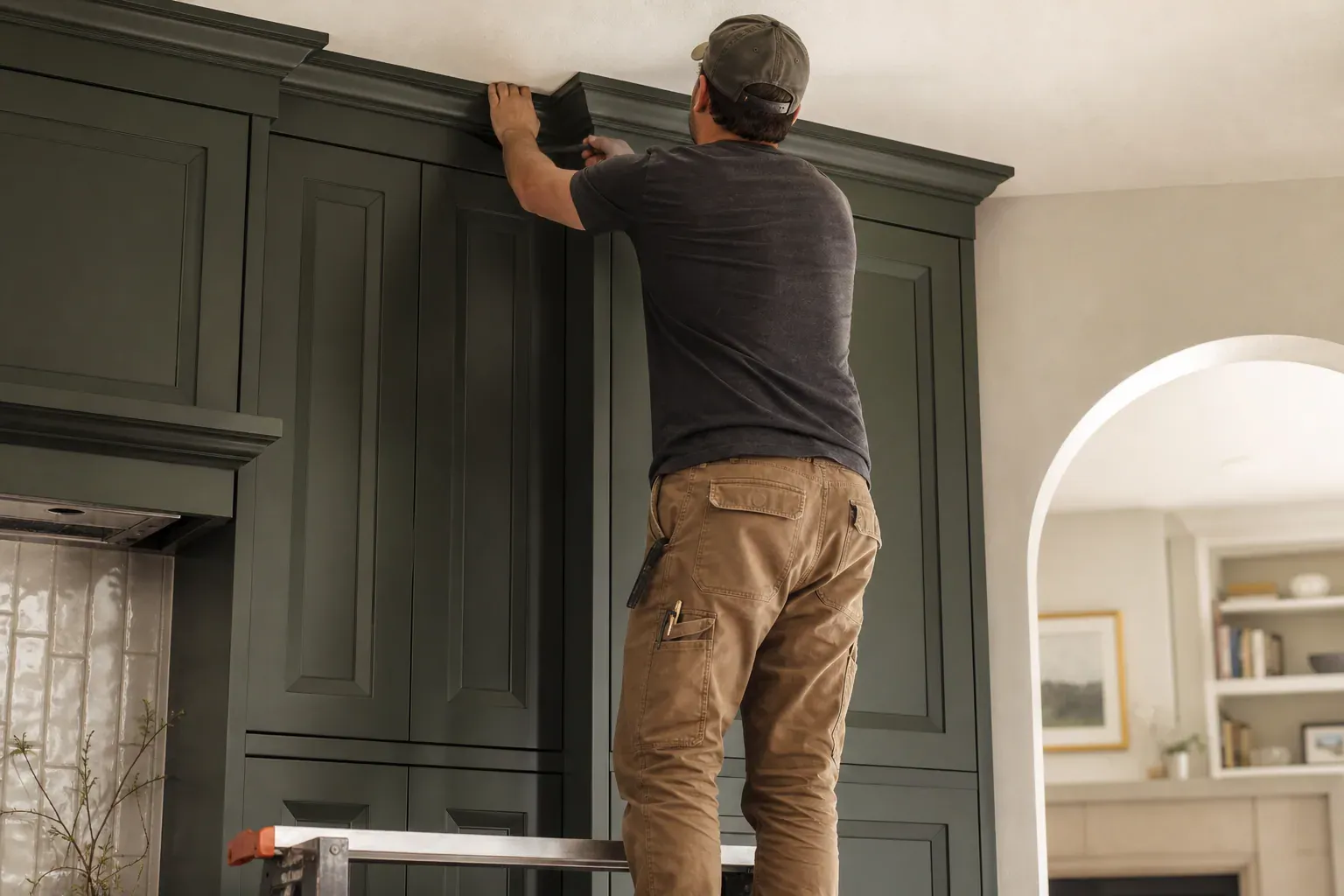
Cabinet design complexity is the first variable. A straight run of uppers and lowers along one wall costs less per linear foot than a kitchen with an island, a corner pantry, or mixed cabinet heights. Every transition, every corner cabinet, every angled run adds labor hours and material waste.
Wood species selection directly shifts pricing. Oak cabinets and maple wood occupy the entry-level range for solid hardwood builds. Cherry wood and walnut wood sit at the premium end. The difference isn't just material cost—species also affect milling time and finishing complexity. Walnut wood has grain movement and color variation that demand slower finishing passes than maple does. Your quote will itemize wood species separately.
Cabinet hardware—hinges, drawer slides, knobs, and pulls—adds per-door and per-drawer costs. A basic five-piece hinge costs far less than a soft-close hinge assembly. Standard ball-bearing drawer slides run lower than full-extension undermount slides. If your design includes pull-out shelves, spice racks, hidden compartments, or specialty organizers, each one is a separate line item.
Construction quality tier matters. Dovetailed drawer boxes cost more to build than stapled boxes, but they outlast stapled construction by decades. Plywood shelving inside cabinets costs more than particleboard but won't sag under weight. A baked-on catalyzed finish resists chipping and yellowing better than brush-applied stain or paint, and that durability commands a higher quote.
Cabinet materials selection goes beyond species choice. A veneer finish on mdf substrate costs less than solid wood construction but still looks refined. Laminate finish keeps costs down further. Paint finish over mdf cabinet doors is economical and covers imperfections. Custom cabinet pricing reflects whether you're choosing solid hardwood throughout, veneer over plywood, or mdf with paint.
Installation labor costs vary by site conditions. If walls are plumb and the opening is square, installation moves faster. If walls slope, floors aren't level, or the existing cabinet removal cost is high—because old cabinets are screwed to the studs and require careful removal—labor hours climb and the quote adjusts upward.
Shaker style cabinets remain the most-quoted door configuration because they deliver clean aesthetics and cost less than heavily detailed doors. The five-piece shaker frame with a recessed center panel is straightforward to mill and finish. Other door styles—raised panel, contemporary slab, recessed panel with beading—all cost more because they require additional routing passes and finishing work.
Cabinet veneer work sits between painted mdf and full solid construction. Veneer is a thin slice of premium wood glued to a plywood or mdf substrate. It looks like solid wood, costs less than solid, and offers color and grain consistency that mdf paint can't match. Beveled edges on veneer panels add hand-finished detailing and increase labor cost.
Finish options span paint, stain, and laminate. Paint finish over mdf cabinet doors is durable when applied in multiple passes with baked-on application. Stain finish on hardwood shows grain character but requires careful wood selection and multiple coats to achieve even color. Laminate finish is the most economical and most durable against water and heat but has visible seams on edges. Baked-on finish—technically catalyzed lacquer or conversion varnish—costs more upfront than brush-applied stain or paint but resists moisture, heat, and daily wear much better. Kitchens and bathrooms benefit from baked-on finishes because steam, humidity, and temperature swings don't cause chipping as quickly.
Crown molding adds visual weight to the top of a cabinet run. It's priced per linear foot separately from the box pricing because it's built and finished independently. A simple ogee profile costs less than a complex three-piece build-up with corbels. Adding crown molding to a 12-foot run can add $400 to $1200 to the estimate depending on profile complexity and wood species.
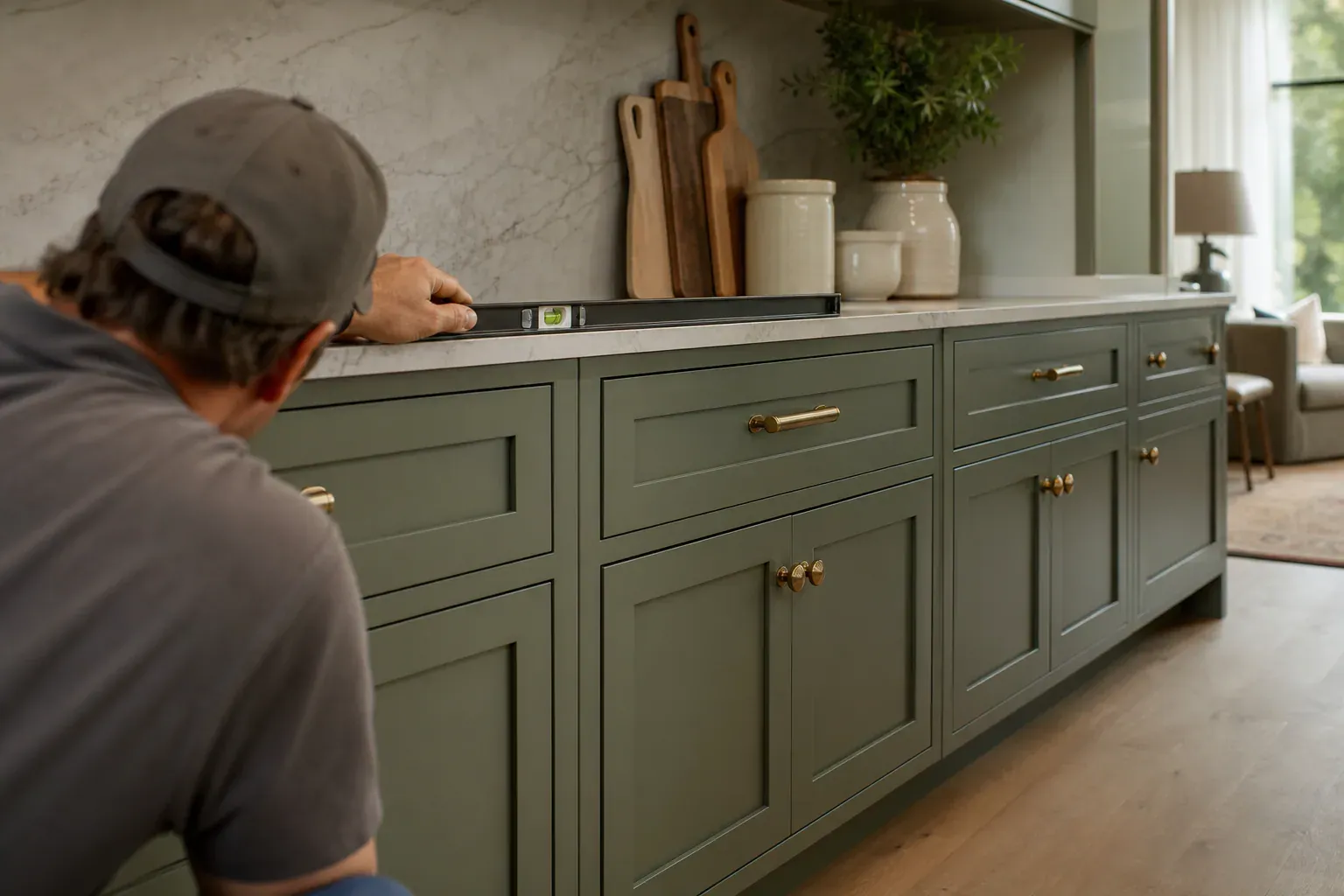
The process starts with a conversation about your space, your timeline, and your budget range. We discuss whether you're renovating a kitchen, updating bathroom vanity cabinets, or building custom shelving elsewhere in the home.
A consultation includes an in-home or showroom measurement. We measure wall dimensions, ceiling height, window and door placements, and any obstructions that affect cabinet layout. We note wall plumb and floor level because out-of-square spaces affect install difficulty. We photograph the space and take notes on lighting, adjacent finishes, and your access to the area during installation.
We walk through design options during the consultation. You tell us about door style preferences, wood species, finish color, hardware style, and special features like pull-out shelves or hidden compartments. If you're building a kitchen cabinet design around an existing appliance layout or window placement, we discuss how the cabinetry interacts with those fixed points. This is where design complexity gets defined—the more custom routing, the more specialty features, the more labor-intensive the design, the higher the quote will climb.
After the consultation, we prepare a written estimate broken down by linear footage of base cabinets, wall cabinets, and specialty runs. The estimate lists box material, door material, finish type, hardware brand and quantity, and installation labor as separate line items. You see what you're paying for before approving the design. We don't collect a deposit until you've reviewed the full custom cabinet quote and agreed to the terms.
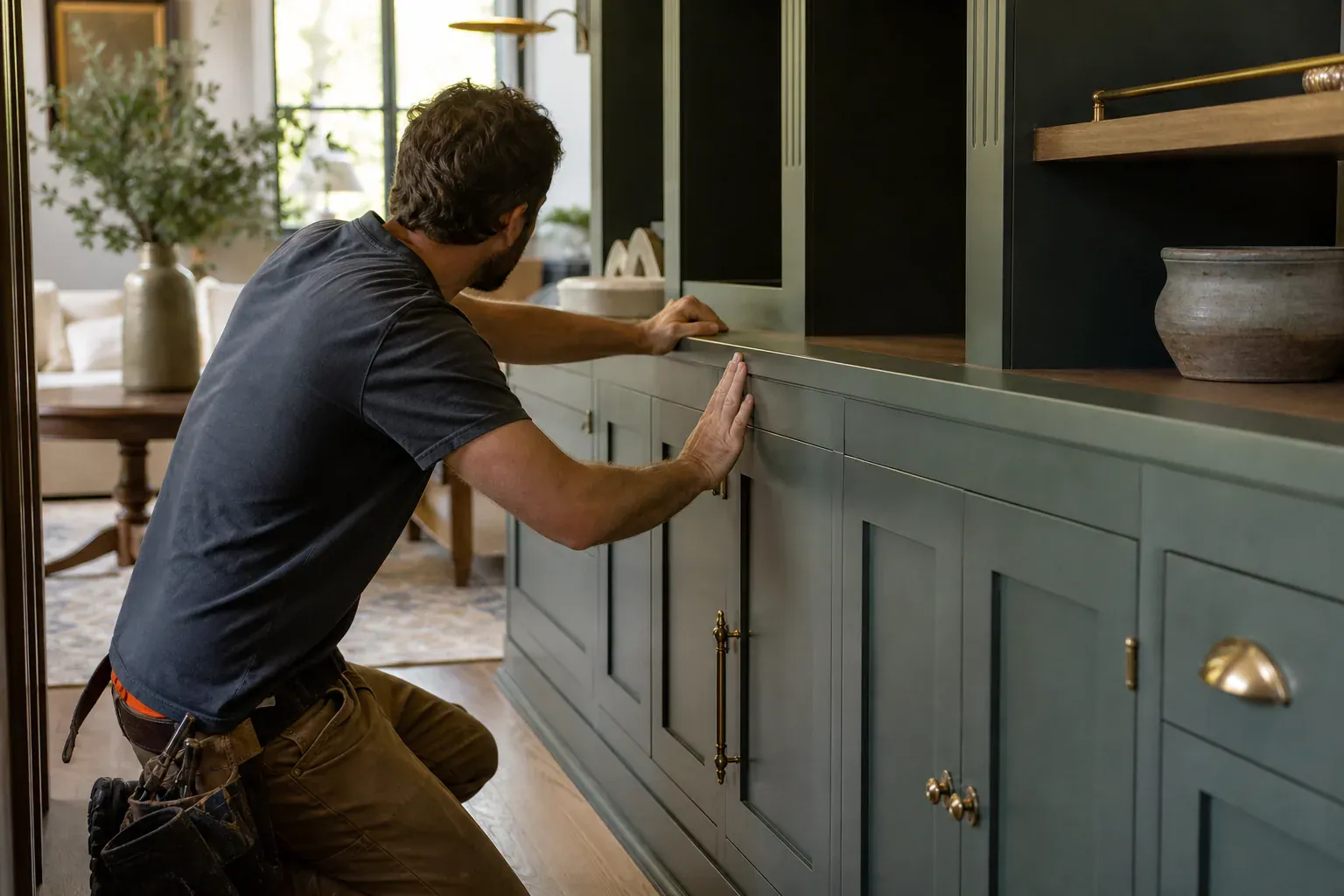
When you request a custom cabinet quote from multiple builders, line up the estimates side-by-side and confirm each one specifies the same materials. A complete quote should list box material, door material, box thickness, edge banding type, finish method, hardware brand, and linear footage broken down by cabinet run. If one quote lists "semi-custom options" and another lists "full custom plywood construction," they're not comparable.
Red flags for suspiciously low estimates include quotes that don't itemize materials, vague descriptions like "premium cabinets" without specifying wood species, or a price-per-cabinet number instead of per-linear-foot measurement. Watch for quotes that cite particleboard where others cite plywood—that's usually a silent downgrade.
High bids deserve scrutiny too. If one builder quotes significantly above the others but doesn't explain the difference—better wood, hand-finished details, specialty features—ask what justifies the premium. Sometimes it's genuine quality difference; sometimes it's padding.
The most honest quotes break out cabinet removal cost separately, note regional labor variation in installation pricing, and itemize features and accessories as line items instead of burying them in a flat rate. A quote that won't separate out design from material from labor makes it hard to understand where the money actually goes.
Once you approve the custom cabinet quote, the fabrication timeline depends on design complexity and your material choices. A simple kitchen with standard shaker doors on maple wood can move from approved shop drawings to delivery in three to four weeks. A complex design with special ordering, reclaimed wood that requires hand-milling, or multiple specialty features takes eight to twelve weeks.
CNC router technology speeds production for standard profiles and door styles. A CNC machine can cut multiple shaker doors and cabinet sides in parallel, so simple, repeatable work moves faster than fully hand-routed custom details.
Cabinet refacing projects skip the fabrication lead time almost entirely because the existing cabinet boxes stay in place. Only the doors, drawer fronts, and exposed frame get replaced or refinished. Refacing can be ready for installation in two to three weeks from approval because you're not building new boxes from scratch.
Delivery scheduling typically follows a one to two-week window after fabrication completes. Installation time depends on the linear footage and site conditions. A straightforward 15-foot kitchen with level walls and plumb corners installs in two to three days. A 25-foot kitchen with an island, a corner pantry, and out-of-plumb walls takes five to seven days.
Total timeline from approved quote to fully installed and hardware-adjusted cabinets usually runs six to sixteen weeks, depending on complexity. Simple refacing projects can be complete in four weeks. Custom builds with specialty materials and features can stretch to four months. Your estimate should include a timeline range so you know what to expect.
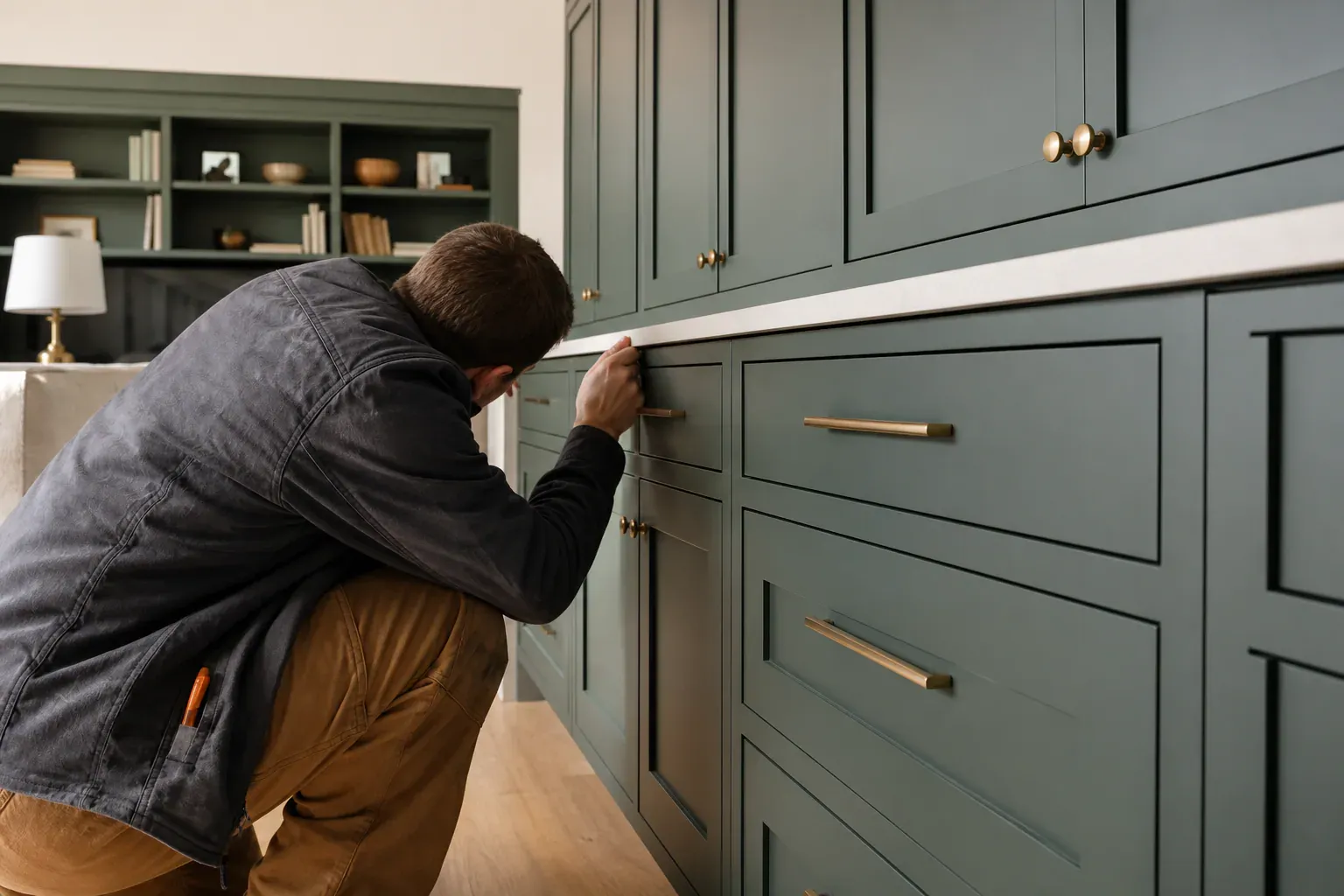
A durable cabinet lives in its box construction. Plywood sides—typically 1/2 inch to 3/4 inch thickness—resist warping and support weight better than particleboard. Dovetailed drawer boxes won't shake loose over time, while stapled boxes deteriorate faster. Full-extension undermount slides on ball bearings glide smoothly under load for years; basic side-mount slides wear out sooner.
Particleboard construction is fine for temporary applications but fails in humid environments like kitchens and bathrooms. Moisture causes particleboard to swell, especially at exposed edges. The cheaper initial cost doesn't justify the shorter lifespan in a space you use daily.
Hardwood cabinets—oak, cherry, maple, walnut—develop character over time. Solid wood expands and contracts with seasonal humidity shifts, so joints need room to move. That's why quality custom cabinet construction uses traditional joinery methods instead of just glue and fasteners. Hardwood also allows refinishing later. You can sand and re-stain or repaint a hardwood cabinet; particleboard can't take that treatment.
Reclaimed wood cabinets add history and character but require understanding movement and inconsistency before milling. Reclaimed wood isn't uniform in thickness or grain. A builder working with reclaimed materials has to account for knots, nail holes, color variation, and the fact that old wood moves differently than kiln-dried new wood. Your custom cabinet quote for reclaimed builds will be higher because the fabrication process includes extra sorting, milling, and hand-finishing.
Specialty construction like hidden compartments or soft-close drawer systems adds engineering work. The cabinet designer has to ensure the hidden mechanism won't interfere with drawer operation, that hinges support the door weight, and that hardware remains accessible for adjustment. These details are priced as line-item upgrades because they require extra planning and testing.
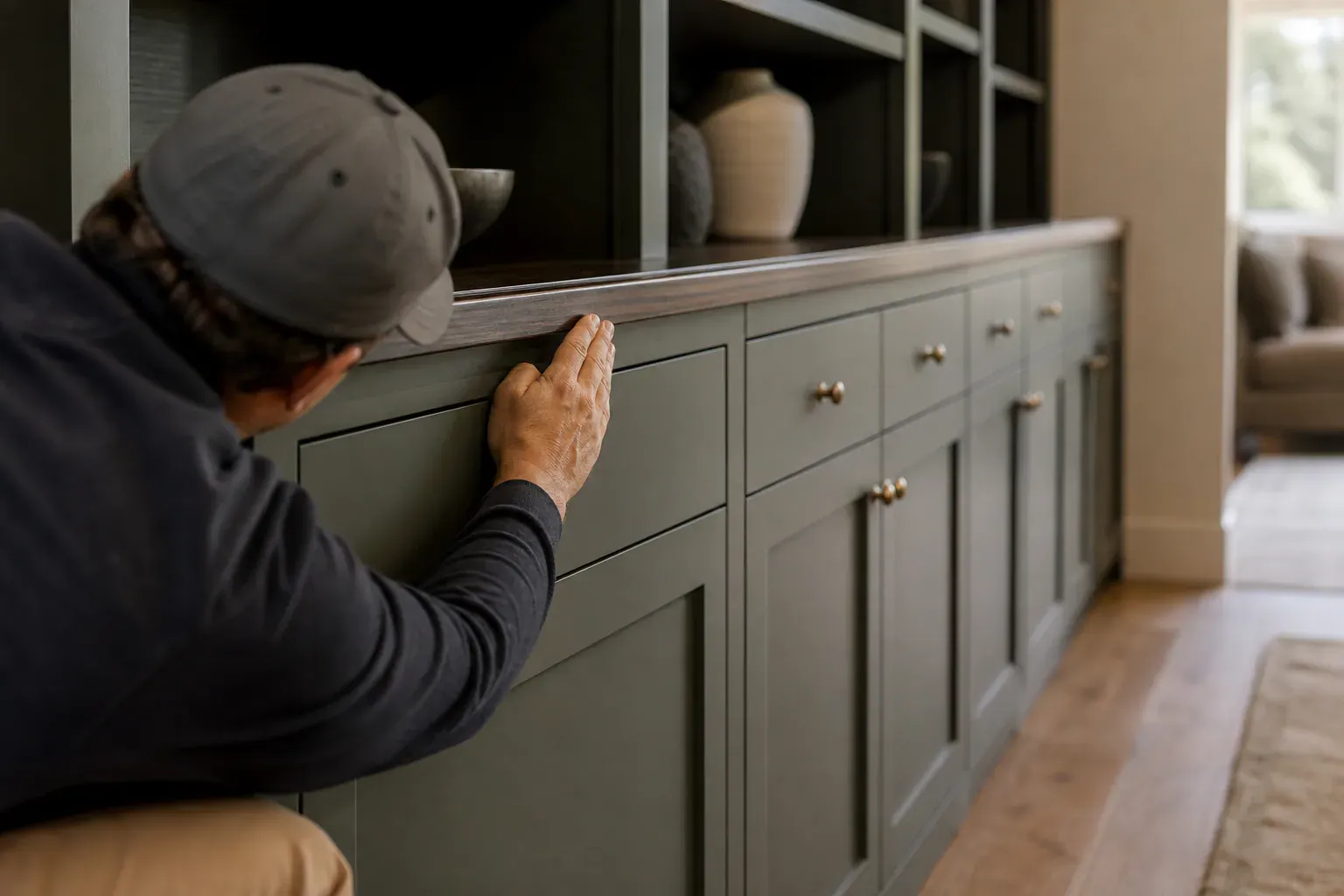
Custom cabinetry delivers value in two ways: functional value during ownership and resale appeal. A kitchen that works—with cabinets sized to your actual cookware, pull-out shelves where you need them, and hardware positioned for your reach—is a kitchen you enjoy using daily. That value isn't captured in a resale appraisal, but it's real in your quality of life.
At resale, kitchens with quality cabinetry—solid hardwood, clean finishes, no sagging doors—appeal to buyers more than kitchens with worn particleboard stock cabinets. A kitchen remodel that prioritizes cabinetry quality typically recovers 50 to 70 percent of its cost in home value at sale. That means a $12,000 cabinet investment might add $6,000 to $8,400 in appraised home value. Bathroom vanity cabinets matter too. A well-made custom vanity with quality plumbing integration and durable finishes signals that the whole bathroom is maintained.
The real return, though, is in years of use. A cabinet built with plywood box construction and hardwood face frames won't loosen, sag, or fail in ten years. A particleboard cabinet might. That durability difference matters if you plan to stay in the home more than five to seven years.
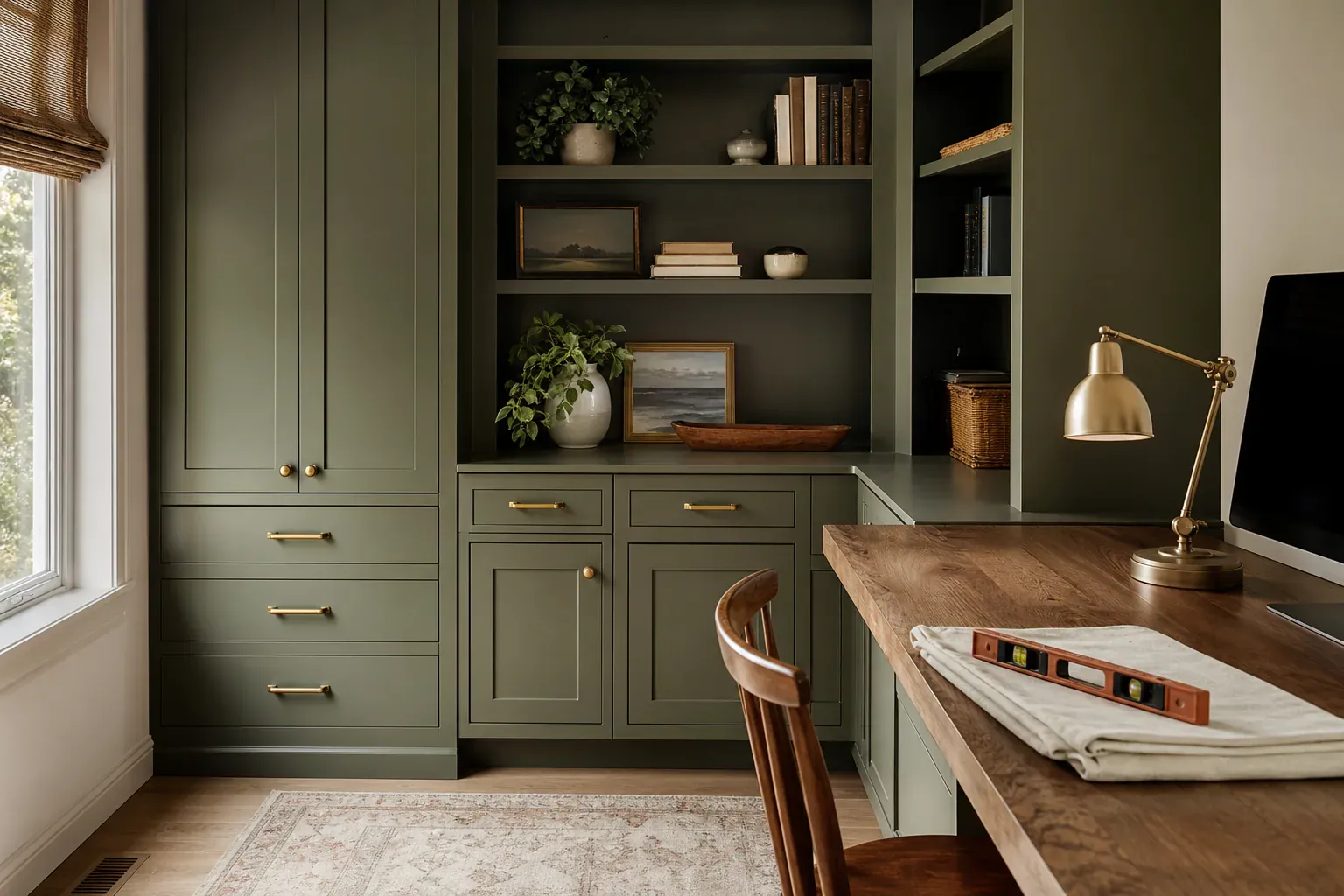
Stock cabinets sit in a warehouse in standard sizes—24 inches, 36 inches, 42 inches wide—and you pick what's available. They're made in bulk, shipped to distributors, and you assemble them or pay someone to drop them in. The upfront cost is lower because nobody engineered them for your space. You get what fits the shelf, not what fits your kitchen.
The problem shows up fast. Your wall isn't perfectly square. Your ceiling slopes. The corner where two runs meet doesn't align with anything. You end up with gaps, filler strips that look wrong, and doors that don't hang level. A stock cabinet quote might say $3,000, but you'll spend another $800 getting a carpenter to make it work in a real house. By then you're committed to the look.
Custom cabinets are built to your actual dimensions. We measure the space, account for the drywall's movement and the floor's slope, and build boxes that sit flush. No fillers. No gaps. Doors hang level because the frame is square. That costs more at the quote stage, but you don't pay for adaptation labor or accept a crooked installation. For Boise kitchens where homes were built over decades and nothing is perfectly plumb, custom framing eliminates the compromises stock cabinets force.
Semi-custom cabinets are the middle ground—modular boxes with some customization options. They reduce lead time and cost versus fully custom, but you're still limited to certain widths and configurations. If your space is awkward or you want specific interior features, semi-custom won't solve it without expensive modifications.
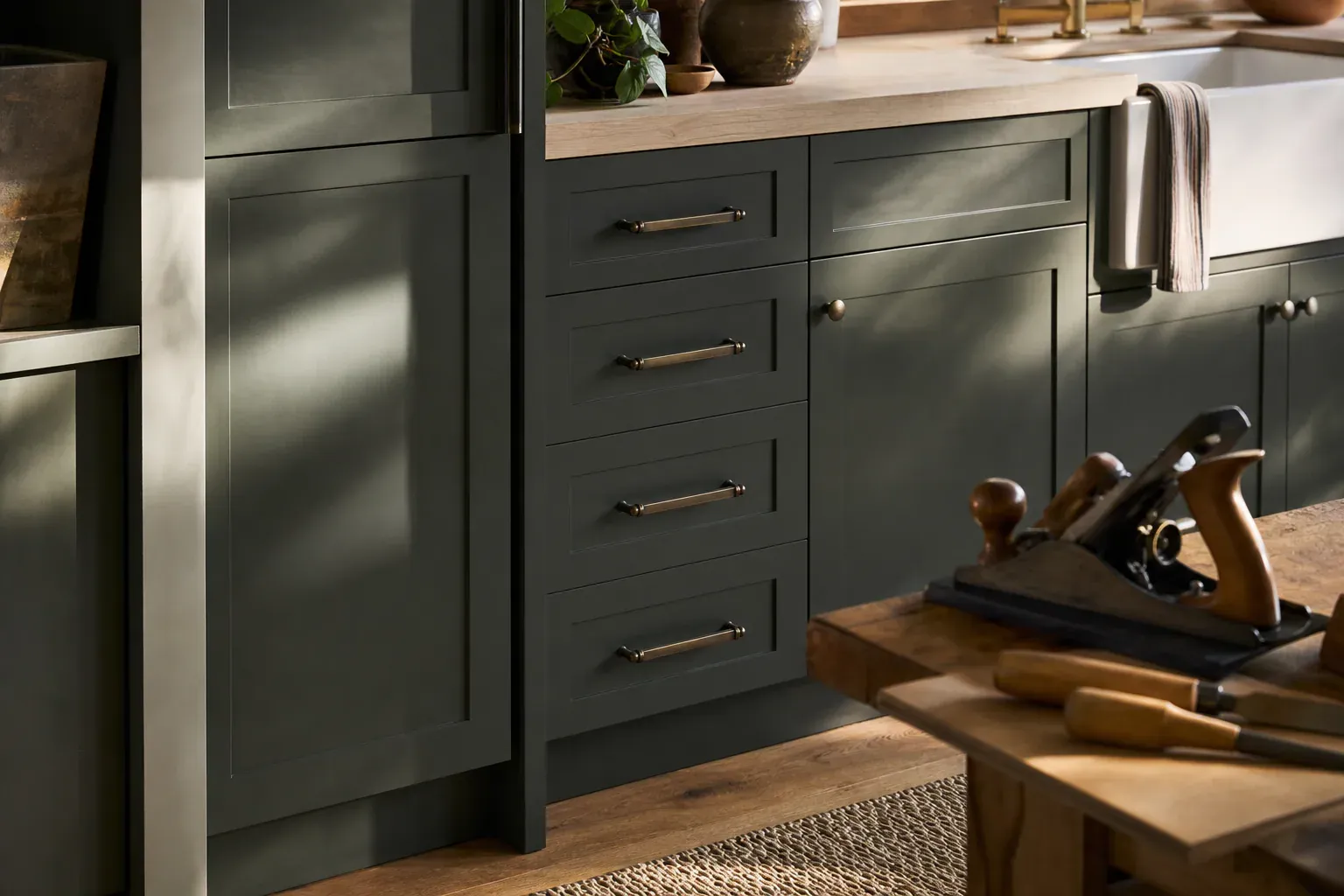
Inside the box is where custom cabinets earn their reputation. Drawers and shelves aren't just holes—they're systems that affect daily use and resale value.
Drawer slides matter most. A stock cabinet might have side-mount slides that allow the drawer to pull out 75 percent of the way. You can't reach the back without tilting the drawer or your pans. Full-extension ball-bearing slides cost more but pull all the way out and handle 100 pounds without sagging. They're worth it if you use deep drawers for pots, spices, or tools.
Shelf supports determine how much weight a shelf holds and whether it sags after five years. Stock cabinets use cheap plastic pegs in pre-drilled holes. They work until someone loads the shelf with dishes and gravity wins. Adjustable shelving with better peg systems or rail-mounted supports lets you reconfigure later and holds heavy loads without flex. Some custom builds include fixed shelves where they're needed most—upper cabinets where nothing moves—and adjustable shelves lower down where you want options.
Specialized organizers are a custom advantage. Pull-out spice racks that slide on drawer hardware. Vertical dividers for baking sheets and cutting boards. Trash and recycling bins that hide behind a door and slide out when you open it. Soft-close hinges that prevent slamming. These aren't standard—they're added as part of a custom design and cost more per unit but transform how a kitchen works in daily life.
Bathroom cabinets benefit from the same thinking. A single deep drawer with a slide-out organizer for hair tools and makeup takes up less wall space than three shallower drawers. Open shelving below the counter for towels costs less than a closed cabinet and lets you change towel colors without looking cluttered. Drawer fronts with integrated towel bars save wall space.
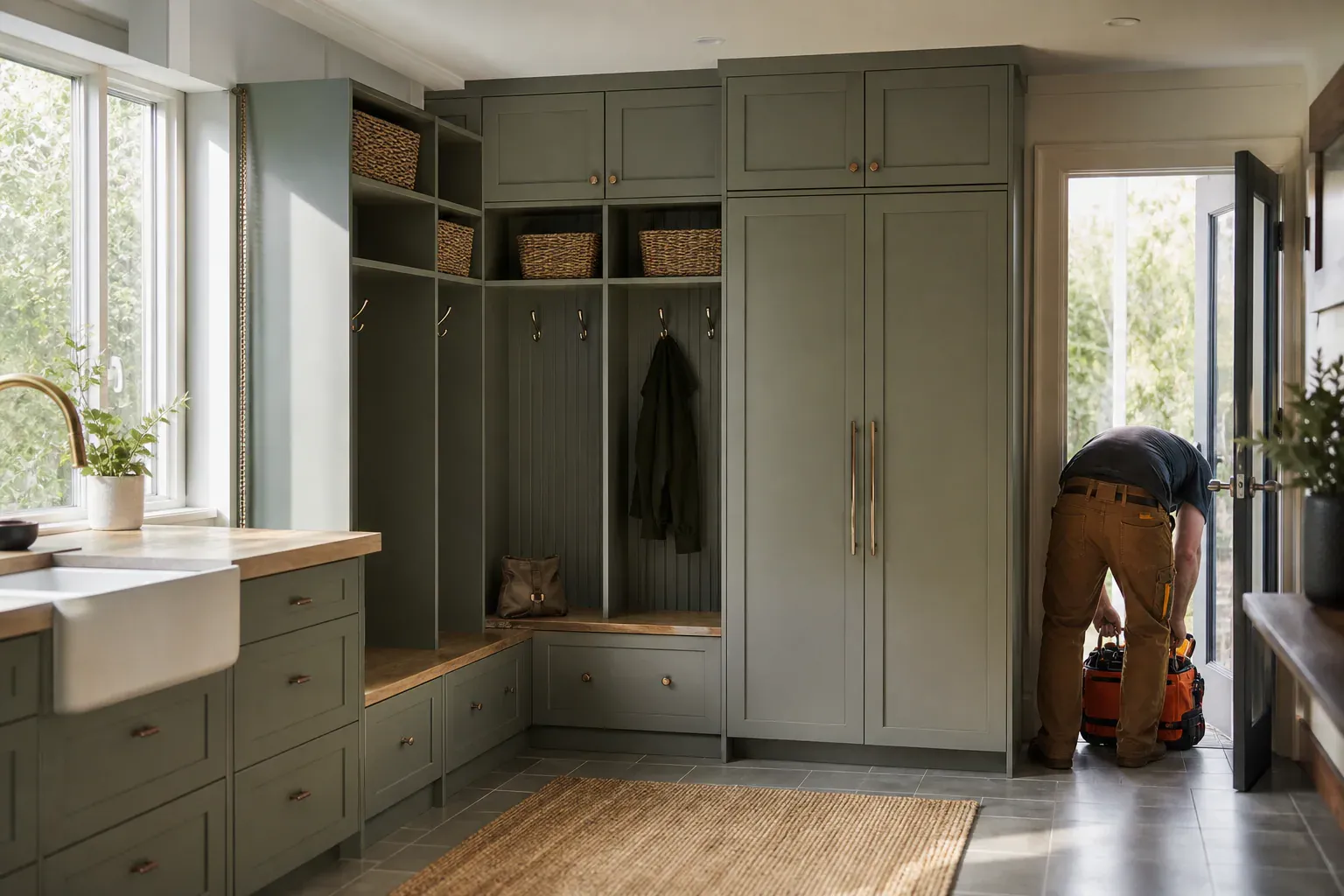
Trends come and go. Open shelving was everywhere five years ago and now feels dated in many homes. Shaker doors cycled through "traditional" and back to "timeless." White kitchens gave way to grays and now muted greens and blues are showing up more often. The risk is building custom cabinets around this year's aesthetic and regretting it in five years.
The trends that last are functional, not decorative. Deeper base cabinets (24 inches instead of the old 21-inch standard) give you more counter workspace and drawer volume. People keep using that space. Island seating that wasn't there before gets used constantly. A baker's drawer with a built-in work surface where you proof dough or frost cookies is still there ten years later because it solves a real problem.
Finish durability matters more than finish color. A matte finish hides fingerprints and dust better than glossy, so you clean less often. That's a quality-of-life win, not a trend. Soft-close drawers that don't bang shut are loud or annoying, then you realize you prefer the peace and quiet—another keep-forever feature.
In Boise kitchens, the trend moving away from stark white is real because it shows grease and dust in a climate where heating systems dry the air half the year. Warmer off-whites, grays, and wood tones have held up better in actual homes because they're more forgiving. Stainless steel appliances against darker cabinets look professional and stand up to fingerprints better than chrome or glass.
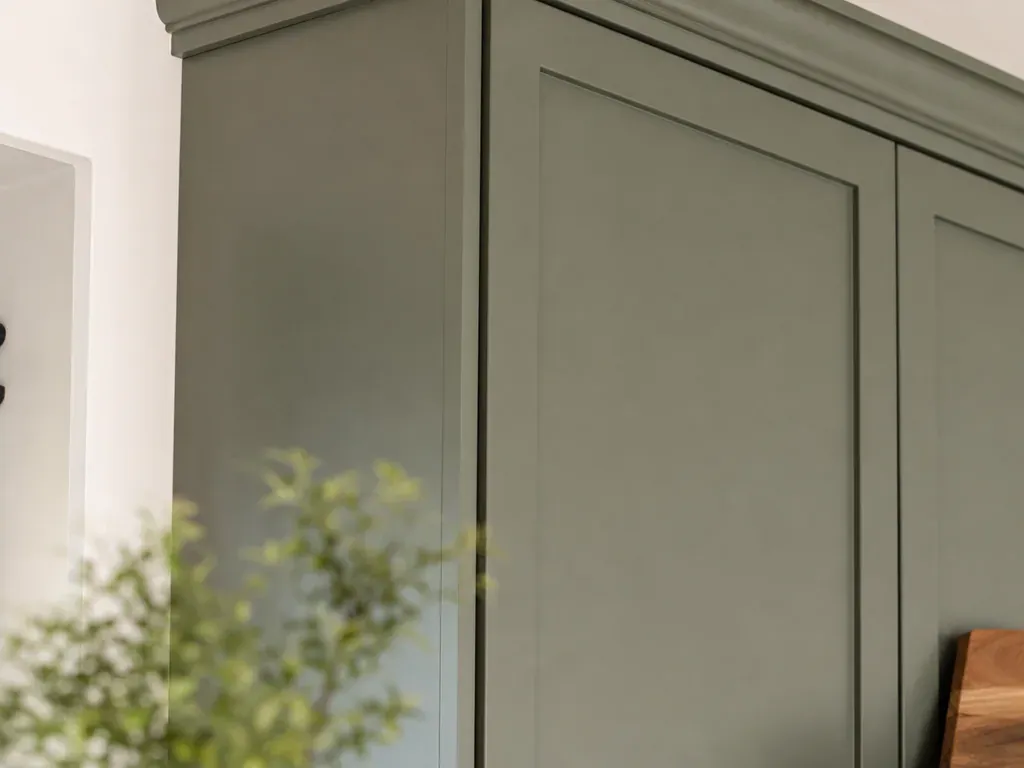
Molding is the frame around the cabinet. It's the piece that covers gaps between
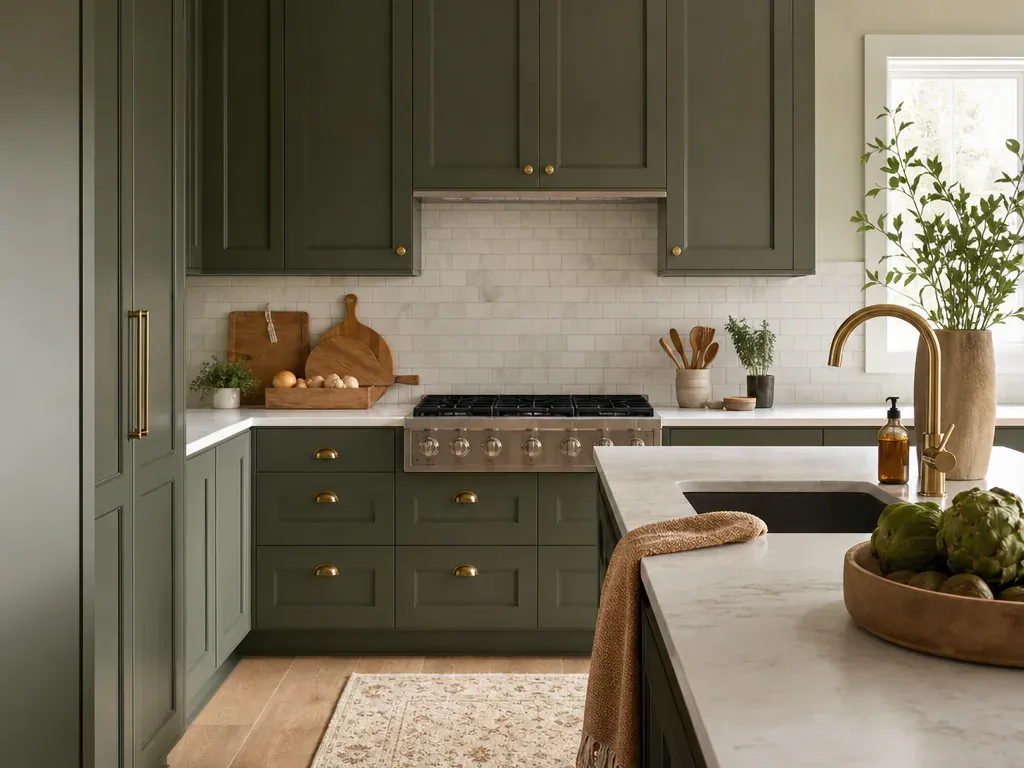
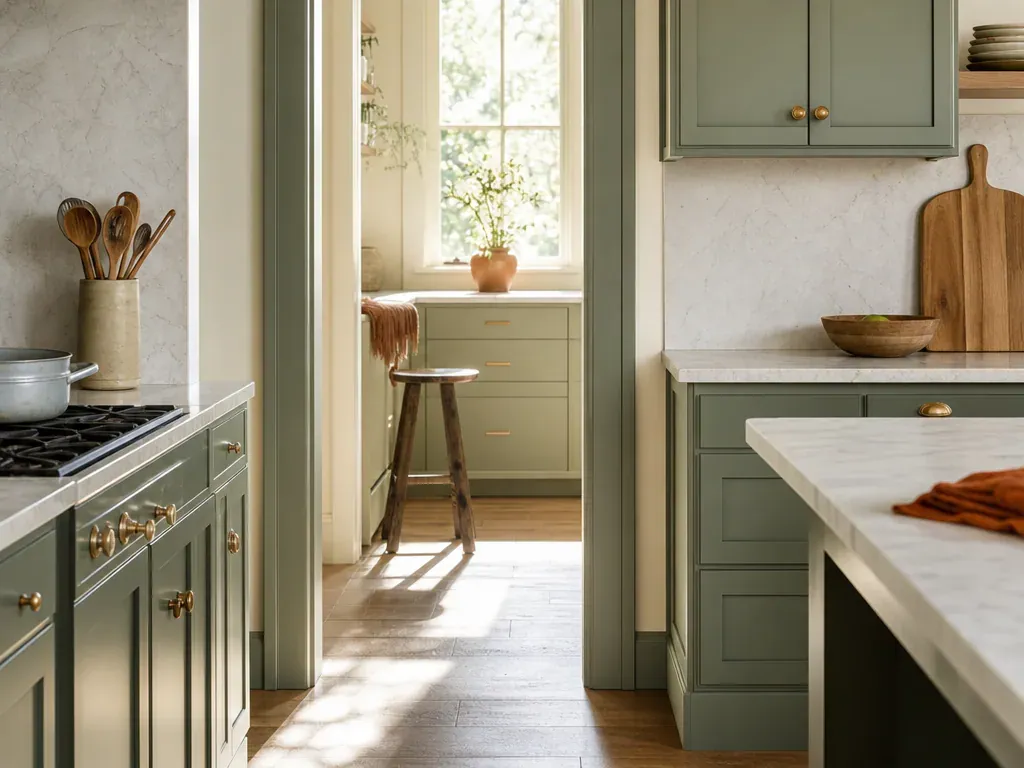
Custom cabinet pricing in Boise scales primarily by linear foot measurement. A typical kitchen runs 10 to 25 linear feet of cabinetry, and that linear-foot span is where the dollar figure…
Stock cabinets use particleboard box construction with mdf cabinet doors in preset widths: 9, 12, 15, 18, 24, 30, 36, and 42 inches. The boxes come finished from the factory.
Cabinet design complexity is the first variable. A straight run of uppers and lowers along one wall costs less per linear foot than a kitchen with an island, a corner pantry, or mixed…
Shaker style cabinets remain the most-quoted door configuration because they deliver clean aesthetics and cost less than heavily detailed doors.
The process starts with a conversation about your space, your timeline, and your budget range. We discuss whether you're renovating a kitchen, updating bathroom vanity cabinets, or building…
When you request a custom cabinet quote from multiple builders, line up the estimates side-by-side and confirm each one specifies the same materials.
Why homeowners call us
Every custom cabinets job is scoped and priced in writing, so the number you approve is the number you pay. If something behind the wall changes the work, we stop and price it first.
You speak to the people doing the work, not a call centre, and cover certificates go to your building manager or general contractor on request.
Containment, floor protection and same-day debris removal on every interior job — the space stays usable while the work is going on.
Crews work Boise and the surrounding cities every week, so a walkthrough is usually available within the same week you call.
FAQ
Custom cabinet pricing scales by linear foot measurement. A typical kitchen with 12 to 18 linear feet of cabinetry runs $8,000 to $18,000 total, depending on wood species, finish quality, and hardware. Bathroom vanity cabinets cost $2,000 to $6,000 for a single or double vanity. Pricing depends on plywood versus particleboard box construction, hardwood versus mdf doors, and paint versus stain finish. Request a detailed written estimate to see material and labor separated.
Stock cabinets come in preset widths and depths from nationwide manufacturers, use particleboard boxes and mdf doors, and cost the least per linear foot. Semi-custom offers more width and finish options from a catalog but still uses limited sizing. Full custom builds are made-to-measure with plywood box construction, hardwood face frames, and exact-fit door sizing. Choose stock if your openings are standard; semi-custom if you want some design control; full custom if walls are out-of-square or you need specialty features.
Full custom hardwood cabinet pricing typically runs $400 to $1,200 per linear foot installed, depending on wood species, finish complexity, and hardware. Oak and maple sit on the lower end; cherry and walnut command the premium range. This includes box construction, doors, hardware, and installation labor. Add-ons like soft-close drawers, pull-out shelves, or crown molding increase the per-foot average. Semi-custom runs $300 to $600 per linear foot. Stock cabinets run $150 to $400 per linear foot.
Stock cabinets cost less upfront because they're mass-produced. Full custom costs more initially because you're paying for exact-fit construction, material choices, and labor. However, custom cabinets last longer if built with plywood and hardwood instead of particleboard. Over a 20-year timeline, custom often costs less per year of use because stock cabinets fail sooner. If budget is the only concern and your walls are plumb, stock is cheaper. If durability and design fit matter, custom pays back in longevity and enjoyment.
Fabrication lead time ranges from three weeks for simple designs to twelve weeks for complex builds with specialty materials. Installation typically takes two to five days for a kitchen, depending on linear footage and wall conditions. Total timeline from approved quote to finished installation usually runs six to sixteen weeks. Cabinet refacing speeds the process to four weeks total because existing boxes stay in place. Request a timeline range when you receive your estimate.
Wood species—walnut and cherry cost more than oak and maple. Construction material—plywood box sides cost more than particleboard. Finish type—baked-on finishes cost more than brush-applied stain. Hardware—soft-close hinges and undermount slides add per-door and per-drawer costs. Design complexity—islands, corner pantries, and specialty features require more labor. Cabinet materials selection—hardwood face frames cost more than mdf. Site conditions—out-of-plumb walls or difficult cabinet removal increase installation labor. Request itemized quotes from multiple builders to see where the cost differences actually sit.
Call (208) 555-0116 for a walkthrough, usually within the same week.