Cabinet Refinishing Service in Boise
Cabinet refinishing keeps your existing cabinet boxes and doors in place while refreshing the visible surfaces—paint, stain, and topcoat.
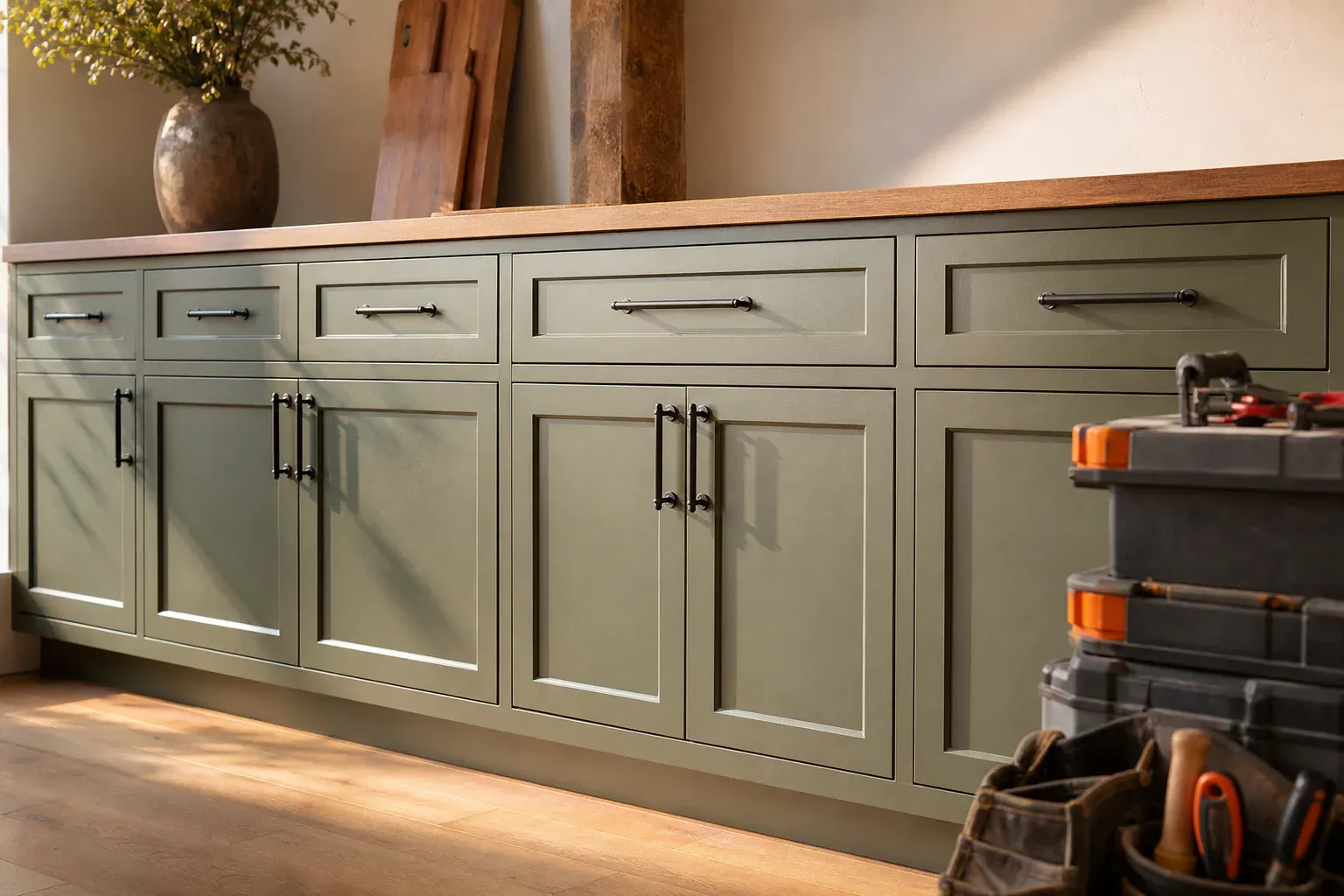
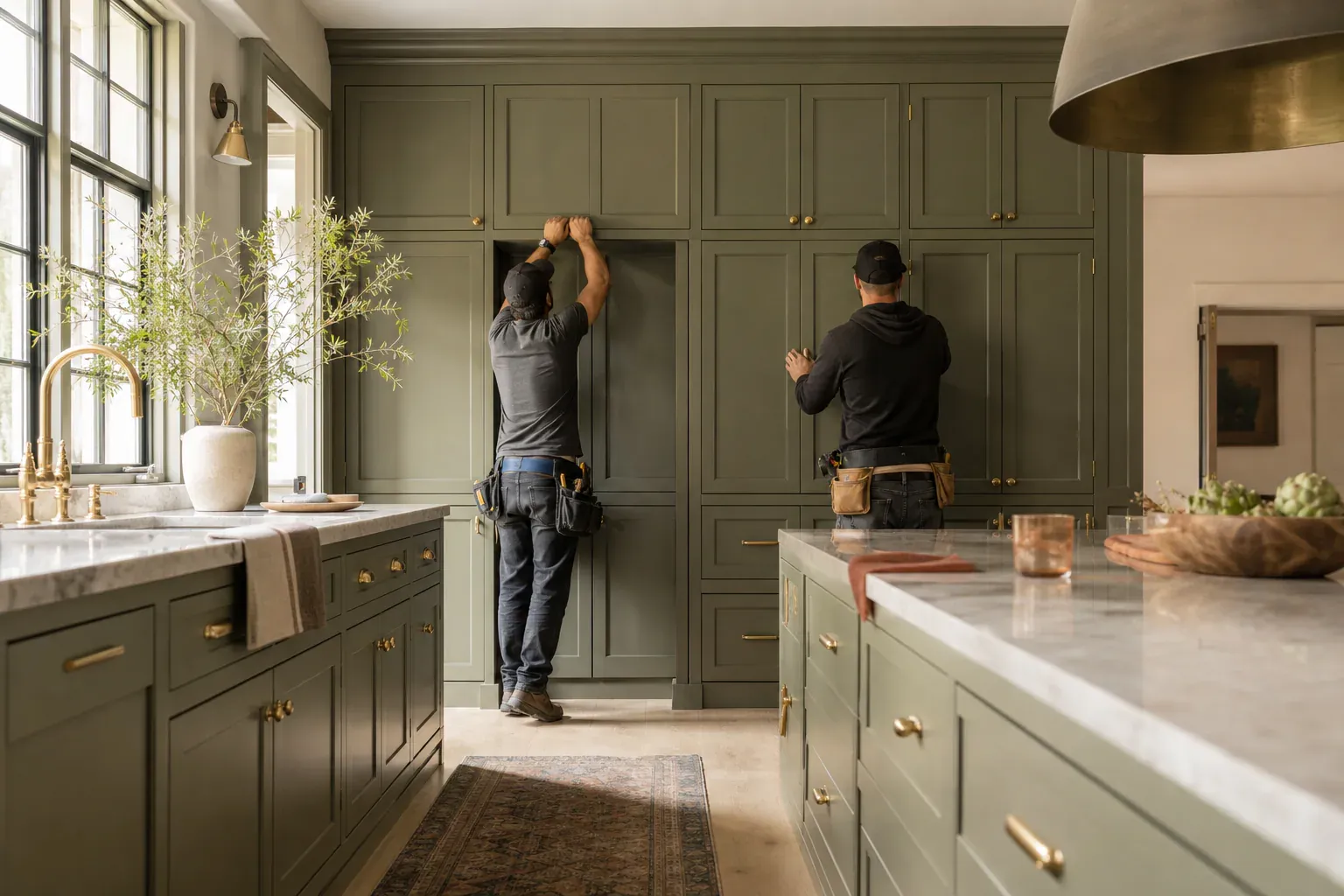
Boise Custom Cabinets provides cabinet refinishing service, kitchen cabinet makeover work, and bathroom cabinet refinishing across Boise, ID. Cabinet refinishing restores function and appearance without the cost and mess of a full kitchen remodel.
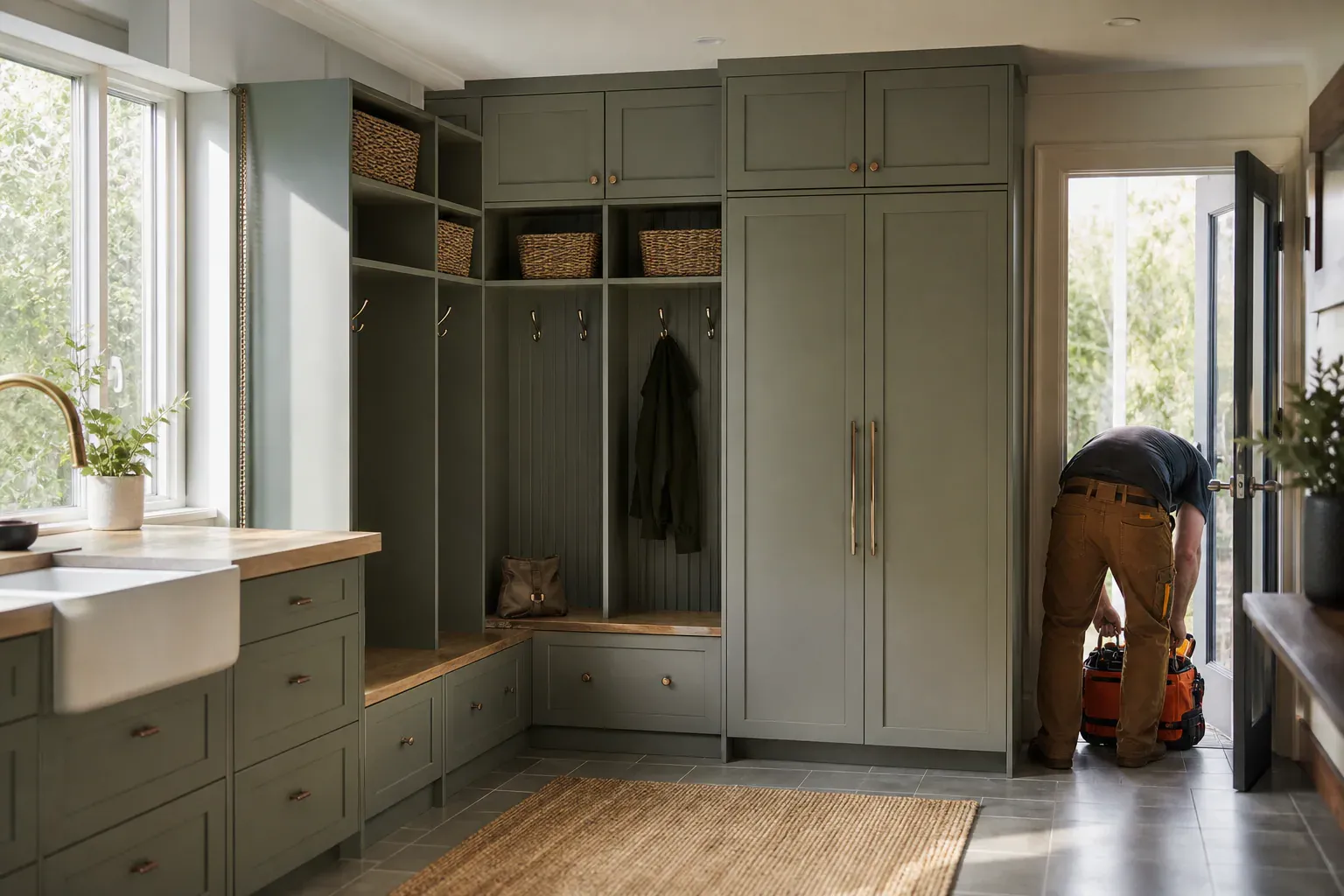
Cabinet refinishing keeps your existing cabinet boxes and doors in place while refreshing the visible surfaces—paint, stain, and topcoat. Doors and drawer fronts are removed, sanded, primed, and finished in a controlled environment for a factory-like finish. Hinges and hardware stay functional, or are replaced during the job if adjustment or cabinet hardware replacement is needed.
This approach works well in kitchens where plumbing and electrical run behind cabinetry. Since cabinets stay attached to walls and islands, there is no replumbing or rewiring. A bathroom cabinet refinishing job on a vanity cabinet near a sink avoids breaking tile or repositioning supply lines. The turnaround is weeks, not months.
Cabinet refinishing, cabinet refacing, and full replacement are three distinct approaches with different timelines and costs.
Refinishing is the least disruptive. You keep the cabinet boxes and doors; we sand, prime, and repaint or restain. Cost runs roughly one-third to one-half the price of full replacement. Cabinet boxes stay in place and the kitchen or bathroom stays functional. Prep work is the longest phase.
Cabinet refacing swaps out door and drawer fronts and re-veneers the exposed boxes with new veneer or laminate. The boxes stay. You get a new wood species or color without replacing plumbing or layout. Cabinet refacing sits between refinishing and replacement in both cost and disruption.
Full replacement removes everything and installs new cabinetry from scratch. This is the most expensive option and may trigger appliance relocation, plumbing moves, and electrical rework. Choose replacement if cabinet boxes are water-damaged, sagging, or no longer fit your layout.
For a kitchen cabinet transformation on a budget and a tight schedule, cabinet refinishing service is the practical choice.
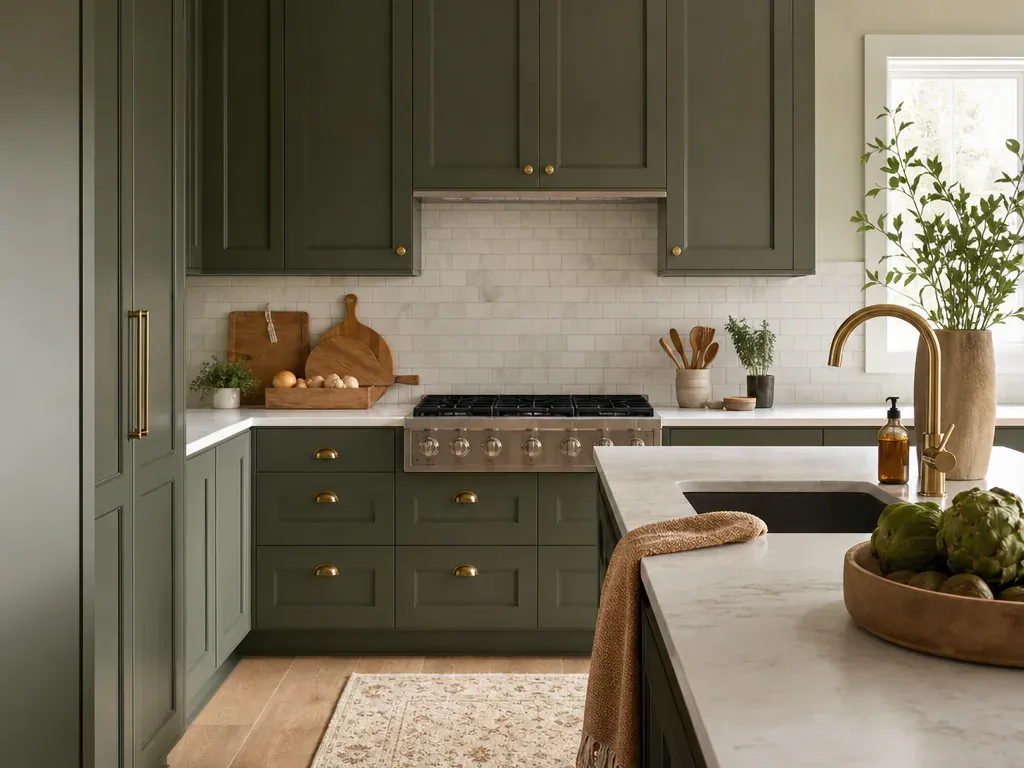
Kitchen cabinet painting and refinishing serves two different goals: paint conceals and covers, while wood stain enhances grain and requires a sound base.
Paint works on any substrate—solid wood, laminate, or previously stained doors. Cabinet paint colors range from classic white and cream to bold blues, grays, and blacks. We walk through color consultation with you, matching existing trim, countertop undertones, or an accent island color so the final look ties the room together.
Wood stain requires a clean wood surface. Porous species like pine or alder need wood conditioner applied first to accept stain evenly and prevent blotchy color. Denser hardwoods like oak or maple take stain more uniformly. Cabinet staining is ideal if you want warmth and depth while keeping the wood texture readable.
Both paint and stain are sealed with a durable topcoat rated for kitchen heat, moisture, and wear. The topcoat determines how well the finish resists scratching and steam.
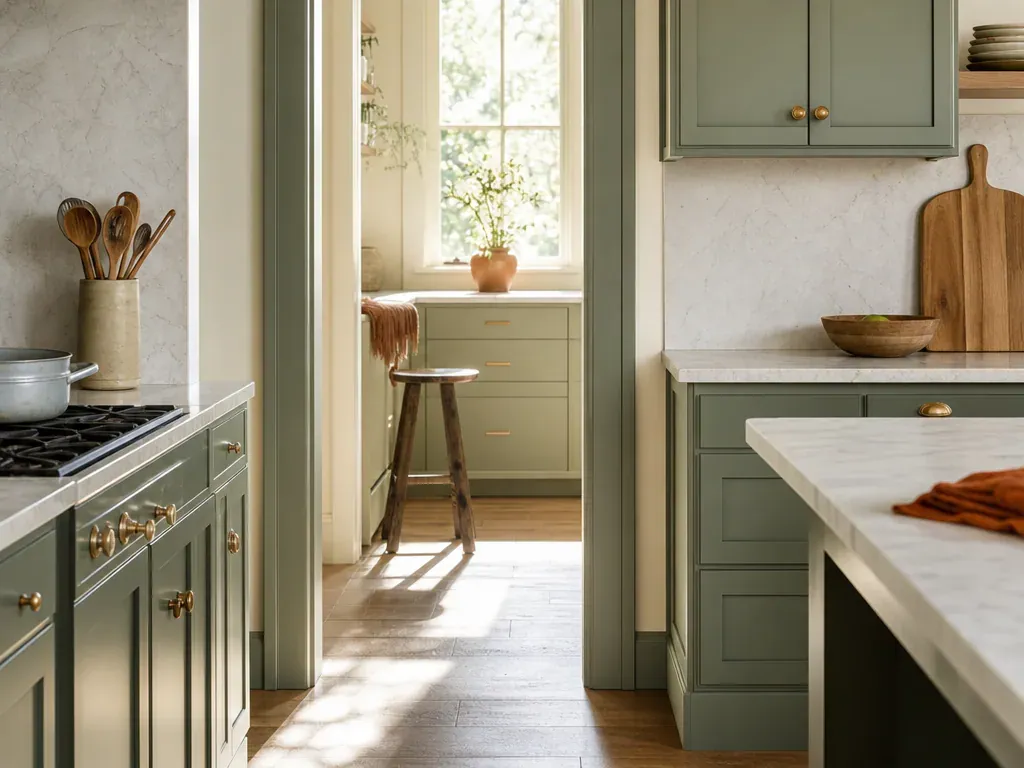
Bathroom cabinet refinishing differs from kitchen work because vanities live in high-humidity environments. Moisture creeps behind faucets, under sink rims, and from daily shower steam.
Vanity cabinet painting requires a moisture-resistant epoxy coating or catalyzed topcoat rated for humidity. Standard polyurethane lacquer will peel and blister in a bathroom over time. Epoxy coating hardens through a chemical reaction rather than air evaporation, creating a harder, more water-resistant seal.
Before spraying, all hardware is pulled—faucet handles, P-trap covers, cabinet hinges, and drawer pulls—so overspray does not land on chrome or brushed nickel finishes. Once the paint or stain and topcoat cure, hardware is cleaned and rehung.
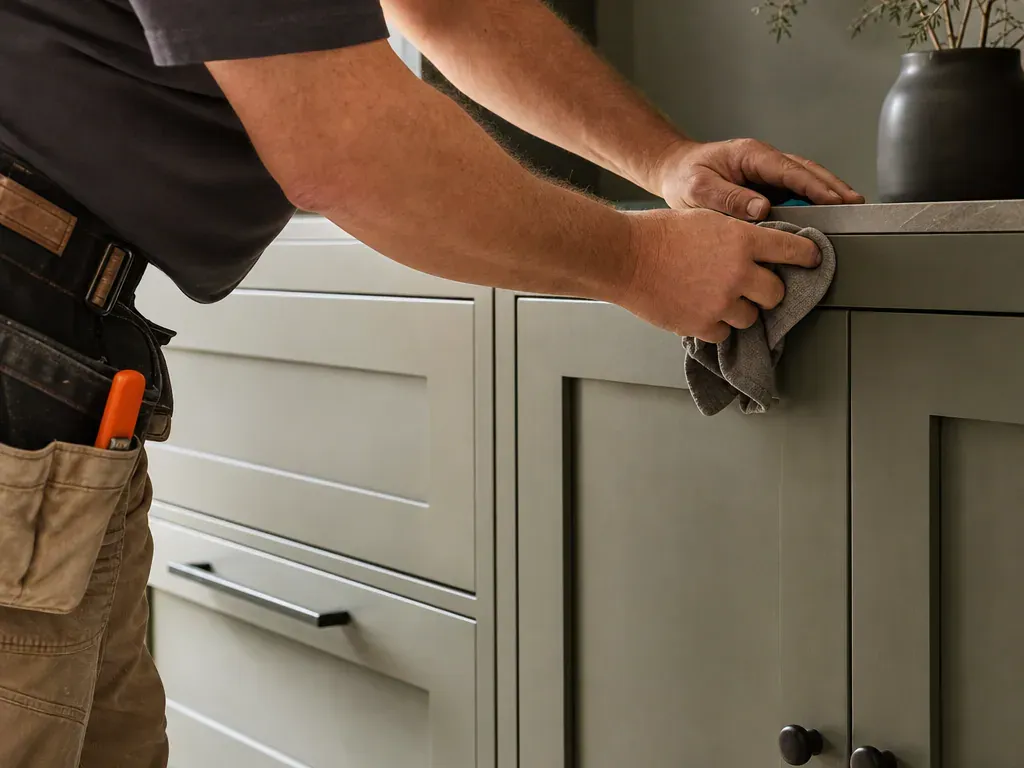
Preparation determines whether the final finish sticks and stays smooth. Rushing this phase leads to peeling, flaking, or adhesion failure.
Cabinet boxes and doors are first degreased using a TSP substitute or similar alkaline cleaner to remove cooking grease, dust, and shop residue. Once dry, surface sanding with 120-150 grit paper scuffs the factory finish enough for primer to grip. We do not sand through to bare wood unless the original finish is failing or water-damaged.
After sanding, all dust is wiped with a tack cloth to lift fine particles that spray or brush would trap in the topcoat. Primer application comes next. A bonding primer formulated for kitchen and bath use seals the sanded surface and prevents topcoat peeling. Primer also blocks stain bleed-through if the original finish had dark color or old stain.
Cabinet preparation and prep work takes three to five days depending on cabinet count, finish condition, and whether doors must be removed and stacked for spraying.
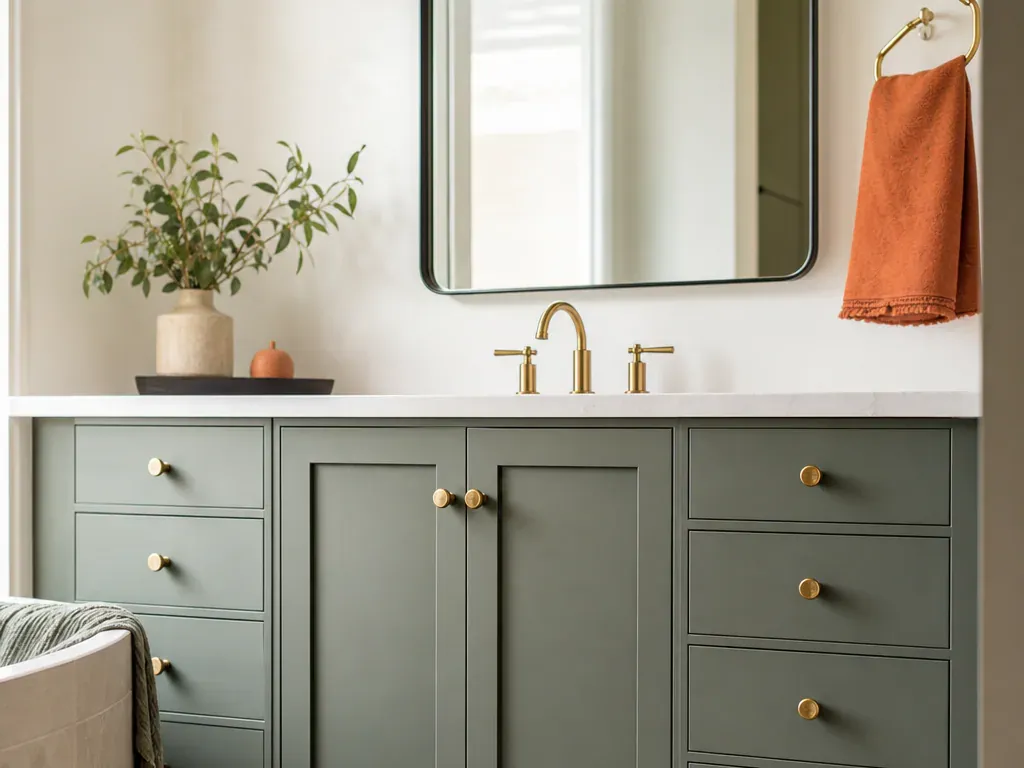
Achieving a factory-style cabinet finish requires the right application method for each surface type.
Doors and drawer fronts are removed, stacked, and sprayed horizontally in a controlled, dust-free booth. Spray painting creates an even coat without brush marks or roller stipple. We apply multiple thin coats rather than one thick coat, building to full coverage. The result is smooth and uniform, matching the factory gloss or satin level you choose.
Cabinet boxes that remain attached to walls are cut in using brush application on faces and edges, then a mini-roller fills large flat sections. This approach avoids overspray onto walls, floors, and surrounding trim. We match the sheen and color of the sprayed doors so the finished cabinet reads as one piece.
High gloss finish is durable and easy to clean but shows fingerprints. Satin finish hides marks better and is more forgiving on imperfect walls.
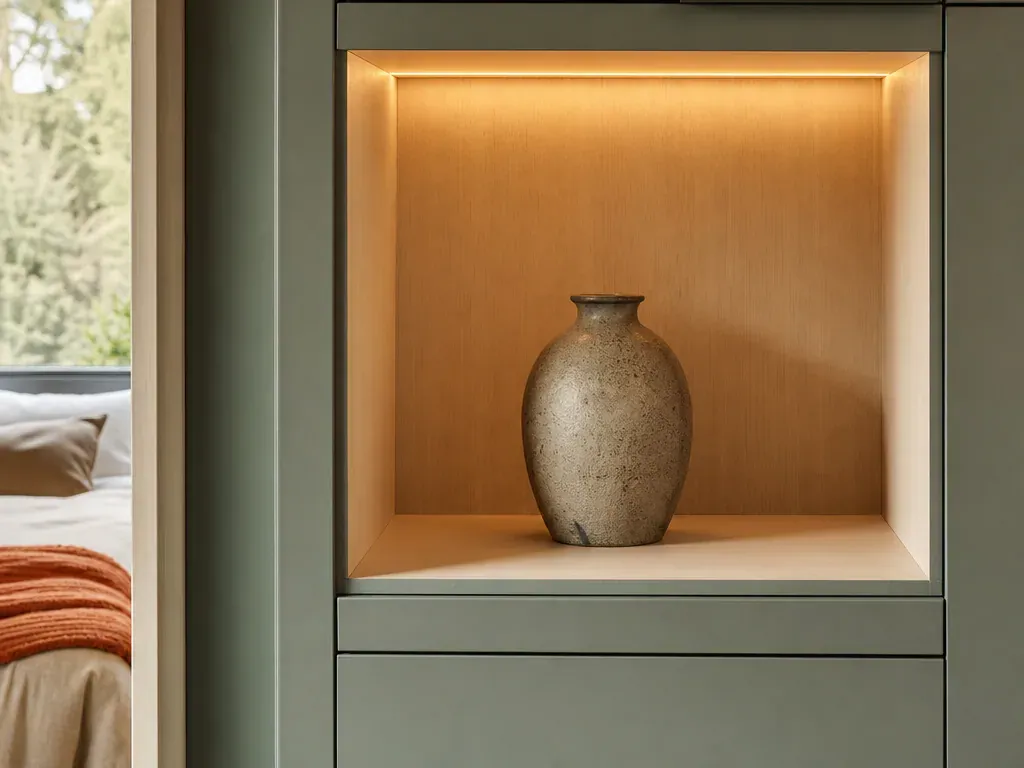
Standard lacquer and polyurethane air-cure over 24 to 72 hours. UV light curing technology hardens in minutes under UV lamps, cutting cure time dramatically.
UV-cured coatings are sprayed onto doors, then placed under UV lamps for five to ten minutes. The finish hardens fully in that window. Cabinet doors can be rehung and drawers can be used the same day, cutting project downtime to a single day instead of a week of "do not touch" waiting.
Finish durability of UV-cured coatings exceeds standard air-cure finishes. UV coatings resist scratching, heat, and moisture better than conventional paint. They are a premium option for busy kitchens and bathrooms where durability matters.
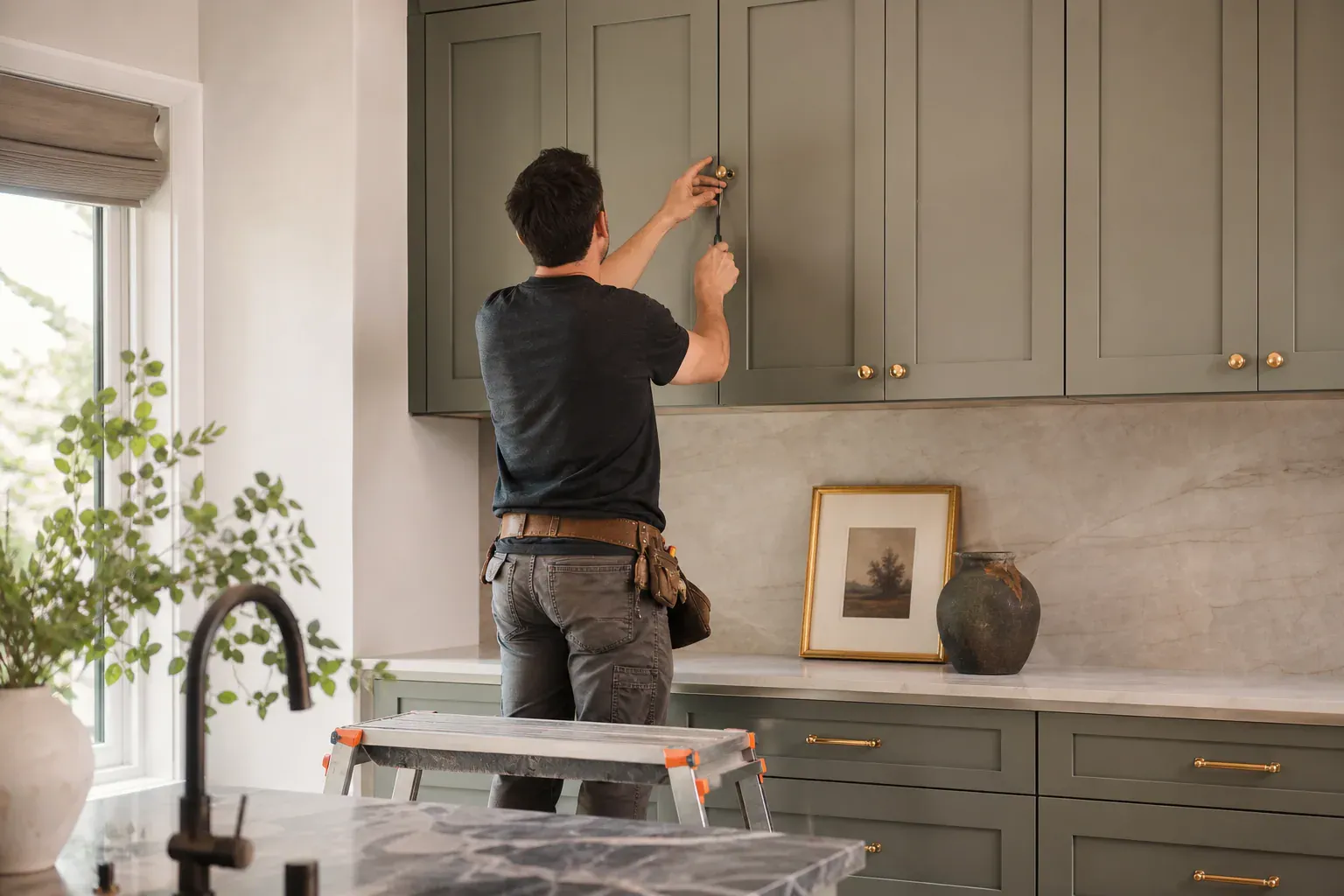
Cabinet doors and panels get detailed attention during finishing. Raised-panel doors have grooves and profile edges that standard equipment cannot coat evenly. A detail brush is used to cut into grooves, ensuring primer and topcoat reach all surfaces.
Hardware hinges set the reveal—the gap between a closed door and the cabinet frame. Hinges are adjusted so each door sits exactly 1/8-inch away from its neighbors, creating a flush, aligned appearance. Old or loose hinges are replaced during cabinet hardware replacement with proper spacing using a template so no drilling is eyeballed.
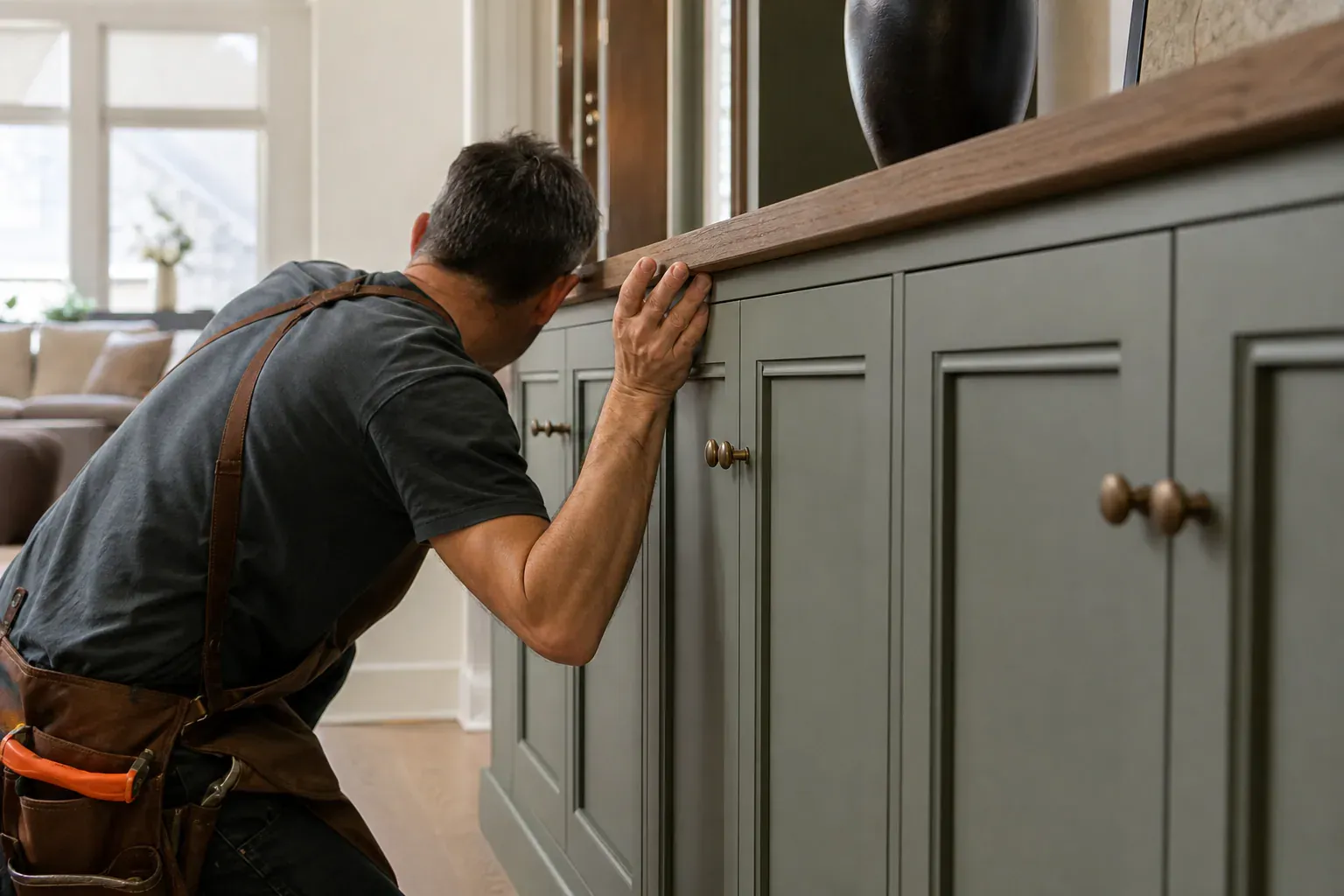
Water-damaged cabinets can be restored if wood structure is intact. Water stains are spot-sanded, then treated with wood bleach to lighten the stain. Once the wood has dried fully and is sanded smooth, a fresh paint finish or cabinet stain is applied over primer. Cabinet repair and restoration takes longer than cosmetic refinishing but saves the cabinetry.
Entertainment center refinishing and wainscoting refinishing follow the same process as kitchen cabinetry—surface cleaning, sanding, primer, and topcoat. Built-ins are left in place; doors or panels are removed and finished separately if possible.
Appliance cutouts sometimes need modification when a refrigerator size changes or a dishwasher is relocated. Raw wood at the cut edge is sanded, primed, and sealed with final topcoat before the appliance is set in place.
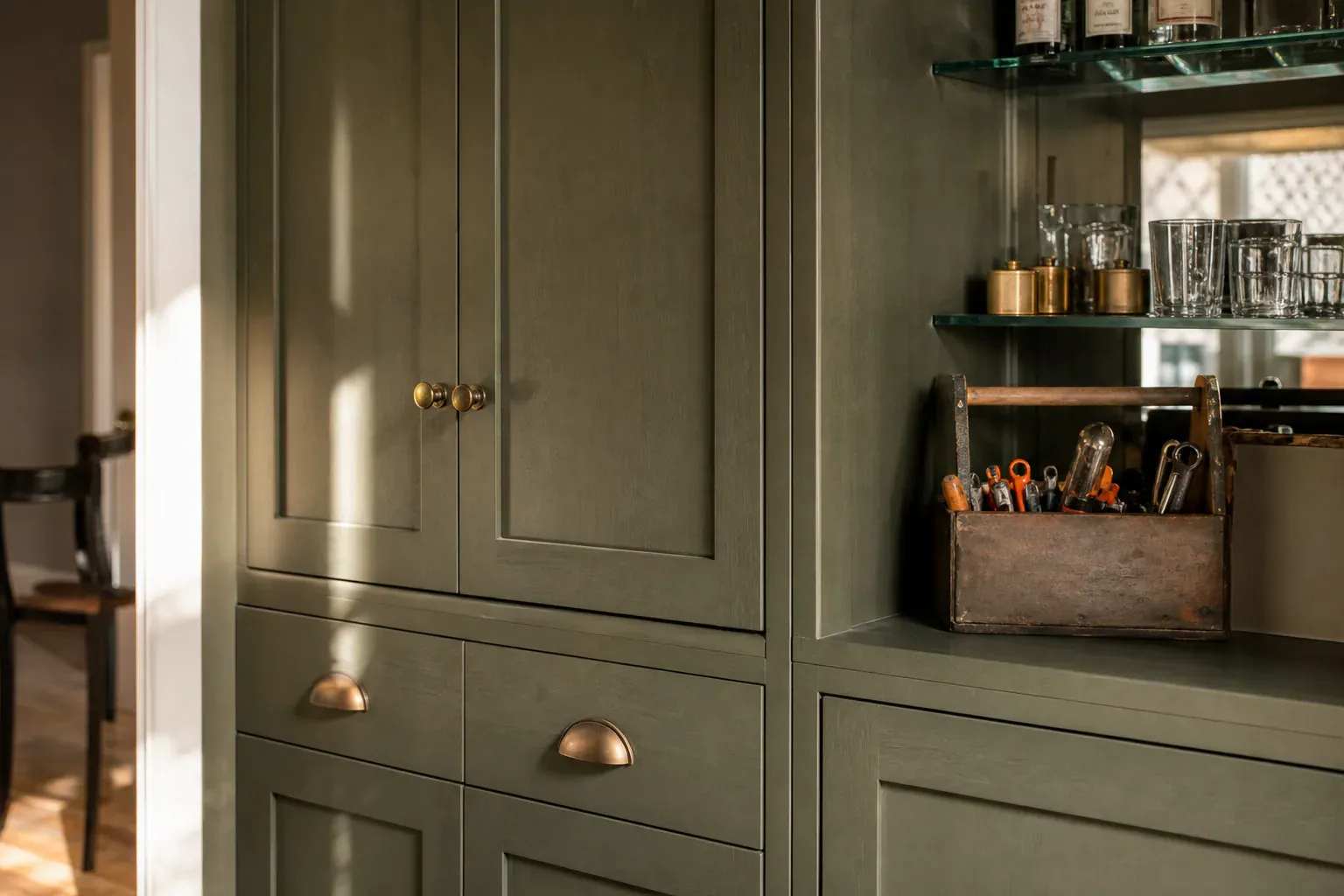
Refinishing existing cabinets costs a fraction of full replacement. When you refinish, you keep the boxes, frames, and interior hardware in place and update only the surfaces that show. Replacement means tearing out every cabinet, patching drywall, possibly relocating plumbing or electrical, and installing new units from scratch—work that stretches timelines and budgets.
The math is straightforward. Refinishing handles prep, sanding, stain or paint, and new hardware across an existing footprint. Replacement involves demolition, disposal, new cabinetry (often requiring lead time), installation labor, and finishing work on walls and counters. For a kitchen with 15–20 linear feet of cabinets, refinishing delivers a transformed look without the cost and disruption of replacement.
Kitchen remodel alternative work often pins cabinet replacement as the main expense. Refinishing lets you redirect that budget toward countertops, backsplash, lighting, or appliances—upgrades that get used every day. You refresh cabinet color and finish while keeping the bone structure of your kitchen intact. This approach works especially well when your cabinet layout and door swing already suit your workflow.
Cabinet redooring is a hybrid approach that splits the difference. You keep existing cabinet boxes and frames but install new door and drawer fronts. This lets you change style and color while preserving the internal infrastructure. Redooring costs less than full replacement but more than refinishing, since new doors and fronts arrive factory-finished and ready to hang. The trade-off is that you cannot update interior surfaces or repair damage to the box sides that show between open doors.
Cabinet refinishing keeps your existing cabinet boxes and doors in place while refreshing the visible surfaces—paint, stain, and topcoat.
Cabinet refinishing, cabinet refacing, and full replacement are three distinct approaches with different timelines and costs.
Kitchen cabinet painting and refinishing serves two different goals: paint conceals and covers, while wood stain enhances grain and requires a sound base.
Bathroom cabinet refinishing differs from kitchen work because vanities live in high-humidity environments. Moisture creeps behind faucets, under sink rims, and from daily shower steam.
Preparation determines whether the final finish sticks and stays smooth. Rushing this phase leads to peeling, flaking, or adhesion failure.
Achieving a factory-style cabinet finish requires the right application method for each surface type.
Why homeowners call us
Every custom cabinets job is scoped and priced in writing, so the number you approve is the number you pay. If something behind the wall changes the work, we stop and price it first.
You speak to the people doing the work, not a call centre, and cover certificates go to your building manager or general contractor on request.
Containment, floor protection and same-day debris removal on every interior job — the space stays usable while the work is going on.
Crews work Boise and the surrounding cities every week, so a walkthrough is usually available within the same week you call.
FAQ
Cabinet refinishing runs roughly one-third to one-half the cost of full replacement because you keep the existing boxes. Refinishing avoids structural tear-out, plumbing changes, and new installation labor. Cost depends on cabinet count, finish condition, and whether you choose standard paint or UV-cured topcoat.
Refinishing keeps cabinet boxes and doors, sanding and repainting only the surfaces. Refacing removes doors and drawer fronts and adds new veneer or laminate to the box sides, keeping the structure but changing appearance completely. Refinishing is less expensive; refacing offers more design flexibility.
Cabinet preparation and sanding takes three to five days. Priming and topcoat application takes two to three days. Standard finishes cure over several days before cabinets are fully usable; UV-cured coatings cure in minutes, so cabinets are ready same-day. Total project time is one to two weeks.
Yes. We provide color consultation and match existing trim, countertops, or an accent color you select. Paint chips and stain samples are applied to sample boards so you see the color in your own light before we commit to full cabinet application.
Yes. A durable topcoat rated for kitchens and bathrooms resists scratching, heat, and moisture. UV-cured coatings perform even better and harden faster. In bathrooms, an epoxy coating rated for humidity prevents peeling. Proper prep and quality coatings ensure a finish that lasts.
Cabinets are degreased with TSP substitute to remove grease and dust. Surfaces are sanded with 120-150 grit paper to promote adhesion. Dust is wiped away with a tack cloth. Bonding primer is applied to block stain bleed and seal the surface before any topcoat is applied. This multi-step prep prevents peeling and ensures a smooth, even finish.
Call (208) 555-0116 for a walkthrough, usually within the same week.